Smart tourism Dubai is changing the way visitors discover, plan, book, navigate, and experience the emirate. Technology is increasingly integrated into the tourism journey, from digital destination guides and mobile applications to artificial intelligence, immersive experiences, contactless hotel services, and data-driven destination management.
Dubai is particularly well suited to smart tourism because the city already combines advanced infrastructure with a highly connected visitor economy. Travelers can research attractions online, build itineraries digitally, use mobile tools to navigate the city, access attraction passes from their phones, and interact with increasingly technology-enabled hotels and tourism businesses.
The development of smart tourism is not simply about replacing traditional travel services with technology. The broader objective is to make travel more convenient, personalized, accessible, efficient, and sustainable while maintaining the human experiences that make a destination memorable.
What Is Smart Tourism?
Smart tourism refers to the use of digital technologies, data, connected infrastructure, and intelligent systems to improve tourism experiences and destination management.
For travelers, smart tourism can mean easier access to information, personalized recommendations, digital tickets, mobile navigation, virtual previews, contactless services, and faster communication. For tourism businesses and destination authorities, it can provide better information about visitor behavior, demand, operational performance, and customer preferences.
The concept therefore has two sides. One focuses on the visitor experience, while the other focuses on managing the destination more effectively.
Why Dubai Is a Strong Smart Tourism Destination
Dubai has developed a tourism ecosystem in which digital services are closely connected with everyday travel. The official Visit Dubai platform provides destination information, interactive planning tools, attraction discovery, itineraries, accommodation information, transportation guidance, and mobile applications for visitors.
The city’s tourism environment also includes extensive digital infrastructure across hotels, attractions, transportation, retail, entertainment, and events. This makes Dubai a natural environment for experimenting with new tourism technologies.
Smart tourism can also help a destination serve different types of visitors. A first-time traveler may need navigation and itinerary guidance, while a returning visitor may want personalized recommendations. A business traveler may prioritize efficiency, whereas a family may focus on attractions and convenient transportation.
Digital Tools and the Modern Dubai Visitor
One of the simplest forms of smart tourism is the use of digital tools to make travel planning easier. Travelers can research destinations before departure, save attractions, explore neighborhoods, compare experiences, and organize their schedules through mobile devices.
Dubai’s official tourism platform currently provides interactive maps, attraction discovery, neighborhood guides, itineraries, transportation information, and downloadable applications. These tools reduce the need for visitors to depend entirely on printed guides or physical information centers.
Digital attraction passes are another example. Dubai’s official 2026 city guide describes digital attraction-pass options that allow visitors to select attractions and manage access through mobile applications. This creates a more convenient way to organize sightseeing while reducing the need to carry multiple physical tickets.
Artificial Intelligence in Dubai Tourism
Artificial intelligence is becoming an increasingly important part of smart tourism. AI can analyze large amounts of information and help tourism platforms provide more personalized recommendations.
For travelers, this could mean receiving itinerary suggestions based on interests, available time, location, budget, or preferred activities. Instead of searching through hundreds of attractions individually, a visitor can increasingly expect technology to help narrow down relevant options.
Dubai’s tourism ecosystem is already moving toward more personalized digital experiences. The city’s tourism authority has highlighted AI-powered tools and immersive virtual experiences as part of efforts to transform the visitor journey.
AI can also support tourism businesses behind the scenes. Hotels, attractions, and travel companies can use data to understand demand, improve resource allocation, personalize communications, and identify opportunities to improve customer experiences.
Augmented Reality Tourism
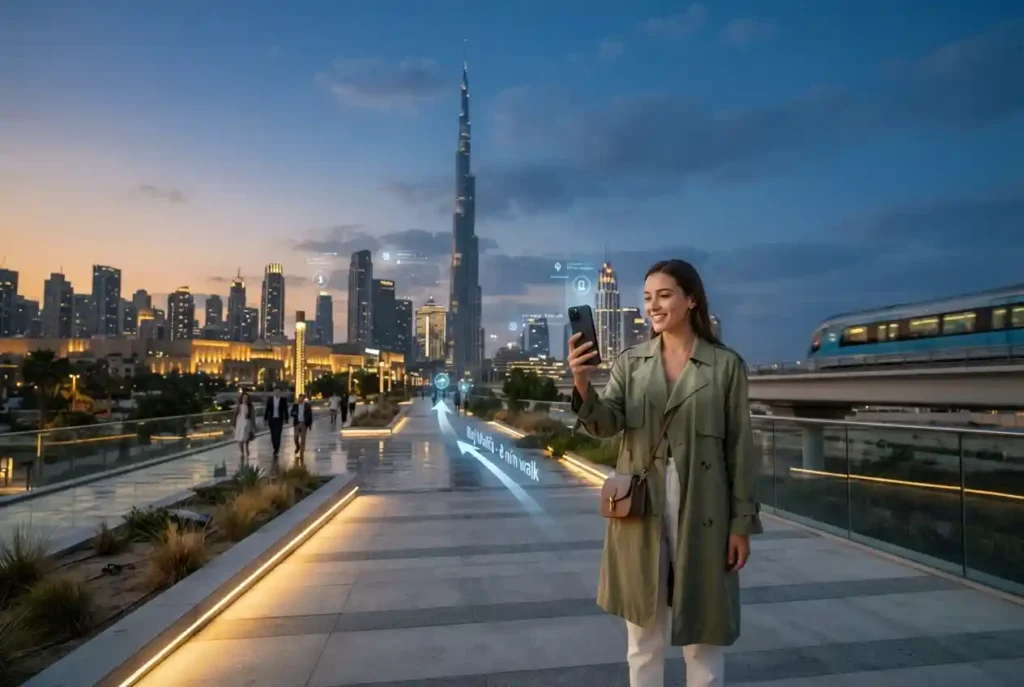
Augmented reality tourism adds digital information or visual experiences to the physical world. Using a smartphone or compatible device, travelers can potentially view additional information about landmarks, attractions, objects, or locations while exploring them.
AR can make sightseeing more interactive because it connects digital storytelling with physical destinations. Instead of simply reading information on a sign, visitors can experience additional visual content, historical context, navigation guidance, or interactive elements.
Dubai has previously used augmented reality as part of destination marketing. In 2020, Dubai Tourism partnered with Snapchat on an AR campaign designed to give potential travelers in France and the UK an immersive way to experience Dubai virtually. This demonstrated how augmented reality can be used not only after visitors arrive but also during the inspiration stage of the travel journey.
AR for Tourism Marketing
AR for tourism can be particularly valuable because travel decisions are strongly influenced by visual inspiration. Travelers want to understand what a destination looks and feels like before committing time and money to a trip.
Augmented reality can help tourism marketers move beyond conventional photographs and videos by allowing prospective visitors to interact with destination content.
For example, a tourism campaign could use AR to preview a landmark, recreate a historical environment, provide an interactive city experience, or allow travelers to explore a destination virtually from another country.
This creates opportunities for tourism brands to make destination marketing more engaging while collecting useful information about how audiences interact with digital experiences.
Virtual Experiences Before the Trip
Smart tourism increasingly begins before the traveler reaches the destination. Virtual experiences can help visitors preview attractions, understand neighborhoods, explore potential activities, and make better itinerary decisions.
This can be particularly useful for international visitors who have limited time in Dubai. A virtual preview can help them decide which attractions deserve priority and how different activities might fit together geographically.
Virtual experiences can also help travelers with accessibility requirements by providing additional information about an attraction before they visit in person.
Smart Hotels in Dubai
Hotels are another important part of smart tourism. Digital check-in, mobile communication, automated services, connected rooms, digital payments, and personalized guest services can reduce friction throughout a stay.
In December 2025, Dubai announced the citywide introduction of a contactless hotel guest check-in solution. The system allows participating hotels and holiday homes to integrate a process in which guests complete identification and biometric requirements before arrival, reducing or eliminating traditional front-desk check-in procedures.
This type of technology illustrates the broader direction of smart hospitality. Instead of requiring guests to complete every administrative step at reception, hotels can move some processes to digital platforms before arrival.
Smart Tourism and Transportation
Transportation is a major part of the visitor experience. Even an excellent attraction can become difficult to enjoy if visitors struggle to understand how to reach it or how long the journey will take.
Digital navigation, journey-planning tools, real-time information, mobile payments, and connected transportation services can make movement around a destination easier.
Dubai’s official tourism platform provides visitors with information about getting around the city, including public transportation options such as the metro, buses, and taxis. Digital tools can help travelers connect this information with their broader itinerary.
For smart tourism, the objective is not simply to provide more transportation technology. The goal is to make the entire visitor journey more predictable and convenient.
Smart Tourism and Sustainable Tourism
Technology and sustainability can work together. Smart systems can help tourism businesses monitor energy consumption, water use, waste, transportation, and other operational factors.
Dubai’s tourism authority operates a Dubai Sustainable Tourism programme focused on improving sustainability across the tourism sector. The initiative includes tools that help hotels understand their environmental performance and identify opportunities to improve efficiency.
Technology can therefore support sustainable tourism by turning environmental performance into measurable information. Hotels can use data to identify inefficient systems, track progress, and make informed operational decisions.
How Smart Tourism Can Improve Sustainability
Smart tourism can contribute to sustainability in several ways. Digital tickets can reduce reliance on physical materials, intelligent transportation systems can improve mobility, and data analytics can help businesses match resources with demand.
Hotels can use connected systems to manage lighting, cooling, water consumption, and other building functions. Tourism authorities can also analyze visitor flows to understand how destinations and attractions are being used.
However, technology itself is not automatically sustainable. Digital systems require energy, infrastructure, hardware, and data management. Smart tourism should therefore focus on measurable improvements rather than simply adding technology for its own sake.
Personalization and the Future of Travel
Travelers increasingly expect experiences that match their individual interests. A technology-focused visitor may want innovation attractions, while a family may prioritize entertainment and child-friendly activities. A food enthusiast may want restaurant recommendations, whereas a history enthusiast may prefer cultural sites.
Smart tourism platforms can use preferences and behavior to make recommendations more relevant.
This can also benefit businesses. More relevant recommendations may increase the likelihood that visitors discover attractions, restaurants, experiences, or events that match their interests.
Smart Tourism and Accessibility
Technology can also support more accessible tourism. Digital information can help travelers understand facilities before visiting, while mobile applications can provide navigation, visual information, communication support, and customized travel planning.
Accessibility should be considered as part of smart tourism design rather than treated as a separate issue. A genuinely smart destination should aim to make information and experiences easier to access for different types of visitors.
Dubai has continued developing accessibility within its tourism sector, including training and initiatives designed to improve experiences for People of Determination.
Benefits for Tourism Businesses
Smart tourism is not only beneficial for visitors. Tourism businesses can gain operational and commercial advantages from connected technology.
- Better understanding of customer preferences
- More efficient booking and reservation processes
- Faster customer communication
- Improved operational planning
- More personalized marketing
- Better resource management
- Greater visibility into business performance
For hotels, restaurants, attractions, travel companies, and tour operators, these capabilities can improve both customer service and operational decision-making.
Challenges of Smart Tourism
Smart tourism also creates challenges. The first is privacy. Tourism businesses collect increasing amounts of customer information, including booking data, preferences, location information, and, in some systems, biometric information.
Businesses must therefore handle personal data responsibly and maintain appropriate security practices.
Another challenge is digital inclusion. Not every traveler wants to rely exclusively on smartphones or digital applications. Visitors may have limited connectivity, different levels of digital literacy, or personal preferences that favor human assistance.
The best smart tourism systems should therefore complement traditional service rather than eliminate useful human support.
The Human Side of Smart Tourism
Technology can make travel faster and easier, but hospitality remains a human industry. A digital check-in system may save time, but travelers may still need a knowledgeable employee when something goes wrong.
Similarly, an AI itinerary can suggest attractions, but a local tourism professional may provide cultural context or practical advice that an automated system cannot fully reproduce.
Smart tourism should therefore be viewed as a combination of technology and human expertise. The strongest destination experiences use technology to remove unnecessary friction while preserving meaningful human interaction.
Smart Tourism Dubai and the Wider Tourism Industry
Smart tourism is closely connected with other developments across the tourism industry. Hotels, attractions, transportation companies, travel agencies, restaurants, events, and destination authorities all contribute data and services to the visitor journey.
This interconnected ecosystem means that improvements in one area can influence another. Better transportation information can improve attraction visits, while better hotel technology can make the overall stay more convenient.
Tourism management therefore increasingly requires an understanding of technology, customer experience, sustainability, marketing, and operational coordination.
What Travelers Can Expect in the Future
The future of smart tourism Dubai is likely to involve increasingly personalized and seamless experiences. Visitors may interact with destinations through AI assistants, immersive previews, digital identities, mobile applications, intelligent transportation, smart hotels, and connected attractions.
Travel planning may become less about searching for individual services and more about receiving an integrated experience tailored to the traveler’s needs.
At the same time, privacy, accessibility, cybersecurity, sustainability, and human service will remain important considerations. Technology will only create lasting value when it solves genuine problems for travelers and tourism businesses.
To Sum Up
Smart tourism Dubai represents the growing integration of technology into destination management and the visitor experience. Artificial intelligence, augmented reality, digital applications, virtual experiences, contactless hospitality, connected transportation, and sustainability tools are all contributing to a more digitally enabled tourism ecosystem.
The most important point is that smart tourism is not simply about using advanced technology. Its real value lies in making travel more convenient, personalized, accessible, efficient, and responsible.
Dubai’s continued investment in digital tourism tools demonstrates how technology can support a destination at every stage of the visitor journey, from inspiration and planning to arrival, sightseeing, accommodation, and departure.
As technology continues to evolve, smart tourism will likely become an increasingly important part of how Dubai competes as a global destination while balancing innovation with sustainability and high-quality human hospitality.