
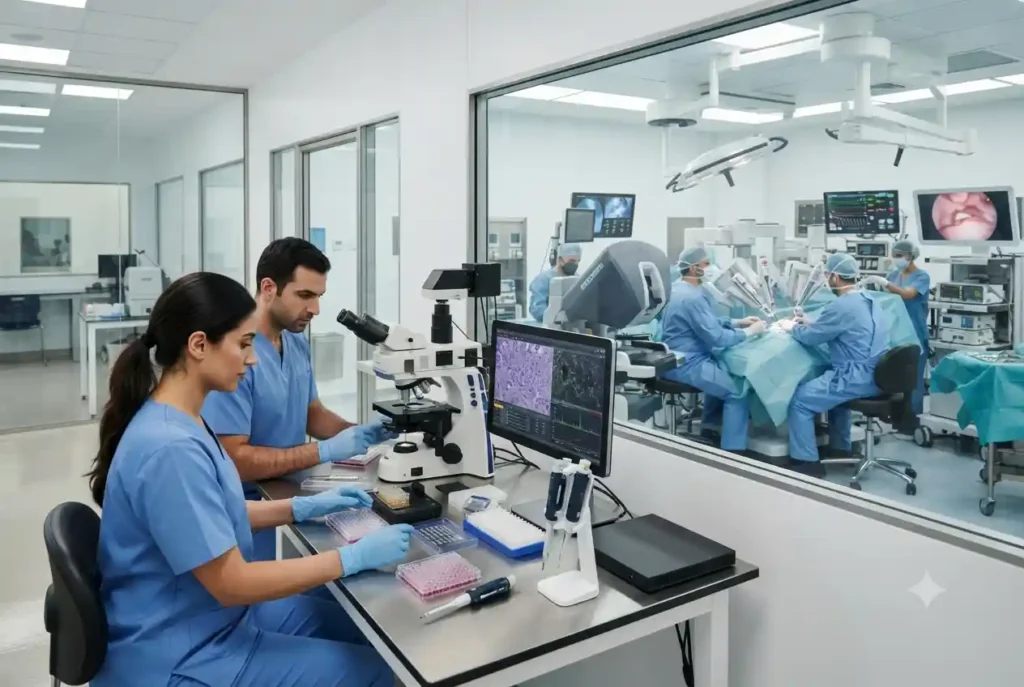
Medical technology has become one of the most important pillars of modern healthcare. From advanced diagnostic equipment to robotic surgeries and digital patient monitoring, medical technology continues to improve the quality of care while helping healthcare professionals make faster and more accurate decisions. In the UAE, continuous investment in healthcare infrastructure and innovation has created a growing demand for skilled medical technologists and advanced medical systems.
Whether you’re considering a healthcare career, exploring academic programs, or simply interested in the latest medical innovations, understanding medical technology provides valuable insight into one of the world’s fastest-growing industries.
What Is Medical Technology?
Medical technology refers to the use of scientific knowledge, laboratory techniques, medical equipment, software, and diagnostic tools to prevent, diagnose, monitor, and treat diseases. Medical technologists work alongside physicians, nurses, and specialists to provide accurate laboratory results and technical support for patient care.
The field combines healthcare, biology, chemistry, engineering, and information technology to improve medical outcomes.
Importance of Medical Technology in the UAE
The UAE has positioned itself as a regional healthcare hub by investing in modern hospitals, smart healthcare systems, and digital medical services. Government initiatives continue to encourage the adoption of artificial intelligence, robotics, electronic medical records, and precision medicine.
Hospitals now rely on sophisticated laboratory equipment, imaging systems, and automated diagnostic technologies that allow healthcare professionals to detect diseases earlier and provide more personalized treatment.
Technology is also transforming healthcare management through cloud-based platforms. Businesses interested in digital infrastructure can learn more about cloud technology and its growing role across critical industries.
Bachelor of Science in Medical Technology
A bachelor of science in medical technology prepares students for careers in clinical laboratories, hospitals, research centers, and diagnostic facilities. The program combines theoretical knowledge with practical laboratory training.
Students typically study subjects including:
- Human Anatomy
- Clinical Chemistry
- Microbiology
- Hematology
- Immunology
- Molecular Diagnostics
- Pathology
- Laboratory Quality Management
Graduates develop the technical skills required to operate sophisticated laboratory equipment while ensuring accurate diagnostic testing.
BSc Medical Lab Technology
A BSc Medical Lab Technology degree focuses specifically on laboratory science. Medical laboratory technologists perform diagnostic tests that help physicians identify infections, blood disorders, hormonal imbalances, and many other medical conditions.
Their work supports nearly every medical specialty, making laboratory professionals an essential part of the healthcare system.
Cardiac Technology
Cardiac technology specializes in diagnosing and monitoring heart-related conditions. A Cardiac technologists work with cardiologists to perform procedures such as:
- Electrocardiograms (ECG)
- Stress testing
- Echocardiography
- Holter monitoring
- Cardiac catheterization support
As cardiovascular diseases remain one of the leading health concerns worldwide, qualified cardiac technologists continue to be in high demand.
Perfusion Technology
Perfusion technology is a specialized healthcare field involving the operation of heart-lung machines during cardiac surgery. Perfusionists temporarily take over the functions of the patient’s heart and lungs, allowing surgeons to perform complex procedures safely.
The role requires advanced technical knowledge, precision, and close collaboration with cardiac surgeons and anesthesiologists.
B Sc Perfusion Technology
A B Sc Perfusion Technology program prepares students to become certified perfusionists. Coursework includes anatomy, physiology, cardiovascular science, pharmacology, critical care, and clinical training.
Graduates often find employment in specialized cardiac hospitals, transplant centers, and advanced surgical facilities.
BSc Cardiovascular Technology
The BSc Cardiovascular Technology degree focuses on diagnostic imaging, cardiovascular testing, and patient monitoring. Students gain expertise in operating advanced cardiac equipment while learning how to assist physicians during diagnostic procedures.
This specialization continues to grow as hospitals expand cardiovascular services and adopt newer diagnostic technologies.
Career Opportunities in Medical Technology
The healthcare industry offers a wide range of rewarding career paths for graduates in medical technology and related disciplines.
- Medical Laboratory Technologist
- Clinical Laboratory Scientist
- Cardiac Technologist
- Perfusionist
- Diagnostic Specialist
- Clinical Research Associate
- Laboratory Manager
- Healthcare Quality Officer
- Biomedical Equipment Specialist
Healthcare professionals with advanced technical skills remain highly valued in both public and private healthcare institutions across the UAE.
Technologies Shaping Modern Healthcare
Medical technology continues evolving through innovations such as:
- Artificial Intelligence for diagnosis
- Robotic-assisted surgery
- Telemedicine platforms
- Electronic Health Records
- 3D medical imaging
- Wearable health devices
- Digital pathology
- Automated laboratory systems
These technologies improve diagnostic accuracy, reduce treatment times, and enhance the overall patient experience.
Organizations developing healthcare software also rely on modern web application technologies to securely manage patient information and hospital operations.
Future of Medical Technology in the UAE
The UAE continues investing in smart hospitals, digital healthcare infrastructure, and medical research. Artificial intelligence, personalized medicine, remote patient monitoring, and robotic surgery are expected to become increasingly common over the coming years.
Healthcare professionals who combine medical knowledge with technical expertise will remain essential as hospitals adopt more advanced diagnostic systems and digital healthcare solutions.
According to the World Health Organization (WHO), digital health technologies have significant potential to improve healthcare access, quality, and patient outcomes worldwide.
Key Takeaways
Medical technology continues transforming healthcare by making diagnosis faster, treatments more effective, and patient care more personalized. Programs such as the bachelor of science in medical technology, BSc Medical Lab Technology, cardiac technology, perfusion technology, and BSc Cardiovascular Technology prepare professionals for rewarding careers in this rapidly evolving field.
As the UAE strengthens its position as a regional leader in healthcare innovation, medical technology professionals will play a vital role in delivering safer, smarter, and more efficient healthcare services for future generations.