
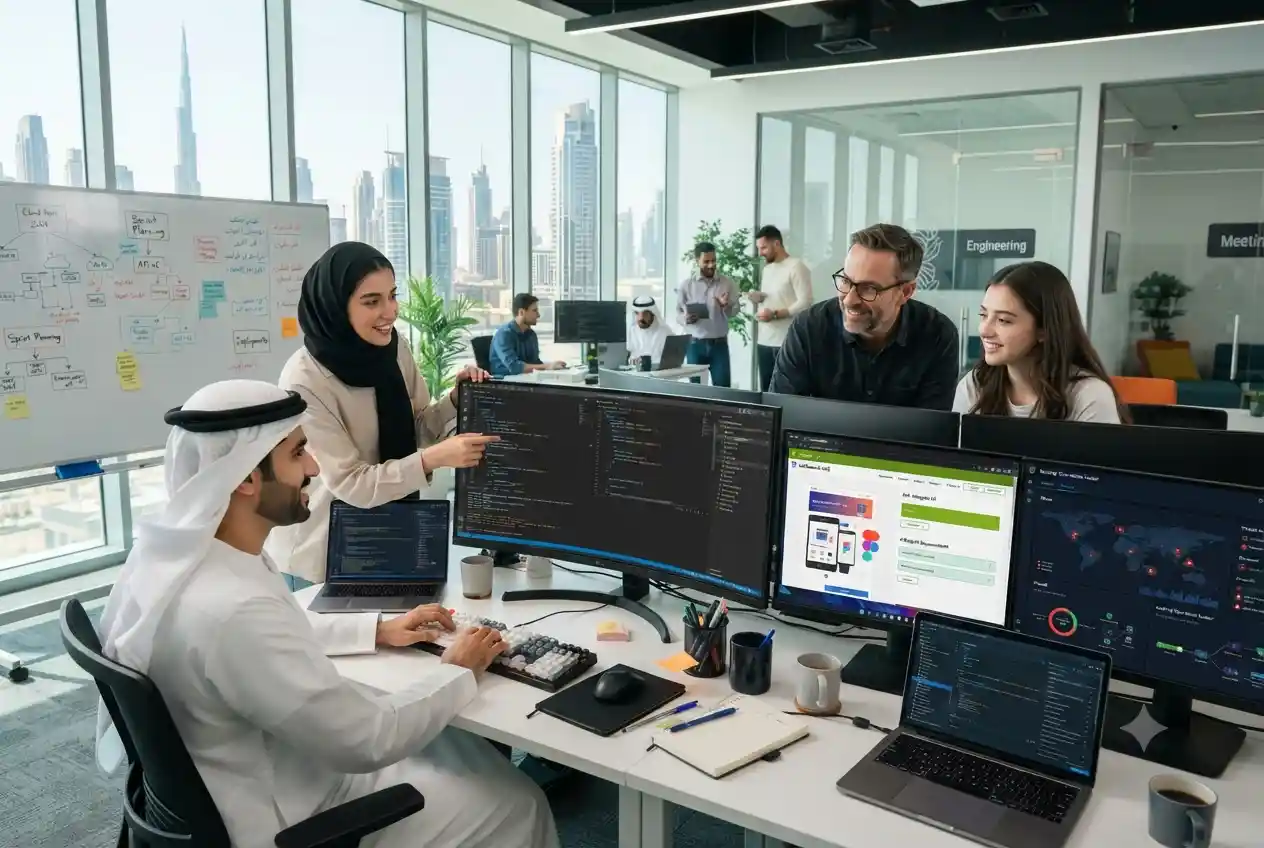
Web application technologies have transformed how businesses deliver services, manage operations, and engage customers online. From e-commerce platforms and banking portals to healthcare systems and business management software, web applications power many of the digital services people use every day. In the UAE, organizations across industries are investing in modern web technologies to improve efficiency, enhance customer experiences, and support digital transformation.
Unlike traditional websites, web applications provide interactive features that allow users to perform tasks, access personalized information, collaborate online, and manage business processes through a web browser.
What Are Web Application Technologies?
Web application technologies are the programming languages, frameworks, databases, servers, and development tools used to build interactive web-based applications. These technologies enable users to log in, submit forms, process transactions, manage accounts, and interact with dynamic content without installing desktop software.
Modern web applications operate across desktops, tablets, and smartphones, making them accessible from virtually anywhere with an internet connection.
Why Web Applications Matter
Businesses increasingly rely on web applications because they improve accessibility, scalability, and collaboration. Cloud-based business software allows employees and customers to access services securely from different locations while reducing infrastructure costs.
Organizations adopting digital transformation strategies often combine web applications with cloud technology to achieve greater flexibility, reliability, and performance.
Core Components of Web Application Development
Front-End Technologies
The front end is the part of a web application users interact with directly. It focuses on layout, design, responsiveness, and user experience.
- HTML5
- CSS3
- JavaScript
- React
- Angular
- Vue.js
These technologies create responsive interfaces that function smoothly across different devices.
Back-End Technologies
The back end handles business logic, databases, authentication, and server-side operations.
- PHP
- Python
- Node.js
- Java
- .NET
- Ruby on Rails
Back-end technologies ensure secure data processing and communication between users and databases.
Databases
Web applications require reliable databases to store and manage information.
- MySQL
- PostgreSQL
- MongoDB
- Microsoft SQL Server
- Oracle Database
Choosing the right database depends on application size, performance requirements, and scalability needs.
Benefits of Modern Web Application Technologies
Organizations benefit from web applications in several ways:
- Access from any internet-connected device
- Automatic software updates
- Lower maintenance costs
- Improved collaboration
- Centralized data management
- Enhanced scalability
- Better customer engagement
- Secure remote access
These advantages make web applications suitable for startups, enterprises, educational institutions, healthcare providers, and government organizations.
Connecting Technology Across Business Systems
Connecting technology is an essential part of modern web application development. Businesses often integrate websites, payment gateways, customer relationship management (CRM) systems, enterprise resource planning (ERP) software, inventory platforms, and cloud services into a unified digital ecosystem.
These integrations reduce manual work, improve data accuracy, and create seamless customer experiences across multiple digital channels.
Security in Web Applications
As businesses handle increasing amounts of sensitive information, security remains one of the highest priorities in web development. Developers implement several measures to protect applications and users.
- SSL encryption
- Multi-factor authentication
- Secure coding practices
- Role-based access control
- Regular security updates
- Data encryption
Strong cybersecurity practices help protect business operations while maintaining customer trust.
Applications Across Industries
Web application technologies support digital transformation in numerous industries, including:
- E-commerce
- Healthcare
- Education
- Banking and finance
- Real estate
- Logistics
- Manufacturing
- Government services
Businesses also depend on information and communication technology to maintain secure digital infrastructure and reliable online communication.
Emerging Trends in Web Development
The web development landscape continues evolving with innovations designed to improve speed, user experience, and scalability.
- Artificial Intelligence integration
- Progressive Web Apps (PWAs)
- Serverless architecture
- Low-code development
- API-first design
- Voice-enabled applications
- Machine learning integration
- Advanced cybersecurity solutions
Organizations adopting these technologies can build faster, smarter, and more reliable digital platforms.
The Future of Web Application Technologies in the UAE
The UAE’s digital economy continues expanding through investments in smart government services, fintech, healthcare, logistics, and e-commerce. Modern web applications will remain essential for delivering secure, scalable, and user-friendly digital services.
Companies investing in modern development frameworks and cloud-based infrastructure will be well positioned to meet growing customer expectations while supporting long-term business growth.
For best practices in modern web standards and accessibility, developers can refer to resources published by the World Wide Web Consortium (W3C).
Overall Verdict
Web application technologies form the foundation of today’s digital economy by enabling businesses to deliver secure, interactive, and scalable online services. From front-end frameworks and back-end development to cloud integration and cybersecurity, modern technologies continue driving innovation across industries.
As digital transformation accelerates throughout the UAE, organizations that embrace advanced web application development will be better equipped to improve customer experiences, streamline operations, and remain competitive in an increasingly connected world.