Bosnia tourism offers an unusually diverse experience for travelers looking for history, culture, dramatic landscapes, traditional food, and authentic European city life. Bosnia and Herzegovina sits in the heart of the Balkans, yet its character is distinct from many of the region’s better-known destinations. Ottoman influences, Austro-Hungarian architecture, mountain scenery, rivers, medieval towns, and Adriatic coastal landscapes all come together within a relatively compact country.
For many visitors, Sarajevo and Mostar are the natural starting points. Sarajevo introduces travelers to a fascinating blend of cultures and historical influences, while Mostar is famous for its Old Bridge and atmospheric old town. Beyond these two cities, Bosnia and Herzegovina offers waterfalls, national parks, mountain resorts, rivers, lakes, forests, historic towns, and smaller destinations that reward travelers willing to explore beyond the standard itinerary.
The country’s tourism authorities emphasize the importance of its natural and cultural heritage and aim to develop tourism products that can attract visitors throughout the year. :contentReference[oaicite:0]{index=0} This combination makes Bosnia suitable for both short city breaks and longer journeys through the Balkans.
Why Bosnia Tourism Is Worth Exploring
Bosnia tourism stands out because several different travel experiences can be combined in one trip. A visitor can begin with museums and historic neighborhoods in Sarajevo, continue to the mountain landscapes around the country, explore the streets of Mostar, and finish with waterfalls or riverside towns.
The country is particularly appealing to travelers who enjoy destinations with a strong sense of place. Sarajevo’s streets reflect layers of Ottoman, Austro-Hungarian, Yugoslav, and contemporary history. Mostar combines Ottoman-era architecture with Mediterranean influences, while rural areas reveal traditional villages, agricultural landscapes, forests, and mountain scenery.
Food is another important part of the experience. Bosnian cuisine includes grilled meats, filled pastries, soups, breads, cheeses, coffee traditions, and regional specialties. Eating at a local restaurant or traditional café can be as memorable as visiting a major landmark.
Sarajevo: The Cultural Heart of Bosnia
Sarajevo should be high on almost every first-time Bosnia itinerary. The capital is compact enough to explore on foot in many central areas, yet there is enough history and culture to justify several days.
Bascarsija is one of the city’s most recognizable areas. Its traditional streets, shops, cafés, craft stores, and historic buildings provide an introduction to Sarajevo’s Ottoman heritage. Visitors can walk through the old market area, enjoy Bosnian coffee, and continue toward landmarks that reflect other periods of the city’s history.
The city’s architecture is particularly interesting because different historical influences exist close to one another. Ottoman-era structures can be followed by Austro-Hungarian buildings, while modern Sarajevo adds another layer to the urban landscape.
Sarajevo also provides opportunities to explore museums and sites connected to the country’s more recent history. Travelers should approach these places thoughtfully, as the city’s past includes difficult and deeply significant events.
Mostar and the Famous Old Bridge
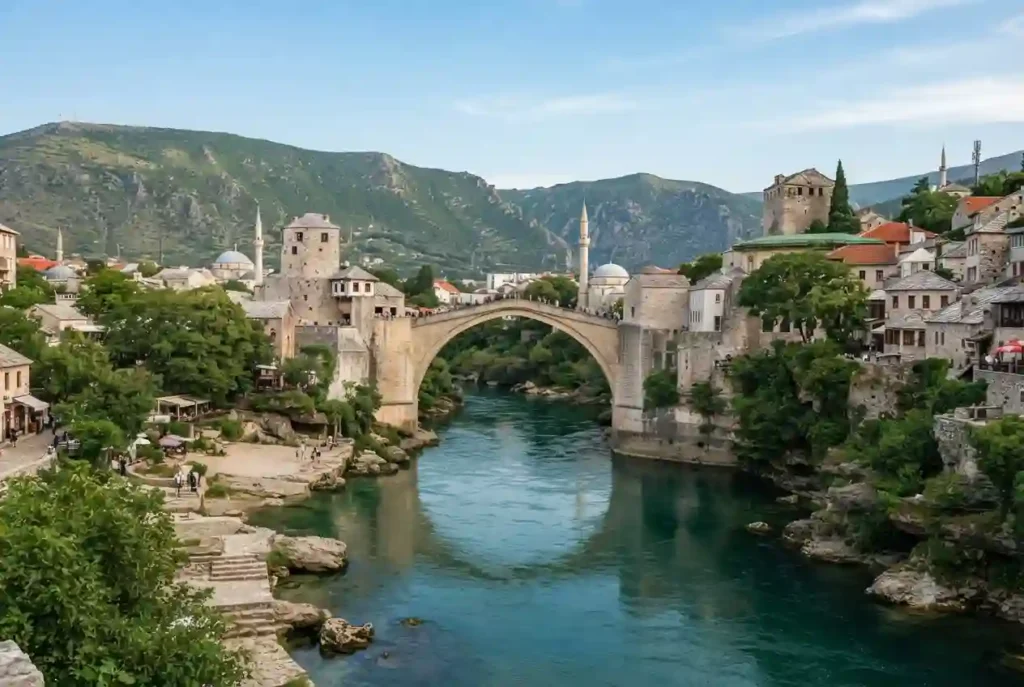
Mostar is one of the most recognizable destinations in Bosnia and Herzegovina. Its historic center is built around the Neretva River, with the famous Stari Most, or Old Bridge, forming the visual centerpiece.
The bridge and surrounding old town create an atmospheric setting for walking, photography, shopping, and dining. Stone streets, traditional buildings, small shops, cafés, and restaurants make the historic area particularly appealing when explored at a relaxed pace.
Mostar can be visited as a day trip from Sarajevo, but staying overnight allows travelers to experience the town after many day visitors have left. Early morning and evening can offer a calmer atmosphere for exploring the historic center.
Blagaj and the Buna River
Blagaj is another destination that fits naturally into a Herzegovina itinerary. Located near Mostar, it is known for its natural setting around the Buna River and the historic Dervish monastery, or Blagaj Tekija.
The combination of water, cliffs, historic architecture, and surrounding landscape makes Blagaj different from the urban atmosphere of Sarajevo and Mostar. It is an excellent addition for travelers who want to include both cultural and natural attractions in the same day.
Because of its proximity to Mostar, Blagaj can easily be incorporated into a regional road trip or guided excursion.
Kravica Waterfalls
Kravica Waterfalls are among the natural attractions that can add variety to a Bosnia tourism itinerary. The waterfalls are surrounded by greenery and create a striking landscape, particularly during periods when water levels are favorable.
The site is especially attractive during warmer weather, when visitors can combine sightseeing with time outdoors. Travelers should check local conditions before visiting, as water levels and access arrangements can change throughout the year.
Kravica also works well as part of a wider Herzegovina route that includes Mostar, Blagaj, and other regional attractions.
Jajce: History and Natural Scenery
Jajce is a historic town in central Bosnia and Herzegovina known for its combination of heritage and natural scenery. One of its most distinctive features is the waterfall located close to the historic town center.
The town’s fortress and old streets provide opportunities for travelers interested in medieval history and architecture, while the surrounding landscapes add a strong outdoor element to the visit.
Jajce can be particularly appealing for travelers who want to move beyond Sarajevo and Mostar without committing to a long journey into remote areas.
Una National Park and Outdoor Adventures
Una National Park is a strong choice for nature-focused travelers. The region is associated with clear rivers, waterfalls, forests, and outdoor activities.
The Una River provides opportunities for rafting and other water-based adventures, while the surrounding landscapes are suitable for travelers who prefer hiking, photography, and nature exploration.
Una National Park is located in the northwestern part of the country, so it requires more planning than destinations close to Sarajevo or Mostar. However, its landscapes can make the additional travel worthwhile for visitors building a longer Bosnia itinerary.
Travnik and Bosnia’s Historic Towns
Travnik offers another opportunity to experience Bosnia’s historic character. The town has an Ottoman architectural heritage and a prominent fortress overlooking the surrounding area.
Travelers interested in local history can combine a visit to Travnik with regional food experiences and a walk through the old town. Its smaller scale also makes it a useful contrast to Sarajevo.
Historic towns such as Travnik show why Bosnia tourism is not limited to its two internationally famous cities. Exploring smaller destinations can provide a deeper understanding of the country’s regional character.
Mountains and Outdoor Tourism in Bosnia
Bosnia and Herzegovina is a strong destination for travelers who enjoy mountains and outdoor activities. The country’s terrain includes peaks, forests, rivers, valleys, and areas suitable for hiking and winter sports.
Mountains around Sarajevo can be convenient for visitors who want to combine city sightseeing with outdoor activities. Bjelašnica and Jahorina are particularly associated with mountain recreation and winter sports, while other areas provide hiking opportunities during warmer months.
Outdoor travelers should plan according to the season and their experience level. Mountain weather can change quickly, and routes may require proper equipment, local knowledge, or a guide.
Bosnian Food and Café Culture
Food should be an important part of any Bosnia tourism itinerary. Cevapi is one of the country’s best-known dishes, consisting of small grilled meat portions commonly served with bread and accompaniments. Burek and other filled pastries are also deeply associated with Balkan food culture.
Bosnian coffee is another cultural experience worth taking time for. Rather than treating coffee as a quick stop between attractions, visitors can use cafés as places to slow down and observe everyday local life.
Regional dishes can vary, so travelers should try local specialties rather than limiting themselves to familiar international food. Markets, traditional restaurants, bakeries, and small cafés can all become part of the travel experience.
Best Time for Bosnia Tourism
The best time to visit Bosnia depends on the type of trip you want to take. Spring and autumn can be appealing for city sightseeing, cultural exploration, and comfortable outdoor activities. Summer is useful for travelers who want warmer weather and more opportunities to explore waterfalls, rivers, mountains, and outdoor attractions.
Winter offers a different experience, particularly for travelers interested in mountain resorts and snow-related activities. Sarajevo can also provide an appealing winter city break when combined with nearby mountain destinations.
Rather than selecting a travel month solely based on general weather expectations, consider the destinations included in your itinerary. Mountain conditions, river levels, outdoor access, and seasonal activities can vary across the country.
How Many Days Do You Need for Bosnia?
A long weekend can provide an introduction to Bosnia through Sarajevo and Mostar, but a longer trip allows the country’s regional diversity to become much more apparent.
With three to four days, travelers can focus on Sarajevo and Mostar with selected nearby excursions. A week provides more flexibility for adding destinations such as Blagaj, Kravica, Jajce, Travnik, or mountain areas.
Travelers with more than a week can consider a broader road trip that reaches northern or western Bosnia. This approach is particularly useful for nature lovers who want to visit national parks and less-visited landscapes.
Getting Around Bosnia and Herzegovina
Transport planning is an important part of a Bosnia trip because attractions are distributed across different regions. Sarajevo and Mostar are relatively straightforward to connect, while reaching smaller towns and natural attractions may require additional planning.
Public transport can be useful between major destinations, while a rental car provides greater flexibility for travelers who want to explore waterfalls, mountain areas, villages, and smaller historic towns.
For visitors who do not want to drive, organized day tours can be practical for destinations around Sarajevo and Mostar. When choosing transportation, consider not only distance but also the time required for mountain roads and regional routes.
Travel Tips for a Better Bosnia Experience
Allow extra time when traveling between destinations rather than planning every day around a tightly packed schedule. Bosnia’s landscapes are part of the attraction, and rushing from one landmark to another can reduce the enjoyment of the journey.
Comfortable walking shoes are useful because historic centers often contain cobbled streets, slopes, and uneven surfaces. Travelers planning hikes should bring appropriate clothing and equipment for changing weather.
It is also worth learning a few simple local expressions and respecting local customs, particularly when visiting religious and historic sites. Bosnia and Herzegovina has a diverse cultural and religious heritage, and thoughtful travelers should dress and behave appropriately at places of worship.
For official information about tourism regulations and related matters, travelers can also consult the Bosnia and Herzegovina tourism information from the Federal Ministry, which provides government information related to the tourism sector. :contentReference[oaicite:1]{index=1}
Bosnia Tourism for Different Types of Travelers
Bosnia can appeal to a wide range of visitors. History enthusiasts can focus on Sarajevo, Mostar, Travnik, Jajce, and museums. Nature lovers can prioritize Una National Park, mountains, waterfalls, rivers, and hiking areas.
Couples may prefer a combination of Sarajevo’s restaurants and cafés with scenic destinations around Mostar and Herzegovina. Families can choose a balanced itinerary featuring historic towns, waterfalls, nature, and manageable outdoor activities.
Adventure travelers can build trips around rafting, hiking, skiing, and mountain exploration, while food-focused visitors can use regional restaurants, bakeries, markets, and cafés as an important part of the itinerary.
Combining Bosnia With a Wider Balkan Trip
Bosnia and Herzegovina can also fit naturally into a broader Balkan itinerary. Travelers with additional time may consider combining it with neighboring destinations rather than treating the country as an isolated stop.
For example, visitors researching Serbia tourism can compare the two countries when planning a Balkan route. Serbia offers a different combination of cities, culture, nightlife, and landscapes, while Bosnia provides a particularly strong mix of Ottoman heritage, mountain scenery, rivers, and historic towns.
The advantage of combining destinations is that travelers can experience contrasting regional cultures without having to travel far across Europe.
Final Thoughts on Bosnia Tourism
Bosnia tourism rewards travelers who look beyond a simple checklist of famous attractions. Sarajevo and Mostar deserve their popularity, but the country’s real character becomes clearer when visitors add smaller towns, mountain landscapes, rivers, waterfalls, and local food experiences to their itinerary.
The destination can work for a short city break, a cultural journey, an outdoor adventure, or a longer Balkan road trip. Its compact geography makes it possible to combine several different experiences, although travelers should still allow enough time for transportation between regions.
For first-time visitors, starting with Sarajevo and Mostar provides a strong introduction. From there, destinations such as Blagaj, Kravica, Jajce, Travnik, Una National Park, and the surrounding mountains can add depth and variety.
Ultimately, the appeal of Bosnia and Herzegovina lies in its contrasts: historic cities beside dramatic landscapes, traditional food alongside modern cafés, mountain destinations within reach of urban centers, and a cultural heritage shaped by different civilizations over centuries. That combination makes Bosnia tourism an increasingly interesting choice for travelers seeking a meaningful Balkan experience.