Serbia tourism offers a compelling mix of historic cities, lively cultural scenes, mountain landscapes, rivers, national parks, traditional food, and distinctive Balkan hospitality. Located in southeastern Europe, Serbia can work equally well for travelers interested in city breaks, outdoor adventures, cultural exploration, food experiences, or a longer road trip through the Balkans.
Belgrade is usually the first destination for international visitors, but Serbia extends well beyond its capital. Novi Sad provides a slower-paced cultural experience along the Danube, while destinations such as Zlatibor, Tara, Uvac, Kopaonik, Niš, and Fruška Gora introduce travelers to the country’s natural and regional diversity.
The National Tourism Organisation of Serbia presents destinations ranging from major cities and mountain resorts to national parks, spas, wine regions, rivers, and rural communities. Its official destination resources can be useful when building an itinerary around particular interests. Explore Serbia’s official tourism information before finalizing your route.
Why Serbia Tourism Is Worth Exploring
Serbia is particularly interesting for travelers who want to experience a European destination without limiting their trip to traditional sightseeing. The country combines layers of Roman, medieval, Ottoman, Austro-Hungarian, and modern history with a strong contemporary cultural identity.
Its capital is known for an active restaurant and nightlife scene, while smaller cities offer historic architecture, riverside settings, local markets, festivals, and regional cuisine. Outside the urban centers, mountains, forests, gorges, caves, lakes, and national parks provide opportunities for hiking, skiing, cycling, rafting, and photography.
This variety makes Serbia suitable for different travel styles. A short visit can focus on Belgrade and Novi Sad, while a longer trip can connect the country’s cities with mountain and nature destinations.
Belgrade: The Main Starting Point for Serbia Tourism
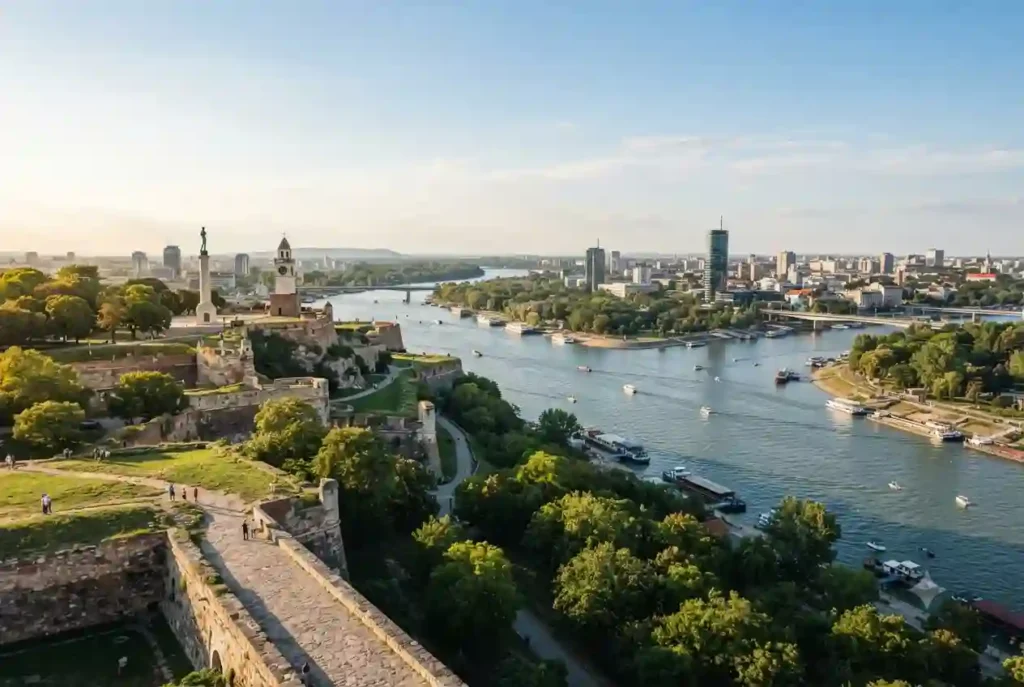
Belgrade is the natural starting point for many Serbia tourism itineraries. The capital sits at the meeting point of the Sava and Danube rivers and offers a combination of historic landmarks, contemporary neighborhoods, restaurants, cafés, museums, parks, and nightlife.
Belgrade Fortress is one of the city’s major attractions. Its elevated position provides views across the rivers and surrounding city, while the wider fortress area offers space for walking and exploring historical structures.
Knez Mihailova Street is another important part of the central sightseeing experience. The pedestrian area connects visitors with shops, cafés, historic buildings, and nearby cultural attractions.
St. Sava Temple is also worth including for travelers interested in architecture and religious heritage. The enormous structure has become one of Belgrade’s most recognizable landmarks.
Travelers who enjoy evening entertainment will find plenty of options in Belgrade. Restaurants, bars, cafés, music venues, and riverside establishments contribute to the city’s energetic atmosphere, making it possible to combine daytime sightseeing with an active evening.
Novi Sad: A Relaxed Cultural Destination
Novi Sad offers a noticeably different atmosphere from Belgrade. The city is the capital of Serbia’s northern Vojvodina province and sits along the Danube. The National Tourism Organisation describes it as a relaxed city where visitors can enjoy the riverfront, historic streets, nearby Fruška Gora, and regional food experiences. :contentReference[oaicite:0]{index=0}
Petrovaradin Fortress is one of Novi Sad’s most important attractions. The fortress overlooks the Danube and provides excellent views across the city and surrounding landscape.
The city center is well suited to walking, with pedestrian streets, cafés, restaurants, cultural institutions, and historic architecture. Novi Sad’s cultural identity is also reflected in institutions such as Matica Srpska and the Serbian National Theatre. :contentReference[oaicite:1]{index=1}
For travelers who prefer a slower pace, Novi Sad can be one of the most enjoyable stops on a Serbia itinerary. Its location also makes it convenient to combine with Fruška Gora and nearby wine-producing areas.
Zlatibor: Mountains, Nature and Outdoor Activities
Zlatibor is one of Serbia’s best-known mountain destinations and offers a combination of outdoor recreation, traditional villages, scenic landscapes, accommodation, and regional food.
The destination can appeal in both summer and winter. During warmer months, travelers can explore hiking and cycling routes, while winter brings opportunities for snow-based activities.
One of Zlatibor’s notable attractions is its panoramic gondola, which crosses the landscape toward Tornik. The official tourism organization describes the route as nine kilometers long and highlights the views across the surrounding hills and Ribnica Lake. :contentReference[oaicite:2]{index=2}
Travelers interested in traditional culture can also visit Sirogojno’s open-air museum, while Stopića Cave and Gostilje Waterfall provide additional nature-focused excursions.
Tara National Park and the Drina Landscape
Tara is a strong choice for travelers who want forests, mountain scenery, viewpoints, and outdoor activities. The mountain lies in western Serbia around the Drina River canyon and forms part of a protected natural environment.
The National Tourism Organisation highlights Tara’s forests, the Drina canyon, lakes, and diverse plant and animal life. The area is also associated with Pančić’s spruce, a distinctive tree species named after Serbian botanist Josif Pančić. :contentReference[oaicite:3]{index=3}
Hiking and scenic exploration are among the main reasons to visit Tara. Travelers can also combine the area with nearby destinations such as Mokra Gora and Zlatibor, creating a broader western Serbia itinerary.
Uvac River Gorge
Uvac is one of Serbia’s most visually distinctive natural destinations. The river forms dramatic meanders between the Zlatar and Zlatibor mountains, creating viewpoints that are particularly attractive to photographers and nature enthusiasts.
The official tourism organization notes that visitors can experience the gorge by boat or kayak, while viewpoints above the river provide impressive perspectives of the winding waterway. The surrounding cliffs are also home to protected bird species. :contentReference[oaicite:4]{index=4}
Uvac is best suited to travelers willing to spend time outside the country’s main cities. It can be incorporated into a western or southwestern Serbia road trip alongside Zlatibor and other mountain destinations.
Kopaonik: Serbia’s Mountain Resort
Kopaonik is another major mountain destination and is particularly relevant to travelers interested in winter sports. The mountain also offers opportunities for outdoor activities during warmer months.
Hiking, mountain scenery, fresh air, and resort facilities make Kopaonik suitable for travelers who want a combination of recreation and comfortable accommodation. The destination can be especially attractive during winter, when visitors come for skiing and other snow-based activities.
Because Kopaonik is farther from Belgrade than some of the country’s other attractions, it works better as a dedicated mountain stop rather than a rushed day trip.
Fruška Gora and the Vojvodina Region
Fruška Gora provides an easy opportunity to escape the urban environment around Novi Sad. The national park is known for forests, walking routes, viewpoints, monasteries, and surrounding rural landscapes.
The area is also connected with wine tourism and traditional food. Visitors can combine nature walks with visits to local wineries or villages, creating a more relaxed day outside Novi Sad.
Its proximity to the city makes Fruška Gora particularly convenient for travelers who want nature without adding a major detour to their itinerary.
Niš: History in Southern Serbia
Niš offers a different perspective on Serbia and is an important destination for travelers exploring the country’s south. The city has a long history and is associated with the Roman period, including Emperor Constantine the Great.
Niš Fortress is one of the city’s most recognizable historic sites. The fortress area provides an opportunity to explore the city’s layered history while also serving as a pleasant place to walk.
Niš is also known for its food culture. Travelers should take the opportunity to try southern Serbian specialties and explore local restaurants rather than limiting themselves to international dining.
Serbia’s National Parks and Natural Landscapes
Nature is an important part of Serbia tourism. The country’s protected areas include mountains, forests, gorges, lakes, rivers, and diverse wildlife habitats.
The National Tourism Organisation identifies national parks including Fruška Gora, Đerdap, Tara, Kopaonik, and Šar Mountain. Each offers a different landscape and set of outdoor opportunities. :contentReference[oaicite:5]{index=5}
Đerdap National Park is particularly notable for its location along the Danube and the dramatic Iron Gate gorge. Tara provides forested mountain landscapes, while Fruška Gora is convenient for visitors based around Novi Sad.
Travelers interested in nature should choose parks according to the season and the activities they want to undertake. Hiking routes, weather conditions, road access, and local regulations can vary considerably.
Serbian Food and Wine Experiences
Food can add significant depth to a Serbia trip. Traditional Serbian cuisine includes grilled meats, breads, stews, cheeses, pastries, vegetables, and regional specialties influenced by the country’s diverse history.
Ćevapi and pljeskavica are popular choices for travelers who want to experience grilled meat dishes, while dishes such as sarma, prebranac, and various baked pastries showcase different aspects of local cuisine.
Wine is also becoming an increasingly interesting part of the country’s tourism landscape. Serbia has indigenous grape varieties as well as internationally recognized varieties, and wine regions can be incorporated into trips around Vojvodina and other parts of the country.
For travelers who enjoy food tourism, small restaurants, local markets, traditional households, and regional wineries can provide a more authentic experience than relying exclusively on tourist-oriented restaurants.
Best Time for Serbia Tourism
The best time to visit Serbia depends on your preferred activities. Spring and autumn can be comfortable for city sightseeing, cultural trips, road journeys, and outdoor exploration. Summer is useful for travelers who want longer daylight hours, festivals, outdoor dining, and time in nature.
Winter is particularly relevant to travelers planning mountain holidays. Kopaonik and Zlatibor can offer snow-based experiences, while Belgrade and Novi Sad remain suitable for city-focused trips.
Because Serbia includes both lowland cities and mountain regions, conditions can differ significantly between destinations. Travelers planning outdoor activities should check local weather and access information before setting out.
How Many Days Do You Need in Serbia?
A three-day trip can provide a useful introduction to Belgrade, particularly for visitors interested in architecture, food, history, and nightlife. Adding Novi Sad generally works better with at least another day.
For a week-long journey, travelers can combine Belgrade and Novi Sad with one or two natural destinations such as Zlatibor, Tara, or Fruška Gora.
A longer itinerary allows travelers to explore southern and western Serbia, including Niš, Uvac, Kopaonik, or additional mountain and cultural destinations. Road trips are especially useful for travelers who want to discover smaller towns and rural landscapes.
Getting Around Serbia
Belgrade serves as the country’s main transportation hub, and travelers can reach many major destinations by road or rail. Serbia’s official tourism resources also highlight train travel as a convenient option for exploring different parts of the country. :contentReference[oaicite:6]{index=6}
For travelers focused on major cities, public transportation and organized tours can be sufficient. A rental car becomes more useful when the itinerary includes remote viewpoints, national parks, mountain villages, waterfalls, or several rural destinations.
When planning a road trip, avoid packing too many stops into a single day. The journey itself can be part of the experience, particularly when traveling through mountain and countryside regions.
Serbia Tourism for Different Types of Travelers
Serbia can suit a wide range of travel preferences. Couples may enjoy Belgrade’s restaurants and nightlife before moving into quieter mountain destinations. Families can combine city attractions with nature parks, scenic areas, and family-friendly outdoor activities.
Adventure travelers can focus on hiking, skiing, rafting, cycling, and mountain exploration. History enthusiasts can explore Belgrade, Novi Sad, Niš, monasteries, fortresses, and archaeological sites.
Food-focused travelers can create itineraries around traditional restaurants, local markets, wine regions, and regional specialties. This flexibility is one of the strongest reasons to consider Serbia for a Balkan holiday.
Combining Serbia With Other Balkan Destinations
Serbia can work particularly well as part of a wider Balkan itinerary. Its central position in the region makes it possible to connect the country with neighboring destinations while experiencing different landscapes and cultural traditions.
Travelers researching Bosnia tourism, for example, can compare the two destinations when planning a broader Balkan journey. Bosnia and Herzegovina offers its own distinctive combination of historic towns, mountains, rivers, and Ottoman heritage, while Serbia provides a different balance of urban culture, Danube landscapes, mountain resorts, and regional food.
Travelers interested in southeastern Europe can also use Serbia as a starting point for discovering nearby countries rather than limiting the entire trip to one destination.
Practical Tips for Planning a Serbia Trip
Start by deciding whether your priority is city life, nature, history, food, winter sports, or a combination of these experiences. This will make it easier to choose destinations without creating an unnecessarily complicated itinerary.
Wear comfortable footwear if you plan to explore historic centers or hiking destinations. For mountain trips, prepare for changing weather and check local conditions before leaving marked routes.
Travelers should also respect local customs when visiting religious buildings and cultural sites. Serbia’s heritage includes Orthodox Christian monasteries and churches alongside other historical influences, so appropriate behavior and clothing are important at religious locations.
It is also useful to keep some flexibility in your schedule. Serbia’s smaller towns, viewpoints, restaurants, and countryside landscapes can sometimes become the most memorable parts of a journey even when they were not the original centerpiece of the itinerary.
Final Thoughts on Serbia Tourism
Serbia tourism offers far more variety than a short visit to Belgrade might suggest. The capital provides history, architecture, restaurants, cafés, nightlife, and riverfront experiences, while Novi Sad adds a relaxed cultural atmosphere along the Danube.
Beyond the cities, Zlatibor, Tara, Uvac, Kopaonik, Fruška Gora, and other protected landscapes demonstrate the country’s natural diversity. Southern destinations such as Niš add further historical and culinary experiences.
The best Serbia itinerary is therefore one that balances urban exploration with time in nature. Instead of rushing between as many destinations as possible, choose a few complementary places and allow enough time to experience their local character.
Whether you are planning a weekend in Belgrade, a mountain escape, a food-focused journey, or a longer Balkan road trip, Serbia provides enough variety to build a memorable itinerary around your interests.