
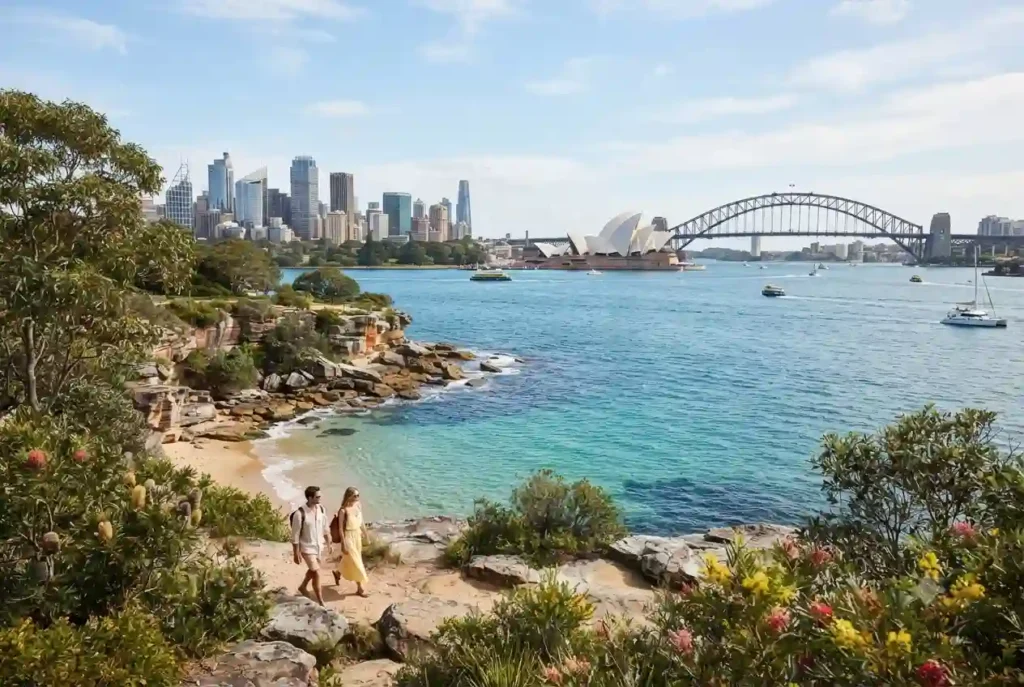
Australia tourism places range from globally recognized cities and spectacular beaches to ancient landscapes, tropical reefs, wildlife-rich islands, rainforests, and vast outback regions. Because the country is geographically enormous, planning an Australia trip is less about trying to see everything and more about choosing destinations that match your interests, available time, and preferred travel style.
For first-time visitors, the biggest challenge is deciding where to begin. Sydney may appeal to travelers who want a combination of iconic landmarks and coastal experiences, while Melbourne is known for its cultural character, food scene, and urban atmosphere. Elsewhere, the Great Barrier Reef, Uluru, the Great Ocean Road, Tasmania, Western Australia’s coastline, and Queensland’s tropical destinations offer experiences that feel completely different from Australia’s major cities.
Tourism Australia highlights the country’s diversity across cities, beaches, islands, countryside, outback, and natural environments. Its destination guidance also covers the country’s capital cities and a wide selection of regional destinations, making it useful when building a trip around specific interests. Explore Australia’s official tourism destinations for additional planning information.
Why Australia Has So Many Tourism Places to Explore
Australia stands out because its tourism experiences are spread across very different environments. A single trip can include a major international city, a tropical marine ecosystem, a mountain region, a remote desert landscape, and a quiet island.
This diversity means Australia works for many types of travelers. Families can choose beaches, wildlife experiences, and attractions in major cities. Couples may prefer coastal drives, island escapes, boutique stays, and food-focused destinations. Adventure travelers can explore national parks, hiking routes, reefs, and remote landscapes, while culture and history enthusiasts can explore museums, galleries, heritage locations, and Aboriginal cultural experiences.
The key is to build an itinerary around a small number of regions instead of treating Australia as one compact destination.
Best Australia Tourism Places for First-Time Visitors
Sydney
Sydney is one of the strongest starting points for international visitors. The city combines an impressive harbour, beaches, cultural attractions, restaurants, neighborhoods, and outdoor experiences.
The Sydney Opera House and Sydney Harbour Bridge are among the city’s most recognizable landmarks, but the destination is not limited to famous architecture. Visitors can explore coastal walks, spend time at beaches, discover local neighborhoods, visit museums, and enjoy waterfront dining.
Bondi Beach is particularly well known, while the coastal scenery around Sydney provides opportunities for travelers who want to combine city sightseeing with outdoor activities. Sydney can therefore work equally well as a short city break or as the first stop on a longer Australian journey.
Melbourne
Melbourne offers a different personality from Sydney. It is especially appealing to travelers interested in food, coffee, arts, culture, sports, shopping, and urban exploration.
The city’s laneways, galleries, markets, restaurants, and cultural venues give visitors plenty to discover beyond traditional sightseeing. Melbourne can also serve as a base for exploring destinations outside the city, including the Great Ocean Road and surrounding regions.
For travelers who prefer an urban holiday with strong cultural and culinary elements, Melbourne deserves a prominent place on an Australia itinerary.
Brisbane and the Gold Coast
Queensland offers a combination of warm-weather cities, beaches, islands, tropical landscapes, and family attractions. Brisbane provides a modern city experience with riverfront areas, restaurants, cultural venues, and access to nearby destinations.
The Gold Coast is particularly attractive for travelers who prioritize beaches and entertainment. Its long coastline, surfing culture, theme parks, dining options, and resort atmosphere make it a popular choice for families and leisure travelers.
Brisbane and the Gold Coast can also be combined with other Queensland destinations for a more varied holiday.
Great Barrier Reef
The Great Barrier Reef is one of Australia’s defining natural attractions and a major reason many international travelers visit Queensland. The reef region offers opportunities to experience marine environments through activities such as snorkeling, diving, boat trips, and wildlife-focused excursions.
Travelers do not necessarily need to spend their entire holiday around the reef. It can be incorporated into a broader Queensland itinerary alongside tropical islands, coastal towns, or cities.
Because marine conditions and local weather can influence activities, travelers should check current local information before booking specific reef excursions.
Uluru and Australia’s Red Centre
For a completely different experience, Uluru provides access to Australia’s Red Centre and its distinctive desert landscapes. The enormous sandstone monolith and surrounding environment create an experience that contrasts sharply with Australia’s coastal cities.
A visit to Uluru is about more than scenery. The region has deep cultural significance for Anangu Traditional Owners, and visitors should approach the area with respect for its cultural heritage and local guidance.
The Red Centre is best suited to travelers who want to experience Australia’s interior rather than staying exclusively along the coast. Depending on the itinerary, visitors can combine Uluru with other Central Australian destinations and guided experiences.
Great Ocean Road
The Great Ocean Road is one of Australia’s most appealing road-trip destinations. Located in Victoria, the route combines dramatic coastline, beaches, forest landscapes, small towns, and viewpoints.
It is particularly suitable for travelers who enjoy self-drive journeys and want to experience scenery at a slower pace. Rather than rushing through the route, travelers can allow time for coastal stops, walks, local food, and photography.
The road can also be incorporated into a Melbourne itinerary, making it practical for visitors who want to combine an urban stay with a scenic regional experience.
Tasmania
Tasmania offers a more nature-focused side of Australia. The island is known for rugged landscapes, national parks, coastal scenery, wildlife, hiking opportunities, and food experiences.
Hobart provides a convenient urban starting point, while destinations beyond the capital allow travelers to explore forests, mountains, beaches, and wilderness areas. Cradle Mountain-Lake St Clair National Park and Freycinet National Park are among the places that attract visitors interested in Tasmania’s natural environment.
Tasmania is particularly appealing for travelers who want a slower pace and more time outdoors. It can also be an excellent choice for repeat visitors who have already explored Australia’s major mainland cities.
Perth and Western Australia
Perth gives travelers access to a very different part of Australia. The Western Australian capital combines beaches, parks, restaurants, urban attractions, and easy access to surrounding coastal areas.
One advantage of choosing Western Australia is the opportunity to explore destinations that feel more remote from Australia’s eastern tourist circuit. Travelers with more time can consider areas such as Margaret River, Ningaloo, Broome, and the Kimberley depending on the season and route.
Western Australia is particularly attractive to travelers who enjoy long-distance road trips, coastal scenery, marine life, and less conventional itineraries.
Adelaide and South Australia
Adelaide offers an attractive combination of food, wine, culture, beaches, and access to regional landscapes. The city itself is manageable for travelers who prefer a less hectic urban experience, while surrounding wine regions provide opportunities for day trips and longer excursions.
Kangaroo Island is another major attraction in South Australia. Its natural environment and wildlife make it a compelling choice for visitors who want to experience a quieter side of the country.
South Australia can therefore work well for travelers who want to combine an urban stay with food, nature, and wildlife experiences.
Australia’s Best Tourism Places for Nature Lovers
Australia’s natural attractions extend far beyond the Great Barrier Reef and Uluru. The country has rainforests, deserts, mountains, wetlands, beaches, islands, and national parks spread across its states and territories.
Daintree Rainforest in Queensland provides a tropical environment, while Kakadu National Park in the Northern Territory offers a combination of wetlands, wildlife, landscapes, and Aboriginal cultural heritage. The Blue Mountains near Sydney are another convenient choice for travelers who want to escape the city for dramatic scenery and walking opportunities.
Australia’s national parks can be particularly rewarding for travelers who plan their journeys around hiking and outdoor experiences. However, conditions can vary significantly between regions, so visitors should check local park information, weather conditions, access restrictions, and safety advice before setting out.
Australia Tourism Places for Beach Holidays
Australia’s coastline gives beach lovers an enormous range of options. Sydney’s beaches are convenient for travelers who want to combine swimming and coastal walks with city sightseeing. Queensland provides warmer tropical environments, while Western Australia offers spectacular beaches and coastal landscapes.
The Whitsundays are particularly attractive for travelers interested in island scenery and access to the Great Barrier Reef. Whitehaven Beach is one of the region’s best-known attractions and is often included in Queensland itineraries.
For a quieter beach-focused trip, travelers can look beyond the country’s most famous destinations and explore regional coastal communities and islands.
Australia Tourism Places for Wildlife Experiences
Australia’s wildlife is another major attraction. Kangaroos, koalas, wombats, wallabies, and numerous bird species can be encountered in different parts of the country, although responsible wildlife tourism should always be prioritized.
Wildlife experiences vary from national parks and carefully managed sanctuaries to guided encounters and marine activities. Travelers should avoid disturbing wild animals, feeding them without authorization, or participating in experiences that put unnecessary pressure on wildlife.
Kangaroo Island, Tasmania, Queensland, and Western Australia all provide opportunities to explore Australia’s distinctive natural environment while incorporating wildlife into a broader itinerary.
How to Choose the Right Australia Tourism Places
The best destination depends heavily on the length and purpose of your trip. A traveler with five days should not plan the same route as someone spending three weeks in Australia.
For a shorter first visit, focusing on one major city and one nearby region can create a more enjoyable experience. Sydney combined with a coastal or mountain excursion is one option. Melbourne paired with the Great Ocean Road is another.
With more time, travelers can consider combining different regions. Queensland can support a city, beach, island, and reef itinerary, while a longer journey through Australia’s southern states can combine Melbourne, the Great Ocean Road, Adelaide, and Tasmania.
Travel distance should always be considered before adding another destination. Australia’s size means that moving between major regions can require significant travel time. A well-designed itinerary is usually better than an ambitious schedule that leaves little time to enjoy each place.
When Should You Visit Australia’s Tourism Destinations?
Australia does not have one universal travel season because its climate varies considerably from region to region. The ideal time for Sydney may not be the ideal time for tropical northern Australia or Tasmania.
Travelers should therefore choose the season according to their selected destinations. Beach holidays, reef trips, outback journeys, hiking adventures, and city breaks can all have different seasonal considerations.
Checking conditions for individual regions before booking is particularly important when the itinerary includes outdoor activities or remote areas.
Planning a Balanced Australia Tourism Itinerary
A strong Australia itinerary combines experiences rather than simply collecting destinations. For example, a trip could begin with several days of city sightseeing, continue with a coastal journey, and finish with time in a natural destination.
Travelers should also leave room for local experiences. Food markets, neighborhood walks, cultural attractions, guided tours, national parks, and regional restaurants can make a trip more memorable than moving constantly between famous landmarks.
Australia’s official tourism resources organize destinations around cities, beaches, islands, country regions, the outback, and nature, reflecting just how broad the country’s travel possibilities are. :contentReference[oaicite:0]{index=0}
Final Thoughts on Australia Tourism Places
The strongest Australia tourism places are not limited to one type of destination. Sydney and Melbourne provide sophisticated city experiences, Queensland offers beaches and reef adventures, Uluru introduces travelers to the Red Centre, Tasmania delivers wilderness and hiking, and Western Australia opens the door to vast coastal and outback landscapes.
The right choice ultimately depends on how much time you have and what you want to experience. Instead of attempting to cover the whole country, select a few destinations that complement each other and allow enough time to appreciate each region.
For travelers researching international destinations as part of a wider travel cluster, comparing Australia’s city-and-nature combination with destinations such as Bosnia tourism or Serbia tourism can also highlight how different countries offer very different experiences for the same holiday budget and travel duration.
With thoughtful planning, Australia can provide far more than a collection of famous landmarks. Its greatest strength is the contrast between its cities, coastlines, islands, wildlife, cultural heritage, and enormous natural landscapes.