
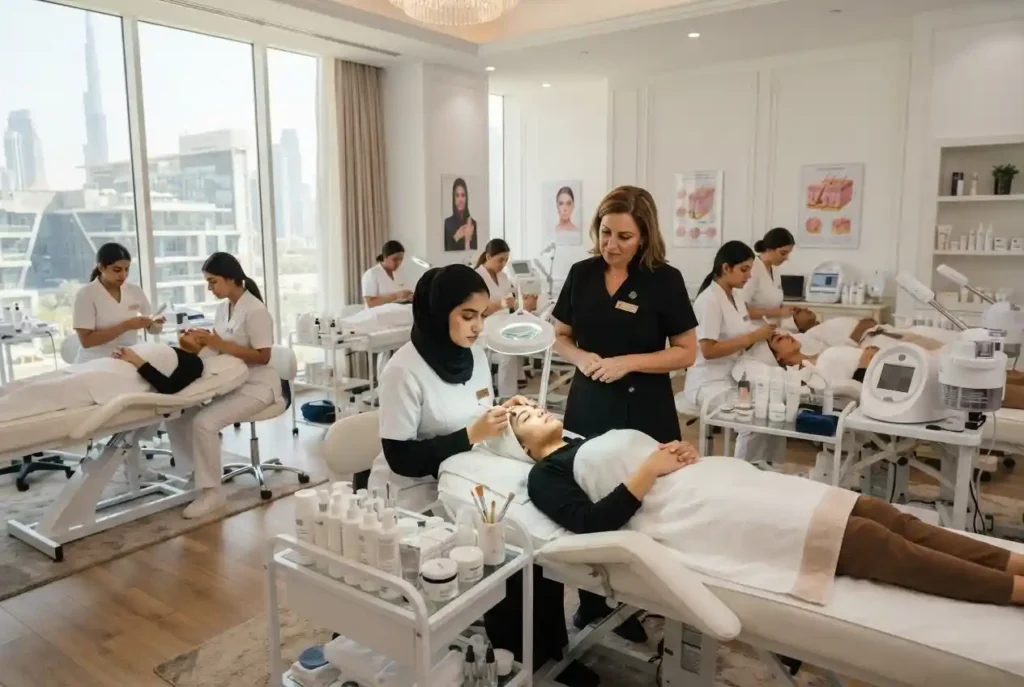
Beauty therapy courses can provide a structured starting point for people who want to build a career in the UAE beauty and personal-care industry. Instead of learning individual treatments informally, a suitable course can introduce students to professional techniques, client care, hygiene, product knowledge, and the practical skills required in a salon or beauty environment.
The UAE has a broad beauty sector that includes salons, beauty centers, spas, wellness businesses, hotels, and specialist service providers. This creates opportunities for trained professionals, but employers also expect candidates to demonstrate genuine practical ability and professional behaviour.
Choosing the right course therefore requires more than comparing prices. Students should consider the curriculum, practical training, certification, course duration, instructor experience, facilities, and how well the training aligns with their intended career.
What Are Beauty Therapy Courses?
Beauty therapy courses are structured training programmes designed to teach students a range of personal-care and beauty treatments. The exact curriculum depends on the institution and course level.
Introductory programmes may cover foundational areas such as skincare, facial treatments, waxing, manicures, pedicures, client consultation, and salon hygiene. More advanced programmes may introduce specialist techniques and additional areas of beauty therapy.
The goal is not simply to learn how a treatment works. Students should also develop the professional habits needed to work safely, consistently, and confidently with clients.
Who Should Consider a Beauty Therapist Course?
A beauty therapist course may suit people entering the industry for the first time as well as existing beauty professionals who want to expand their skills.
Beginners can use structured training to establish a foundation before applying for entry-level salon positions. Existing therapists may choose additional courses to develop specialist skills or improve their qualifications.
The field can appeal to people who enjoy practical work, customer interaction, personal care, creativity, and learning new techniques. However, students should also understand that beauty therapy is hands-on work that can involve long periods of standing and repeated use of the hands.
What Can You Learn on a Beauty Therapy Course?
The curriculum varies between providers, but several areas are commonly associated with professional beauty training.
Skincare and Facial Treatments
Students may learn the fundamentals of skin assessment, cleansing, exfoliation, facial massage, masks, product application, and basic treatment planning.
Understanding different skin types and conditions is important because a treatment that works well for one customer may not be suitable for another. Students should learn to recognise when a client may require professional medical advice rather than a conventional beauty treatment.
Waxing and Hair Removal
Waxing training can teach preparation, product handling, application techniques, removal methods, hygiene, and aftercare.
Because waxing involves direct contact with the skin, proper preparation and hygiene are essential. Students should also understand when a treatment may need to be postponed because of skin irritation or other concerns.
Manicure and Pedicure
Nail care is another common component of beauty training. Students may learn nail preparation, shaping, cuticle care, polish application, basic nail treatments, and professional hygiene procedures.
Advanced courses may cover additional techniques, although students should confirm exactly what is included before enrolling.
Lash and Brow Treatments
Lash and brow services are popular in many beauty environments. Training can cover techniques such as brow shaping, tinting, lash treatments, and related client-care procedures, depending on the course.
Because the eye area is sensitive, appropriate safety and hygiene procedures should form an important part of any relevant training.
Salon Hygiene and Client Safety
Technical skills are only one part of professional beauty therapy. Students should also understand how to maintain clean workstations, prepare equipment, handle products correctly, and protect clients during treatments.
Good training should make hygiene a routine part of every service rather than an afterthought.
Why Beauty Certification Matters
Beauty certification can help demonstrate that a professional has completed structured training in a particular area. It can also give employers a clearer understanding of the candidate’s educational background.
However, a certificate should not be viewed as a substitute for practical ability. Employers may also consider hands-on experience, communication skills, treatment quality, professional presentation, and customer service.
When comparing certification programmes, check what the certificate actually represents, who issues it, what the assessment process involves, and whether the programme includes practical training.
Choosing the Right Beauty Therapy Course in the UAE
There are several factors worth reviewing before enrolling in a course.
Course Curriculum
Start with the syllabus. Make sure the programme covers the services you want to learn rather than choosing a course based only on its title.
If your goal is to become a general beauty therapist, a broader curriculum may be useful. If you already have experience and want to specialise, a focused advanced programme may make more sense.
Practical Training
Beauty therapy is a hands-on profession, so practical training should be a major consideration. Students need opportunities to practise techniques under appropriate supervision.
A course that relies heavily on theory without sufficient practical application may not provide the confidence needed for real salon work.
Instructor Experience
Experienced instructors can provide useful guidance on technique, client communication, common mistakes, and professional standards.
Before enrolling, research the training provider and understand who teaches the programme. Practical industry experience can add significant value to classroom learning.
Course Duration
Course length can vary significantly. Short programmes may focus on individual skills, while comprehensive beauty therapy programmes can take longer.
Do not automatically assume that the shortest course is the best value. Compare the number of practical hours, topics covered, assessment methods, and support provided after training.
Salon Training and Real-World Experience
Salon training can help bridge the gap between classroom learning and professional work. Students benefit from seeing how treatments are delivered in a real environment, how appointments are managed, and how professionals communicate with customers.
Where available, supervised salon experience can be particularly valuable for beginners. It allows students to develop confidence while learning how to work efficiently and professionally.
Even after completing formal education, continued practice is important. Beauty techniques improve through repetition, feedback, and experience with different clients.
How Beauty Training Can Support a Career in Dubai
Dubai’s beauty sector includes a wide range of businesses, from neighbourhood salons to luxury beauty lounges, hotel spas, and specialist providers. A recognised training background can therefore be useful when applying for entry-level and intermediate positions.
Those considering beauty therapist jobs in Dubai can use their training to demonstrate knowledge of relevant treatments and professional standards.
Additional skills can also expand career options. A therapist who develops expertise in skincare, nails, lashes, brows, or another specialist area may be able to target roles that require those particular competencies.
Beauty Training for Career Changers
Beauty therapy can also be an option for people considering a career change. A structured course can provide an introduction to an entirely new industry without requiring previous professional experience in every case.
Career changers should research the course requirements carefully and consider the financial and time commitment involved. It is also useful to speak with experienced beauty professionals before enrolling so you understand what daily salon work is actually like.
What to Look for in a Training Provider
- A clear and detailed course syllabus
- Qualified and experienced instructors
- Practical hands-on training
- Suitable salon or training facilities
- Transparent course fees
- Clear assessment requirements
- Information about the certificate awarded
- Reasonable student-to-instructor support
- Clear information about course duration and schedules
These factors can help separate a structured professional programme from a course that offers limited practical value.
Questions to Ask Before Enrolling
Before paying a course fee, ask the training provider several direct questions.
- What treatments are included in the curriculum?
- How much practical training is provided?
- Who teaches the course?
- What certification will I receive?
- How are students assessed?
- Are training products and equipment included?
- Is supervised practice available?
- What are the class schedules?
- Are there additional costs beyond the advertised course fee?
Clear answers can help you compare providers and avoid choosing a programme based on incomplete information.
Developing Skills Beyond the Certificate
Completing a course is only the beginning of a beauty career. Professional growth comes from continuing to practise, learn, and adapt.
Beauty professionals can improve by studying new techniques, learning about professional products, developing communication skills, and paying attention to customer feedback.
Building a portfolio can also be useful. With appropriate client permission, professionals can document examples of their work and use them to demonstrate their abilities when applying for future positions.
Beauty Therapy as a Long-Term Career
For people who enjoy the industry, beauty therapy can lead to several career paths. A therapist may progress into a senior role, specialise in a particular treatment category, become a trainer, move into salon management, work in beauty retail, or eventually establish an independent business.
Career progression usually depends on a combination of technical skills, experience, customer service, reliability, and professional development.
Management roles require additional abilities such as scheduling, team leadership, stock management, sales, budgeting, and business operations. Developing these skills over time can open opportunities beyond treatment work.
How to Make the Most of Your Training
Students can get more value from beauty training by treating every practical session as an opportunity to improve technique and professional habits.
Ask instructors for specific feedback rather than simply trying to complete each treatment. Take notes about common mistakes, product use, client communication, and treatment preparation.
Practise consistently and build confidence gradually. It is better to master core techniques properly than to rush through many advanced services without a strong foundation.
Wrapping Up
Beauty therapy courses can provide a practical foundation for people who want to enter or progress within the UAE beauty industry. The best programme depends on your current experience, career goal, preferred treatment areas, available time, and desired level of certification.
Before enrolling, compare the curriculum, practical training, instructors, certification, facilities, schedule, and total cost. A well-structured programme should teach more than individual beauty techniques; it should help students understand hygiene, customer care, professional behaviour, and the realities of working in a salon environment.
For anyone planning a career in Dubai or elsewhere in the UAE, training can be an important first step. Combined with practical experience, continued learning, and strong customer-service skills, professional beauty education can provide a foundation for a flexible and rewarding career in beauty therapy.