
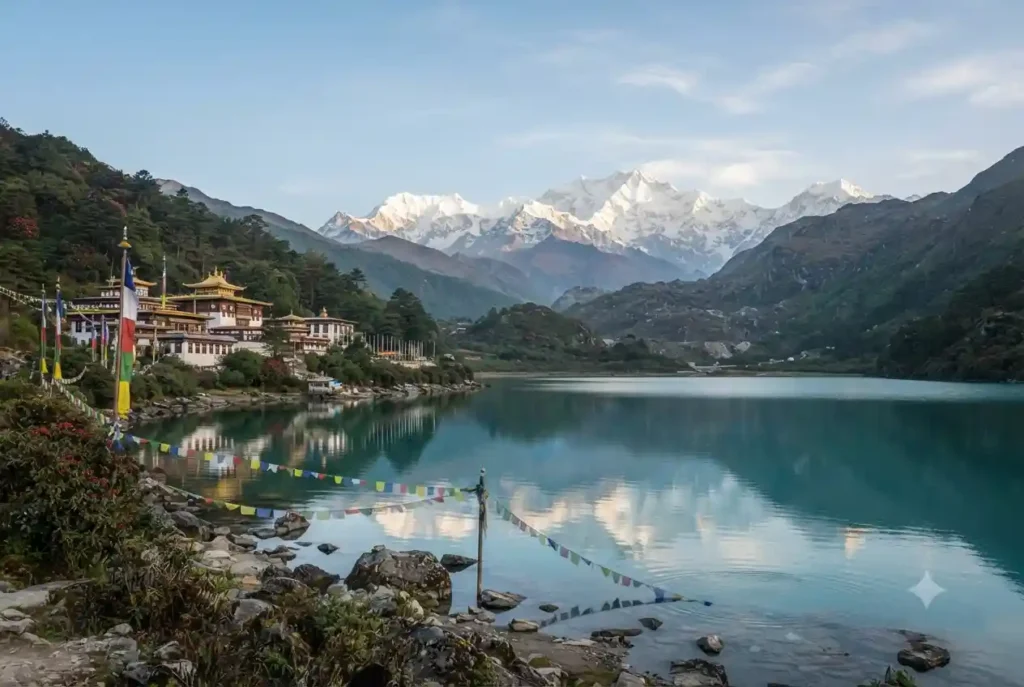
Sikkim tourism offers an exceptional combination of Himalayan scenery, peaceful monasteries, high-altitude lakes, mountain valleys, forests, waterfalls, local culture, and adventure experiences. Located in the eastern Himalayas, this small Indian state is home to Mount Kanchenjunga, rich biodiversity, and communities whose traditions have shaped the region for generations.
Gangtok is the usual starting point for visitors, but Sikkim extends far beyond its capital. Tsomgo Lake, Nathula Pass, Yumthang Valley, Pelling, Ravangla, Yuksom, Namchi, Zuluk, and other destinations offer very different experiences. Some focus on mountain scenery and photography, others on monasteries and heritage, while several are better suited to trekking and outdoor exploration.
The official Sikkim Tourism department describes the state as part of the Eastern Himalayas and highlights its biodiversity, cultural heritage, mountain destinations, monasteries, lakes, and sustainable tourism approach. Sikkim Tourism also notes that Khangchendzonga National Park covers a significant portion of the state. :contentReference[oaicite:0]{index=0}
Why Sikkim Tourism Is Worth Exploring
Sikkim is particularly attractive to travelers who want a Himalayan holiday without limiting the experience to dramatic mountain views. The state combines nature with culture, allowing visitors to move from busy Gangtok streets to quiet monasteries, forest roads, alpine valleys, and remote mountain communities.
The landscape changes dramatically with altitude. Lower areas feature subtropical vegetation and green valleys, while northern destinations become increasingly alpine. This variety creates opportunities for sightseeing, photography, hiking, wildlife observation, meditation, and cultural exploration.
Sikkim is also culturally diverse. The state’s official tourism information describes the cultural heritage of Lepcha, Bhutia, and Nepali communities, with different traditions, languages, festivals, dances, and places of worship contributing to the region’s identity. :contentReference[oaicite:1]{index=1}
Gangtok: The Gateway to Sikkim
Gangtok is the capital and the main base for many Sikkim tourism itineraries. Its hillside setting provides views across surrounding mountains, while the city offers restaurants, cafés, markets, monasteries, viewpoints, and accommodation for different travel styles.
MG Marg is one of the best-known areas for visitors who want to walk through the central part of Gangtok. The pedestrian-friendly atmosphere makes it convenient for an evening stroll, shopping, dining, and experiencing the city’s contemporary side.
Gangtok is also important because many excursions into other parts of Sikkim begin here. Travelers can arrange trips toward Tsomgo Lake and Nathula Pass, while longer journeys can continue toward North Sikkim, West Sikkim, or South Sikkim.
For first-time visitors, spending at least some time in Gangtok rather than treating it only as a transportation hub makes the overall trip more rewarding.
Tsomgo Lake: A High-Altitude Himalayan Attraction
Tsomgo Lake, also known as Changu Lake, is one of the most recognizable attractions near Gangtok. Surrounded by mountains, the lake changes character according to season and weather, creating very different views throughout the year.
The journey to Tsomgo Lake is part of the experience. Roads climb through increasingly dramatic Himalayan scenery, making the route particularly appealing to photographers and travelers who enjoy scenic drives.
Because Tsomgo Lake lies within a regulated area, travelers should check current permit requirements and access conditions before visiting. Sikkim Tourism provides official information about Protected Area Permits and destinations where restrictions apply. :contentReference[oaicite:2]{index=2}
Nathula Pass and the Eastern Himalayas
Nathula Pass is another major attraction commonly visited from Gangtok. Located at a high altitude near the India-China border, it offers a very different experience from the lower valleys and urban areas of Sikkim.
The journey toward Nathula provides dramatic mountain scenery, but conditions can change quickly at high elevations. Visitors should be prepared for cold temperatures and follow all local instructions regarding access and photography.
Permit requirements apply to restricted destinations, so travelers should arrange their visit through authorized channels and verify current regulations rather than relying on outdated travel information.
Yumthang Valley: The Valley of Flowers
Yumthang Valley is one of North Sikkim’s most scenic destinations. The valley is known for mountain landscapes, alpine vegetation, seasonal flowers, rivers, and surrounding peaks.
The experience changes with the season. Warmer months can reveal greener landscapes and flowering vegetation, while colder periods transform the area into a snow-covered Himalayan environment.
Sikkim Tourism identifies Yumthang as one of North Sikkim’s major attractions and highlights its Valley of Flowers setting, hot springs, alpine scenery, and cultural character. :contentReference[oaicite:3]{index=3}
Travelers should remember that access to North Sikkim can be affected by weather and road conditions. It is important to check current local information before planning a journey into high-altitude areas.
Gurudongmar Lake and North Sikkim
Gurudongmar Lake is another spectacular high-altitude destination in North Sikkim. Its remote Himalayan setting makes it particularly appealing to travelers who want dramatic landscapes and a sense of adventure.
However, the altitude and restricted-area regulations mean this is not a destination to approach casually. Visitors should consider altitude, weather, road conditions, and permit requirements before adding Gurudongmar to an itinerary.
Current Sikkim Tourism guidance states that foreign tourists are not permitted to visit Gurudongmar Lake, while specific rules apply to other North Sikkim destinations. Travelers should verify the latest official requirements before making plans. :contentReference[oaicite:4]{index=4}
Pelling: Mountain Views and Monasteries
Pelling in West Sikkim is a popular choice for travelers seeking panoramic Himalayan views, peaceful surroundings, and cultural attractions. The destination is particularly known for views toward the Khangchendzonga range.
The surrounding region contains monasteries and historic sites, making Pelling a useful base for combining mountain scenery with cultural exploration.
Compared with Gangtok, Pelling offers a quieter atmosphere and can suit travelers who prefer scenic accommodation, relaxed mornings, and less urban activity.
Yuksom: History and Trekking
Yuksom is historically significant in Sikkim and is closely associated with the early history of the former kingdom. It is also an important starting point for trekking routes toward the Khangchendzonga region.
For travelers interested in history, Yuksom provides a chance to explore a different side of Sikkim. For adventure travelers, its location makes it particularly relevant to trekking itineraries.
Travelers planning longer treks should prepare carefully for changing Himalayan conditions and use qualified local guides where appropriate.
Ravangla and Buddha Park
Ravangla in South Sikkim offers a combination of mountain scenery, peaceful surroundings, and cultural attractions. Buddha Park is one of its best-known landmarks and features a large statue of Buddha set against a mountain backdrop.
The destination is useful for travelers who want to include South Sikkim in their itinerary without focusing entirely on high-altitude excursions.
Ravangla can also be combined with other South Sikkim destinations, including Namchi and nearby viewpoints, creating a slower-paced regional journey.
Namchi: Culture, Views and Spiritual Attractions
Namchi provides another perspective on Sikkim. The district is known for mountain views, religious attractions, and cultural experiences.
Samdruptse Hill, with its large statue of Guru Padmasambhava, is among the attractions associated with the area. Tendong and Maenam hills also provide opportunities for travelers interested in mountain landscapes and outdoor experiences.
The official Sikkim Tourism information identifies Namchi as one of the state’s districts and highlights its views toward the Khangchendzonga range, Samdruptse Hill, Tendong, Maenam, and Ravangla. :contentReference[oaicite:5]{index=5}
Zuluk and the Old Silk Route Landscape
Zuluk is an increasingly interesting choice for travelers who want a quieter mountain experience. Located in the eastern part of Sikkim, the destination is known for its winding mountain roads, high-altitude scenery, and connections with the historic Silk Route.
The famous hairpin bends around the region create striking viewpoints, particularly for photographers. The area is less urban than Gangtok and can appeal to travelers seeking a more remote Himalayan atmosphere.
Because Zuluk is within a regulated area, travelers should confirm permit eligibility and current access requirements before planning a visit. Sikkim Tourism currently lists Zuluk among destinations with specific Protected Area Permit restrictions. :contentReference[oaicite:6]{index=6}
Sikkim Tourism and Buddhist Monasteries
Monasteries are an important part of the Sikkim tourism experience. Rumtek, Pemayangtse, Enchey, Dubdi, and other monasteries offer opportunities to explore Buddhist architecture, religious traditions, murals, prayer spaces, and peaceful mountain settings.
Visitors should remember that monasteries are active religious spaces rather than simply tourist attractions. Quiet behavior, appropriate clothing, and respect for photography rules are important.
The state’s official tourism resources describe Sikkim’s monasteries and spiritual trails as major cultural experiences and highlight the relationship between Buddhist traditions, mountain landscapes, and local heritage. :contentReference[oaicite:7]{index=7}
Best Time for Sikkim Tourism
The best time to visit Sikkim depends heavily on the destinations and activities included in your itinerary. The state’s varied elevation means weather can differ considerably between regions.
Spring can be attractive for travelers interested in flowers, greenery, and comfortable sightseeing. Autumn often offers clearer mountain views and is popular with photographers and travelers seeking scenic conditions.
Summer coincides with significant rainfall in many areas. Sikkim Tourism notes that heavy rainfall is common from May to early October, with July generally the wettest month in most locations. Road blockages and travel delays can occur during periods of poor weather. :contentReference[oaicite:8]{index=8}
Winter brings snow to higher areas and can create spectacular scenery, but some destinations become much colder and access can be affected. Sikkim Tourism notes that northern areas can remain snowbound for extended periods during winter. :contentReference[oaicite:9]{index=9}
Rather than choosing travel dates solely around a generic “best season,” select the season according to whether your priority is mountain views, flowers, trekking, snow, monasteries, or easier road travel.
Sikkim Tourism for Adventure Travelers
Sikkim provides plenty of options for travelers who prefer active holidays. Trekking is one of the most important adventure experiences, with routes passing through forests, alpine landscapes, mountain valleys, and remote communities.
Other activities can include mountain biking, camping, rafting, photography, nature walks, and scenic road journeys. The suitability of individual activities depends on weather, altitude, local regulations, and the traveler’s experience.
High-altitude destinations require particular care. Travelers should not underestimate the effects of altitude, cold, changing weather, or difficult road conditions. Proper acclimatization and preparation can make a major difference to the quality of the trip.
Food and Local Culture in Sikkim
Sikkim’s food culture reflects the state’s diverse communities and Himalayan location. Visitors can try dishes influenced by Tibetan, Nepali, Lepcha, and Bhutia traditions alongside familiar Indian cuisine.
Momos are among the most popular foods for visitors, while thukpa, traditional breads, noodles, soups, fermented ingredients, and local specialties can provide a broader introduction to Sikkimese cuisine.
Gangtok offers the widest range of restaurants, but travelers should also consider local eateries and homestays when visiting smaller towns and villages. These experiences can provide a more direct connection with local food traditions and everyday life.
Traditional dances and festivals also contribute to Sikkim’s cultural identity. The state’s tourism resources document dances associated with Lepcha, Bhutia, and Nepali communities, reflecting the cultural diversity found across Sikkim. :contentReference[oaicite:10]{index=10}
How Many Days Are Enough for Sikkim?
A short four- to five-day trip can focus on Gangtok and selected nearby attractions, such as Tsomgo Lake and Nathula Pass, subject to current access and permit conditions.
A week allows travelers to create a more varied itinerary by combining Gangtok with destinations such as Pelling, Ravangla, or North Sikkim. Longer trips can include Yuksom, Namchi, Zuluk, trekking routes, and additional villages.
Travelers should avoid trying to cover the entire state in a few days. Mountain roads and weather can make journeys slower than expected, and spending too much time in vehicles can reduce the enjoyment of the destination.
Permits and Restricted Areas in Sikkim
Permit requirements are an important part of planning Sikkim tourism. Several high-altitude and border-region destinations are subject to special access rules.
Sikkim Tourism currently provides separate guidance for Protected Area Permits and Restricted Area Permits. Requirements can vary according to nationality, destination, and travel arrangements. :contentReference[oaicite:11]{index=11}
Foreign visitors should pay particular attention to the current rules before planning trips to protected or restricted areas. Sikkim Tourism states that foreign visitors entering and staying in protected or restricted areas may require a Restricted Area Permit, while some nationalities and destinations are subject to additional conditions. :contentReference[oaicite:12]{index=12}
Because regulations can change, travelers should always check the latest official guidance rather than relying on old blogs, social media posts, or previously published itineraries.
Getting Around Sikkim
Road travel is an important part of exploring Sikkim because many major attractions are located in mountainous areas. Gangtok provides a useful base for organized excursions, while longer routes require more time and planning.
Travelers can use local taxis, organized tours, and private vehicles depending on their itinerary. For restricted destinations, travel may need to be arranged through authorized operators or according to local permit requirements.
It is sensible to keep buffer time in the itinerary. Rain, landslides, road maintenance, traffic, and mountain conditions can affect travel times, particularly during wetter periods.
Sikkim Tourism for Couples and Families
Sikkim can be a strong choice for couples looking for scenic mountain stays, peaceful monasteries, sunrise viewpoints, local food, and quieter destinations. Gangtok provides restaurants and evening walks, while Pelling, Ravangla, and other hill destinations offer a slower atmosphere.
Families can also enjoy Sikkim, especially when the itinerary balances sightseeing with manageable travel days. Lakes, viewpoints, monasteries, cable-car experiences, and scenic drives can provide variety without requiring strenuous trekking every day.
Families traveling with young children should be cautious about very high-altitude destinations and long mountain journeys. The itinerary should be adjusted according to age, fitness, weather, and altitude tolerance.
Responsible Tourism in Sikkim
Sikkim’s natural beauty also makes responsible travel particularly important. Mountain ecosystems, forests, rivers, and high-altitude environments can be sensitive to waste and excessive tourism pressure.
Visitors should avoid littering, minimize single-use plastic where practical, respect wildlife, stay on designated routes, and follow local instructions. Supporting local accommodation, guides, restaurants, artisans, and community-based tourism can also help distribute tourism benefits.
The official Sikkim Tourism website explicitly promotes sustainable tourism and encourages visitors to respect nature and help keep destinations clean for future generations. :contentReference[oaicite:13]{index=13}
Combining Sikkim With Other Northeast India Destinations
Sikkim can be part of a wider journey through northeastern India, although transportation times should be considered carefully. Travelers who enjoy mountain landscapes may want to compare Sikkim with destinations such as Meghalaya tourism, which offers a very different landscape of waterfalls, caves, forests, rivers, and subtropical hills.
Combining the two destinations can create a varied regional journey, but it is better suited to travelers with enough time to handle the distances comfortably. A shorter holiday should focus on one destination rather than attempting to cover too much ground.
Final Thoughts on Sikkim Tourism
Sikkim tourism is defined by contrast. A trip can begin in the lively streets of Gangtok, continue to the peaceful shores of Tsomgo Lake, climb toward high Himalayan passes, and then move into forested valleys, monasteries, and quiet mountain communities.
Gangtok, Yumthang Valley, Pelling, Yuksom, Ravangla, Namchi, Tsomgo Lake, Nathula Pass, and Zuluk each offer a different reason to visit. The strongest itineraries do not attempt to see every attraction but instead combine a few destinations that match the traveler’s interests and available time.
Seasonal planning is especially important. Rain can affect roads and visibility, while winter can bring snow and severe cold to high-altitude areas. Permit rules also need to be checked before visiting regulated destinations.
For travelers seeking Himalayan scenery with a strong cultural identity, outdoor adventure, local cuisine, and opportunities for slower travel, Sikkim offers a distinctive and rewarding experience. Its combination of mountains, monasteries, biodiversity, and community traditions makes it one of the most interesting destinations to explore in northeastern India.