
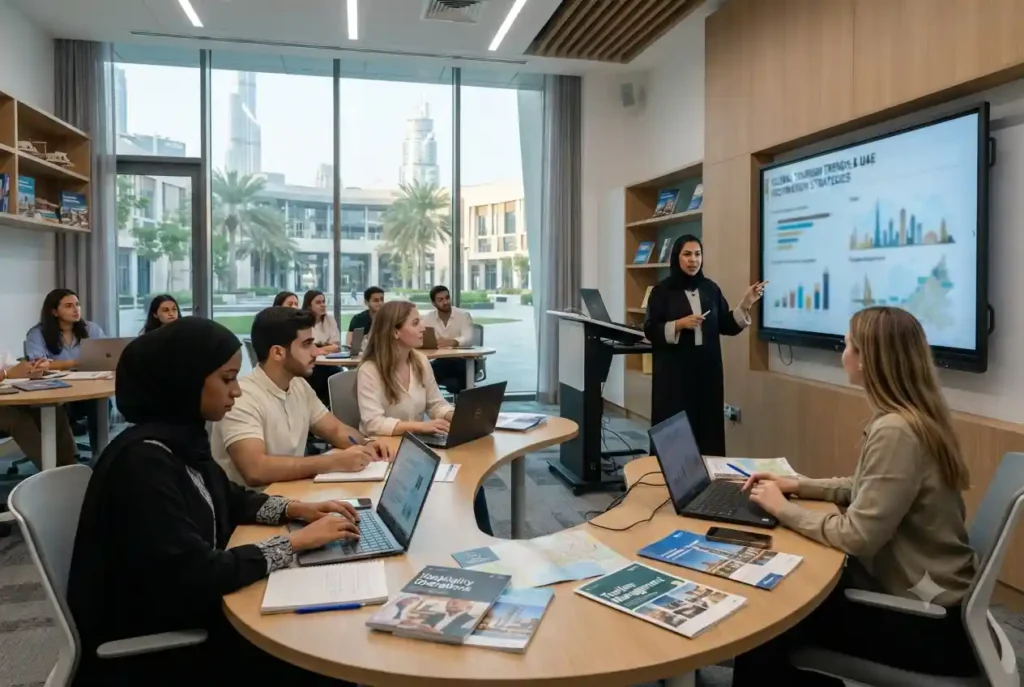
The tourism industry is one of the world’s fastest-growing economic sectors, creating millions of employment opportunities across hospitality, travel, aviation, events, and destination management. For students and professionals looking to enter this dynamic field, enrolling in a tourism course is an excellent way to build practical knowledge and industry-ready skills.
The UAE has become a leading destination for tourism education thanks to its thriving hospitality sector, international hotels, airlines, luxury resorts, and global tourism events. Whether you’re beginning your career or planning to upgrade your qualifications, tourism and hospitality programs offer valuable pathways into one of the country’s most important industries.
If you’re exploring career opportunities in the sector, you may also find our guide on tourism jobs in Dubai helpful for understanding current employment prospects.
What Is a Tourism Course?
A tourism course teaches students the knowledge and practical skills required to work in the travel, tourism, hospitality, and customer service industries. Depending on the program, students may study tourism operations, destination management, marketing, event planning, hotel operations, customer experience, and sustainable tourism.
Courses are available at certificate, diploma, undergraduate, and postgraduate levels, allowing learners to choose a pathway that matches their academic background and career goals.
What Students Learn
Although course content varies by institution, most tourism programs include subjects such as:
- Tourism industry fundamentals
- Hospitality operations
- Customer service excellence
- Destination management
- Travel planning and reservations
- Marketing for tourism businesses
- Event and conference management
- Sustainable tourism practices
- Business communication
- Digital tourism technologies
Hospitality and Tourism Management
Many students choose to specialize in hospitality tourism management or hospitality and tourism management. These programs combine tourism education with hotel management, food and beverage operations, leadership, finance, and guest relations.
Graduates are prepared for careers in hotels, resorts, airlines, cruise companies, destination management organizations, travel agencies, and event management firms.
Choosing the Right Institute
When comparing institutions, students should consider accreditation, industry partnerships, internship opportunities, teaching methods, and graduate employment outcomes.
Some internationally recognized institutions, including the HTMi Hotel and Tourism Management Institute and other hotel and tourism management institutes, offer programs that attract students from around the world. Before enrolling, review each institution’s curriculum, entry requirements, tuition fees, and accreditation status to ensure it aligns with your career objectives.
Tourism Education in the UAE
The UAE offers an excellent learning environment due to its strong tourism infrastructure and multicultural workforce. Students often benefit from internships and practical training within internationally recognized hospitality brands.
Advantages of studying tourism in the UAE include:
- Exposure to a global tourism market
- Industry-focused education
- Internship opportunities
- Networking with hospitality professionals
- Modern learning facilities
- Career opportunities after graduation
Career Opportunities After a Tourism Course
A tourism qualification can open doors to various positions across the travel and hospitality industry.
Popular career paths include:
- Travel consultant
- Tour coordinator
- Hotel supervisor
- Guest relations executive
- Event coordinator
- Destination marketing specialist
- Airline customer service representative
- Tour operations executive
- Hospitality manager
Professionals who continue developing their expertise can also move into leadership and management roles.
Technology in Tourism Education
Modern tourism courses increasingly include digital skills such as online booking systems, customer relationship management (CRM), digital marketing, data analysis, and smart tourism technologies.
Understanding digital innovation is becoming essential as destinations adopt AI-powered services and connected visitor experiences. Learn more in our guide to smart tourism Dubai.
The Importance of Sustainable Tourism
Environmental responsibility has become an important part of tourism education. Students now learn how responsible destination management, conservation, and community engagement contribute to long-term tourism success.
For a deeper understanding of environmentally responsible travel, explore our article on sustainable tourism.
How to Choose the Best Tourism Course
Before enrolling, ask yourself the following questions:
- Does the curriculum match your career goals?
- Is the institution accredited?
- Are internships included?
- What practical training opportunities are available?
- Does the program teach current industry technologies?
- Are graduates employed successfully within the industry?
Researching these factors carefully will help you select a course that offers both academic value and strong career prospects.
Final Thoughts
A tourism course provides the knowledge, practical experience, and professional skills needed to succeed in one of the world’s most exciting industries. With the UAE continuing to strengthen its position as a global tourism destination, qualified professionals remain in high demand across hospitality, travel, aviation, and destination management. Choosing the right program can be the first step toward a rewarding international career.
For information about higher education institutions and academic programs in the UAE, visit the UAE Ministry of Education.