
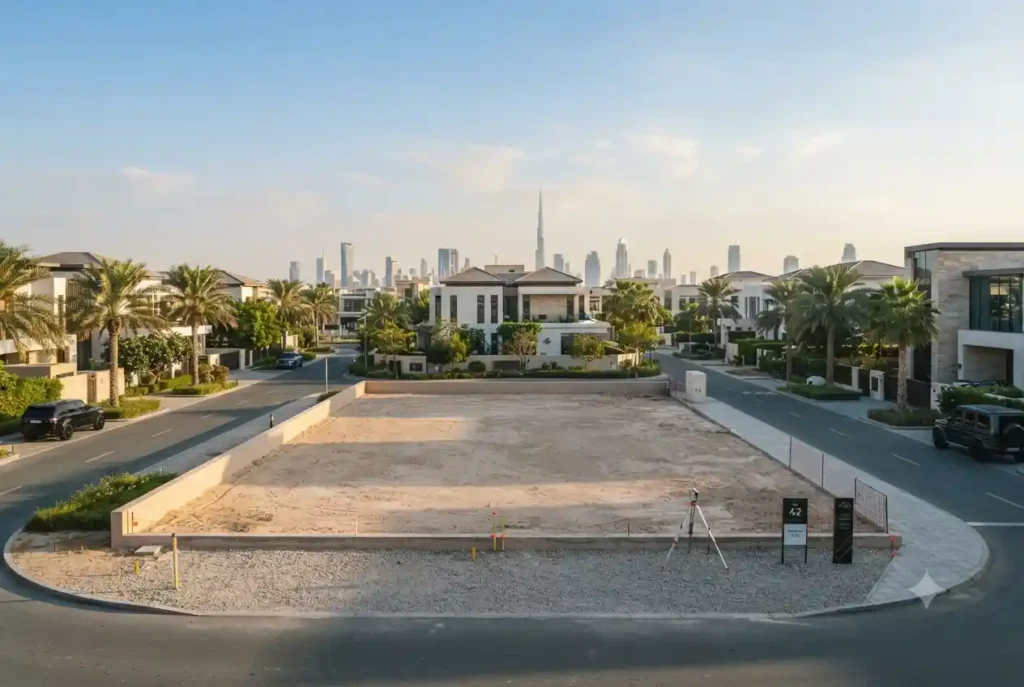
Searching for residential plots for sale in Dubai is different from looking for a completed apartment or villa. Instead of purchasing an existing home, a land buyer is acquiring an opportunity to develop a property according to specific requirements, subject to planning rules, approvals, site conditions, and applicable regulations.
For private buyers, developers, and investors, residential land can offer flexibility that a completed property cannot always provide. A buyer may be able to plan the size, layout, architectural style, amenities, and use of the eventual home. However, this flexibility also comes with additional responsibilities, costs, and development considerations.
Before purchasing land for sale in Dubai, it is therefore important to understand the plot’s permitted use, development potential, location, infrastructure, ownership status, and total project cost. The purchase price is only one part of the financial equation.
What Is a Residential Plot?
A residential plot is a parcel of land intended for residential development according to the applicable planning and land-use requirements. Depending on its location and designation, a plot may have specific rules concerning what can be constructed, the permitted building area, height, setbacks, parking, and other development parameters.
This means that two plots with similar dimensions may not necessarily have the same development potential. Their location, zoning, surrounding infrastructure, and applicable planning requirements can produce very different outcomes.
Buyers should verify the development parameters of a specific plot before assuming that a particular villa, building, or design can be constructed on it.
Why Buy Residential Land in Dubai?
One of the main advantages of purchasing residential land is control over the future development. A buyer building a private home can potentially create a property around their own lifestyle rather than adapting an existing floor plan.
For investors and developers, land can also provide an opportunity to create a residential project designed for a specific market segment. The eventual property could be positioned toward family housing, luxury residences, rental accommodation, or another permitted residential use.
However, land ownership does not automatically guarantee a profitable development. Construction costs, professional fees, financing, approvals, infrastructure, contractor expenses, and market conditions all need to be considered.
Where to Look for Residential Plots for Sale in Dubai
Residential land opportunities can vary significantly across Dubai. Buyers may encounter plots within established communities, newer master-planned districts, villa neighborhoods, and areas undergoing further development.
The ideal location depends on the intended project. Someone planning a family villa may prioritize schools, parks, healthcare, retail, and community facilities. A developer may focus more heavily on demand, accessibility, permitted density, and the feasibility of the proposed development.
Location should therefore be evaluated according to the property’s intended use rather than simply selecting the most recognizable neighborhood.
Understanding Plot Development Potential
One of the most important steps when buying residential land is determining exactly what can be built on the site.
Permitted Use
Confirm that the plot is approved for the intended residential use. Buyers should not assume that a plot marketed as residential automatically permits every type of residential development.
Building Area
The permitted building area can determine how much usable space can ultimately be developed. Buyers should establish the relevant development parameters before calculating the potential value of the completed property.
Building Height
Height restrictions can significantly influence design options. A plot suitable for a low-rise villa may have very different development economics from one where a larger residential structure is permitted.
Setbacks and Site Requirements
Required setbacks and other planning conditions can affect the amount of land that can actually be occupied by the building. This is particularly important when evaluating smaller plots where every part of the site matters.
Residential Buildings for Sale Versus Vacant Land
Buyers deciding between residential buildings for sale and vacant land should compare the advantages and risks of each option.
A completed residential building can provide existing rental income and allows the buyer to inspect an operating asset. However, the buyer inherits the existing design, construction quality, tenant profile, and maintenance requirements.
Vacant land provides greater development flexibility but introduces construction and approval risk. The buyer must fund and manage the process of creating the eventual asset.
The better choice depends on the buyer’s experience, capital, timeframe, risk tolerance, and intended investment strategy.
What Affects the Price of Land for Sale in Dubai?
The value of a plot depends on several factors, including location, plot size, permitted development, infrastructure, accessibility, surrounding properties, and market demand.
A centrally located plot with strong development potential may command a significant premium compared with a larger plot in an emerging area. Similarly, a plot with favorable planning parameters may be more valuable than another site of the same size with stricter development limitations.
Buyers should compare plots using development potential rather than simply calculating price per square foot of land.
Development Costs Beyond the Purchase Price
Anyone considering residential land should prepare a complete development budget before making an offer.
- Land acquisition costs
- Design and architectural fees
- Engineering and consultancy expenses
- Government and approval-related costs
- Construction costs
- Contractor and project-management expenses
- Utility and infrastructure requirements
- Financing costs
- Landscaping and external works
- Contingency for unexpected expenses
Construction budgets can change depending on the property’s design, materials, specifications, site conditions, and market conditions. A realistic contingency is therefore important when evaluating the feasibility of a project.
Buying Residential Plots as an Investment
Investors considering residential properties in Dubai should decide whether the land will be held, developed, or eventually sold. Each strategy has different financial requirements.
A land-holding strategy depends heavily on the expected future demand and development of the surrounding area. A development strategy requires a much more detailed feasibility assessment because the investor must account for construction costs and the eventual sale or rental value of the completed property.
Before purchasing, investors should model several scenarios rather than relying on a single expected selling price. Changes in construction costs, completion time, financing expenses, and market conditions can materially affect the final result.
Due Diligence Before Buying a Residential Plot
Land purchases require thorough due diligence because mistakes at the acquisition stage can create expensive problems later.
- Verify the plot’s exact location and boundaries.
- Confirm ownership and title information.
- Check the permitted land use.
- Establish applicable development parameters.
- Review access to roads and infrastructure.
- Confirm utility availability and requirements.
- Investigate any restrictions affecting development.
- Review outstanding obligations or charges where applicable.
- Obtain professional advice on design and development feasibility.
- Compare the plot with similar land transactions and current opportunities.
For official property-related procedures and services, buyers can consult the Dubai Land Department’s real estate services before completing a land transaction.
Location and Infrastructure Matter
A residential plot is only as useful as its surrounding infrastructure and accessibility. Buyers should investigate road connections, utilities, public transportation, schools, healthcare, retail, recreational facilities, and other services relevant to the intended development.
For a private villa, convenient access to everyday amenities may be a major priority. For a development project, accessibility can directly influence the eventual property’s marketability.
Buyers should also investigate planned development in the surrounding area. New roads, infrastructure, commercial projects, or residential communities can change the character and attractiveness of a location over time.
Designing a Home on Your Own Plot
One of the strongest attractions of owning residential land is the ability to create a home around specific requirements. Buyers can consider the number of bedrooms, living spaces, outdoor areas, parking, home offices, entertainment areas, and other features before construction begins.
However, customization should be balanced against budget and resale considerations. A highly personalized design may be perfect for the original owner but less attractive to future buyers.
Professional architects and consultants can help translate lifestyle requirements into a design that works within the plot’s permitted development parameters.
Residential Land Versus Buying a Completed Home
Buying a completed home can be simpler because the building already exists and its condition can be inspected. The buyer can generally understand the actual layout, finishes, views, and surrounding environment before committing.
Buying land offers greater control but requires more time and planning. There may be a substantial period between acquiring the plot and completing the home.
For buyers who need immediate accommodation, a completed property may be more practical. For those willing to manage a longer development process, residential land can provide greater customization.
Common Mistakes to Avoid
One common mistake is focusing only on the land purchase price. A seemingly inexpensive plot may become costly if development restrictions limit the eventual project or if construction and infrastructure requirements are substantial.
Another mistake is assuming that a particular building design will automatically receive approval. Development parameters should be established before finalizing the purchase decision.
Buyers should also avoid underestimating the time required for design, approvals, financing, construction, inspections, and completion. A realistic project schedule is essential for both private buyers and investors.
How to Choose the Right Residential Plot
Start by defining the intended project. Decide whether the land is for a private villa, a family property, a rental development, or another permitted residential purpose.
Then establish the minimum plot size, preferred location, development requirements, budget, and desired completion timeframe. Shortlist plots that satisfy these criteria before comparing prices.
Professional feasibility advice can be particularly valuable before committing to a purchase. The cost of due diligence is usually small compared with the potential expense of discovering a major development limitation after acquiring the land.
Essential Points
Residential plots for sale in Dubai can provide buyers with flexibility, development control, and the opportunity to create a property around specific requirements. They can also offer investors a route into residential development, provided the project is supported by sound financial and market analysis.
The key is to evaluate the entire opportunity rather than the land price alone. Location, permitted use, development potential, infrastructure, construction costs, approvals, financing, and eventual market demand all contribute to the property’s true value.
With proper due diligence and professional planning, buyers can make a more informed decision and select a residential plot that fits both their development objectives and long-term financial strategy.