
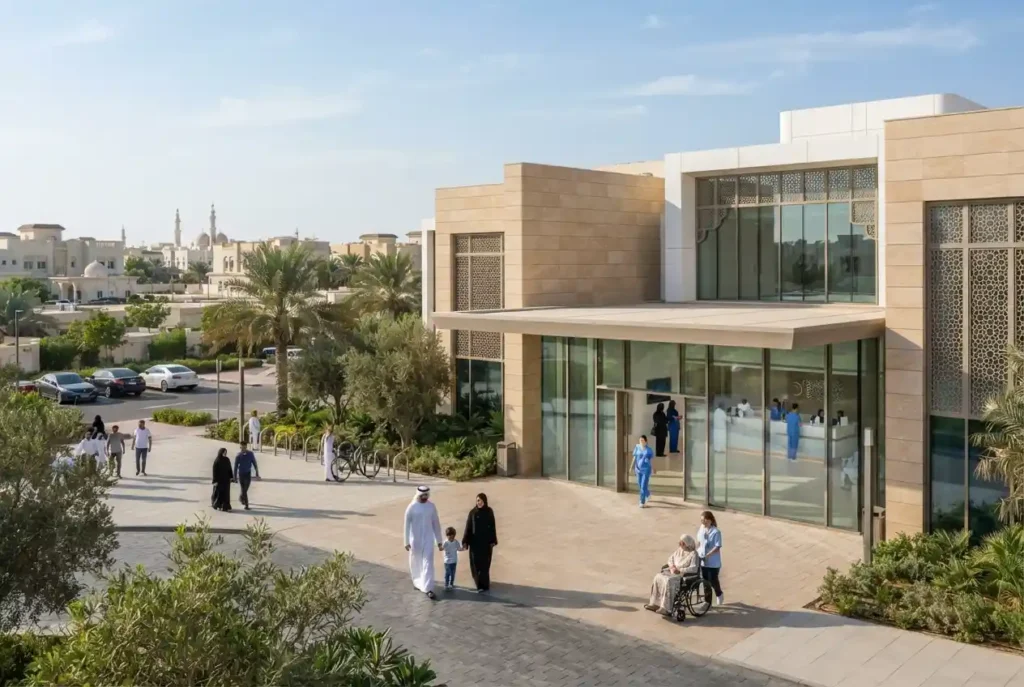
Access to convenient medical care is an important consideration for families and residents living in the growing communities of Abu Dhabi. For people living in Madinat Mohammed Bin Zayed and surrounding areas, the Madinat Mohammed Bin Zayed Healthcare Center is an important part of the local primary healthcare network.
The facility is listed by the Abu Dhabi Department of Health as a primary healthcare center, while SEHA’s current facility information identifies it as Madinat Mohamed Bin Zayed Healthcare Center. The facility is also included in SEHA’s current healthcare network and clinic listings.
This guide explains what residents should know about the center, how community healthcare facilities fit into Abu Dhabi’s wider medical system, and what to check before arranging a visit.
What Is the Madinat Mohammed Bin Zayed Healthcare Center?
The Madinat Mohammed Bin Zayed Healthcare Center is a community healthcare facility serving residents in and around Madinat Mohammed Bin Zayed in Abu Dhabi. It forms part of the primary healthcare network rather than functioning as a large tertiary hospital.
Primary healthcare centers can provide an important first point of contact for routine medical needs. Depending on the facility and the patient’s circumstances, care may include consultations, preventive services, follow-up appointments, assessments, and referrals to other healthcare providers when additional treatment is required.
The exact services available can change, so residents should verify current service information before visiting rather than relying on an old directory listing.
Where Is Madinat Mohammed Bin Zayed?
Madinat Mohammed Bin Zayed is a major residential community in the Abu Dhabi area, located on the mainland away from Abu Dhabi Island. The community has developed substantially over time and is home to families, professionals, and other residents who require convenient access to everyday services.
A local healthcare center is particularly useful in a large residential area because residents may need medical care without travelling into central Abu Dhabi for every routine appointment.
When planning a visit, patients should confirm the facility’s current location through the official healthcare provider and allow enough travel time based on traffic conditions.
Current Access and Operating Information
SEHA’s current clinic information lists SEHA Clinics Madinat Mohamed bin Zayed as operating 24 hours. Its facility directory also lists Madinat Mohamed Bin Zayed Healthcare Center with a schedule of Sunday through Friday from 7am to 10:30pm and Saturday from 10am to 10pm, showing that different SEHA information pages may present different operating arrangements.
Because schedules can be updated and individual services may have different hours, residents should confirm the latest information directly with the provider before travelling. A facility being listed as open for extended hours does not necessarily mean every department or service operates throughout that period.
Services You May Expect from a Community Healthcare Center
The purpose of a primary healthcare center is generally to make appropriate first-level medical care accessible within local communities. The exact departments available at Madinat Mohammed Bin Zayed Healthcare Center should be confirmed before booking.
Depending on the facility’s current service structure, community healthcare may include areas such as:
- Primary medical consultations
- Family healthcare
- Preventive healthcare
- Routine health assessments
- Follow-up care
- Health screening and monitoring
- Referral to specialist services when appropriate
Patients with a specific medical requirement should check whether the relevant service is currently offered before making an appointment.
Madinat Mohamed Bin Zayed Healthcare Center and Primary Care
Primary care has an important role in helping patients navigate the healthcare system. Instead of treating every health concern as a hospital-level problem, primary healthcare provides a suitable starting point for many routine and non-complex medical needs.
A primary care professional can assess a patient’s concern and, when necessary, recommend additional investigations, specialist consultation, or another appropriate level of care.
This approach can help create a more connected healthcare journey, particularly for residents managing ongoing health needs.
24-Hour Healthcare Access in Abu Dhabi
Access to healthcare outside traditional daytime hours can be particularly useful for working residents and families. In 2026, the Department of Health – Abu Dhabi announced expanded 24-hour operations at selected primary care centers across Abu Dhabi and Al Ain. Madinat Mohammed Bin Zayed was included among the Abu Dhabi centers named in the expansion.
The expansion was connected to efforts to improve geographic coverage and support the development of urgent care services. This reflects the broader move toward making appropriate healthcare access more convenient for communities across the emirate.
However, patients should still distinguish between primary care, urgent care, and emergency services. Serious or life-threatening medical situations require emergency medical attention rather than waiting for a routine consultation.
Madinat Khalifa Healthcare Center as Another Abu Dhabi Option
Residents who live or work in other parts of Abu Dhabi may also encounter the Madinat Khalifa Healthcare Center when researching community healthcare options.
SEHA’s current facility information lists Madinat Khalifa Healthcare Center among its Abu Dhabi facilities and provides operating information for the center.
The two facilities serve different communities, so residents should generally choose based on location, required service, appointment availability, and suitability for their healthcare needs rather than assuming that every center provides identical services.
How to Choose Between Healthcare Centers
Having several healthcare facilities available can make access easier, but it can also make choosing the right one confusing. A simple comparison can help.
Start With Your Healthcare Need
Before selecting a center, determine what type of care you are seeking. A routine consultation, preventive appointment, follow-up visit, screening requirement, or specialist referral can each involve different services.
Checking the center’s current service information first can save time and prevent an unnecessary trip.
Consider Distance From Home
For recurring appointments, location is an important practical factor. A healthcare center close to home can make it easier to attend regular consultations and follow-up visits.
Residents of Madinat Mohammed Bin Zayed may find the local center convenient, while people in neighbouring communities may prefer another facility depending on their location.
Check Opening Hours
Operating hours are especially important for people who work standard office hours or need care outside conventional schedules.
Because official listings can change or display different service arrangements, checking the provider’s latest information before travelling is recommended.
Review Insurance Requirements
Insurance coverage can influence which healthcare facility is most practical. Patients should check whether their insurance plan is accepted and whether authorization is required for particular services.
If you are paying privately, it may also be useful to confirm applicable charges before receiving non-emergency services.
When a Healthcare Center Is Appropriate
Community healthcare centers are designed to address appropriate primary and community medical needs. They can be useful for routine consultations, preventive care, follow-up appointments, and other services available at the facility.
They are not substitutes for hospitals in every situation. Patients requiring complex specialist treatment, surgery, hospital admission, or emergency intervention may need a different level of care.
Understanding this distinction can help residents choose the right healthcare pathway rather than automatically visiting a hospital for every concern.
What to Take to Your Appointment
Preparation can make a healthcare visit smoother. Depending on the appointment and provider requirements, patients may need identification, insurance information, previous medical records, medication details, or referral documents.
If you are attending because of an ongoing medical issue, having a clear record of current medications and previous consultations can also help the healthcare professional understand your situation.
Requirements vary, so patients should check the latest instructions when booking.
Using Official Healthcare Information
Healthcare information should be checked carefully because facilities can change their services, schedules, registration procedures, and contact arrangements.
The Abu Dhabi Department of Health maintains information about primary healthcare providers in the emirate, while SEHA provides facility and healthcare network information. These sources are more reliable for current operational details than outdated directory pages.
Residents researching the healthcare centers Al Ain network can also compare how community healthcare is organized across different parts of the emirate.
Emergency Care Versus Primary Healthcare
Not every medical situation should be handled through a routine healthcare center appointment. If a person experiences a serious or potentially life-threatening medical emergency, emergency medical services should be used immediately.
For less serious concerns, a primary healthcare center may be an appropriate first point of contact. Healthcare professionals can assess the situation and determine whether additional treatment or referral is needed.
Understanding this difference can help residents use healthcare resources more appropriately and avoid delays when urgent medical intervention is required.
Why Local Healthcare Access Matters
Healthcare accessibility is about more than the number of hospitals available. Community-based facilities can make everyday healthcare easier to reach for people who live far from major medical districts.
For a large residential community such as Madinat Mohammed Bin Zayed, having a local primary healthcare facility gives residents another option for managing appropriate medical needs closer to home.
Local access can also be particularly valuable for families and people who need regular appointments, provided the facility offers the services required.
Frequently Asked Questions
What is the Madinat Mohammed Bin Zayed Healthcare Center?
It is a community primary healthcare facility in Abu Dhabi serving residents in and around Madinat Mohammed Bin Zayed. It is included in the Abu Dhabi primary healthcare network.
Is Madinat Mohammed Bin Zayed Healthcare Center open 24 hours?
Current SEHA clinic information lists SEHA Clinics Madinat Mohamed bin Zayed as operating 24 hours. Other official facility listings show different schedules, so residents should confirm the latest information before visiting.
What services are available at the center?
Services depend on the facility’s current departments and healthcare arrangements. Patients should check the latest official service information when arranging an appointment.
Is Madinat Khalifa Healthcare Center another option?
Yes. Madinat Khalifa Healthcare Center is also included in SEHA’s Abu Dhabi healthcare network. It serves a different community, so suitability depends on the patient’s location and healthcare requirements.
Should I visit a healthcare center for an emergency?
For serious or life-threatening symptoms, residents should seek emergency medical assistance rather than waiting for a routine primary healthcare appointment.
In Summary
The Madinat Mohammed Bin Zayed Healthcare Center is an important community healthcare facility for residents of one of Abu Dhabi’s major residential areas. Its place within the primary healthcare network gives local residents access to medical care without necessarily requiring a journey to a major hospital for every routine concern.
When planning a visit, check the current services, operating hours, appointment requirements, insurance arrangements, and location details. Because healthcare information can change, official SEHA and Department of Health sources should be used for the latest operational information.
For residents comparing community healthcare options, understanding the difference between primary care, specialist services, urgent care, and emergency treatment can make the healthcare journey more efficient and informed.







