
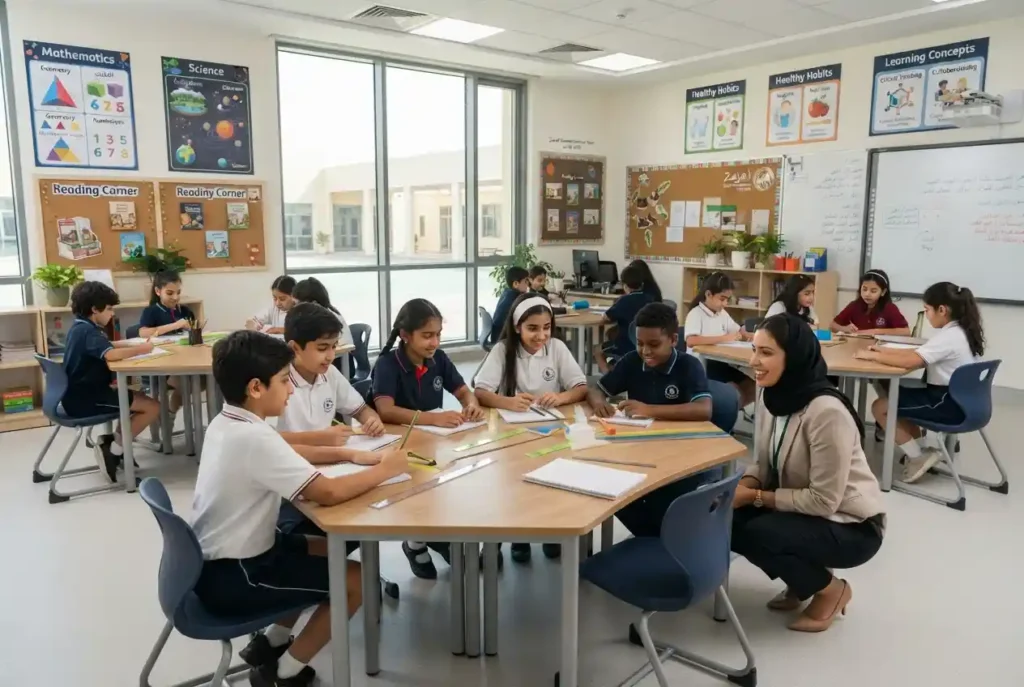
Educational posters are more than decorative materials placed on classroom walls. When they are designed around a clear learning objective, they can reinforce important concepts, provide quick visual references, encourage positive habits, and make learning spaces more engaging for students.
From mathematics and science charts to language guides, health reminders, classroom rules, and inspirational learning displays, posters can support different stages of education. They can also be useful outside traditional classrooms, including libraries, tutoring centers, study rooms, and home learning environments.
The key is not simply putting more information on the walls. Effective educational posters should present useful information clearly, match the learner’s age and ability, and support what students are already learning.
What Are Educational Posters?
Educational posters are visual learning resources created to communicate information, explain concepts, reinforce lessons, or encourage particular behaviors. They usually combine concise text with illustrations, diagrams, symbols, charts, or other visual elements.
A well-designed poster focuses on a specific idea rather than attempting to explain an entire subject. For example, a mathematics classroom might use a multiplication chart, while a science classroom could display the parts of a plant or the solar system. A language classroom may use vocabulary posters, grammar rules, or pronunciation guides.
This focused approach makes posters useful as quick-reference resources. Students can look at them during lessons or independent study without having to search through a textbook for basic information.
Why Educational Posters Matter in Learning Spaces
Visual resources can help turn abstract information into something students can see and revisit. A poster placed in a frequently used area can reinforce a concept repeatedly without requiring a separate teaching session every time.
Educational posters can support learning in several ways:
- Reinforcing key concepts: Important facts, definitions, formulas, vocabulary, and processes can remain visible after a lesson.
- Supporting visual learners: Diagrams, illustrations, and structured information can make certain concepts easier to understand.
- Encouraging independent learning: Students can use posters as quick references when completing activities or reviewing material.
- Improving classroom engagement: Thoughtfully designed displays can make a learning environment more inviting and purposeful.
- Promoting positive behavior: Posters can remind students about hygiene, respect, organization, safety, and classroom routines.
Educational resources such as posters are particularly useful when they complement teaching rather than attempt to replace it. Teachers can introduce a concept during a lesson and then use a poster as a continuing visual reminder.
Types of Educational Posters for Classrooms
Subject-Based Posters
Subject-based posters focus on academic content. Common examples include mathematics formulas, scientific diagrams, historical timelines, geography maps, grammar rules, vocabulary lists, and reading strategies.
These posters are most effective when their content matches the students’ current level. A poster containing advanced terminology may create unnecessary confusion in an early learning classroom, while a very basic display may provide little value to older students.
Motivational Learning Posters
Motivational posters can encourage perseverance, curiosity, confidence, and a positive attitude toward learning. Rather than filling an entire classroom with generic quotes, educators can select messages that connect with the school’s learning culture.
A useful motivational poster might encourage students to ask questions, learn from mistakes, read regularly, or approach difficult tasks with patience.
Healthy Educational Posters
Healthy educational posters can help students learn about personal hygiene, nutrition, physical activity, sleep, hydration, and healthy daily routines. These displays can be particularly useful in younger classrooms where repeated visual reminders can reinforce everyday habits.
For example, a health-focused poster might illustrate proper handwashing steps or explain the importance of maintaining personal hygiene. Similar displays can be placed in school corridors, activity rooms, cafeterias, or other areas where students regularly see them.
The information should be simple, age-appropriate, and consistent with reliable health guidance. For additional educational poster ideas, teachers can also explore resources such as Edutopia’s classroom posters, which provides downloadable poster resources for educators.
How to Design an Effective Educational Poster
A useful educational poster does not need to be complicated. In fact, excessive information can make a poster difficult to understand. The strongest designs usually have a clear central message and enough visual structure for students to identify the important information quickly.
Keep the Main Message Clear
Start with one learning objective. If a poster tries to cover too many unrelated concepts, students may struggle to identify what they are supposed to remember.
For example, instead of creating one crowded poster covering every mathematics topic, a teacher could use separate displays for multiplication facts, fractions, geometric shapes, or measurement.
Use Readable Text
Students should be able to read the poster from an appropriate distance. Large headings, short explanations, and clear typography generally work better than long paragraphs.
Important terms can be highlighted through layout rather than excessive decoration. The goal is to make the information easy to scan.
Use Visuals With a Purpose
Images and diagrams should help explain the content rather than simply fill empty space. A labeled diagram of the human heart, for instance, can provide more educational value than a decorative image placed beside a block of text.
Match the Poster to the Age Group
Design choices should reflect the learner’s age and educational level. Younger students may benefit from simple illustrations, familiar symbols, and short phrases, while older students may need more detailed charts, terminology, or subject-specific diagrams.
Using Posters Alongside Classroom Activities
Posters become more valuable when teachers actively incorporate them into learning activities. Instead of treating wall displays as permanent decoration, educators can refer to them during discussions, quizzes, revision exercises, and group activities.
A teacher might ask students to identify information from a science poster, explain a diagram to a partner, or use a displayed formula to solve a problem. Students can also create their own educational posters as part of a project. This approach turns the poster from a passive display into a learning activity.
Student-created posters can also help teachers assess whether learners understand a topic. If students can organize important information into a clear visual explanation, they may demonstrate understanding in a different way from a traditional written test.
Educational Timers and Classroom Routines
Visual learning tools are not limited to subject information. An educational timer can also support classroom routines by giving students a visible indication of how much time remains for an activity.
Timers can be useful during reading exercises, group work, revision sessions, transitions, and independent assignments. When combined with visual classroom displays, they can help create a more predictable learning environment.
The purpose is not to rush students unnecessarily. Instead, a timer can help learners understand the structure of an activity and develop awareness of time management.
Educational Posters in Home Learning Spaces
Educational posters can also be useful at home. Parents can create a small study area where children have access to age-appropriate reference materials such as alphabet displays, multiplication charts, vocabulary posters, maps, science diagrams, or reading reminders.
However, the same principle applies at home: more posters do not automatically mean better learning. Too many displays can create visual clutter and reduce the impact of individual resources. Selecting a small number of useful posters is often more effective than covering every available wall.
How Educational Posters Fit Into Modern Education
Modern education increasingly combines physical learning resources with digital tools. Posters still have a role because they provide information without requiring a device, login, internet connection, or screen.
They can also complement technology-based learning. For example, students might use an educational app to practice mathematics while a classroom poster provides a quick reminder of multiplication strategies. Similarly, a science learning platform can be supported by physical diagrams displayed in the classroom.
This broader approach becomes particularly relevant as schools explore educational technology, learning apps, and other digital resources. Physical and digital resources do not have to compete; they can serve different purposes within the same learning environment.
Tips for Choosing Educational Posters
- Choose posters that support a specific learning objective.
- Make sure the information is accurate and appropriate for the learner’s age.
- Prioritize readable typography and simple layouts.
- Use diagrams and illustrations when they genuinely improve understanding.
- Replace outdated information when curriculum requirements change.
- Avoid overcrowding classrooms with unnecessary displays.
- Place posters where students can easily see and use them.
- Connect displays with current classroom activities whenever possible.
Final Thoughts
Educational posters can be simple tools, but their value depends on how thoughtfully they are selected and used. A clear mathematics chart, health reminder, science diagram, vocabulary guide, or classroom routine display can provide students with useful information throughout the day.
The best approach is to treat posters as part of the learning environment rather than simply classroom decoration. When visual displays are accurate, focused, age-appropriate, and connected to teaching activities, they can reinforce lessons while encouraging students to engage with information independently.
As schools continue combining traditional teaching methods with educational technology and other modern learning resources, well-designed educational posters remain a practical and accessible way to keep important ideas visible.







