
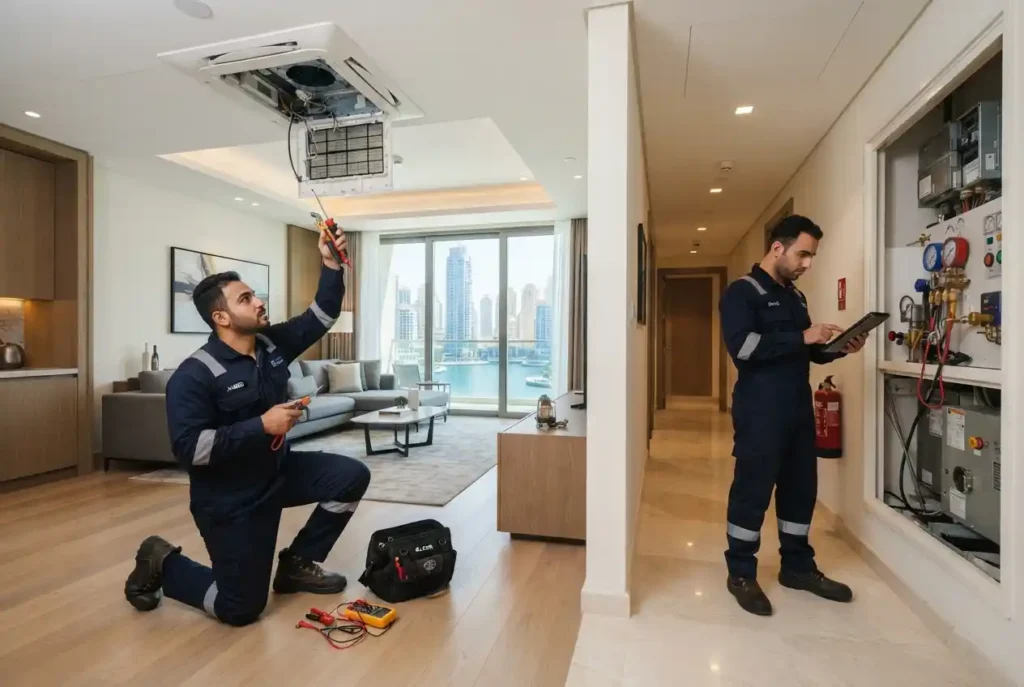
Dubai property maintenance is an important part of protecting the condition, safety, comfort, and long-term value of a property. Whether you own an apartment, villa, townhouse, commercial unit, or investment property, regular maintenance can help identify problems before they become more expensive to repair.
Dubai’s climate and rapid urban development create specific maintenance considerations for property owners. Air-conditioning systems, plumbing, electrical equipment, water systems, exterior surfaces, appliances, and building facilities all require appropriate attention. For landlords, timely maintenance can also contribute to a better tenant experience and smoother property management.
Property maintenance is therefore more than responding to a broken appliance or leaking pipe. It involves preventive inspections, planned servicing, emergency repairs, documentation, vendor coordination, and understanding which responsibilities belong to the owner, tenant, building management, or another party.
What Is Property Maintenance in Dubai?
Property maintenance in Dubai covers the regular inspection, servicing, repair, and upkeep of a property and its associated systems. The exact responsibilities can vary depending on the property type, ownership structure, tenancy agreement, building rules, and service arrangements.
Common maintenance areas include air conditioning, plumbing, electrical systems, water heaters, appliances, doors and windows, painting, flooring, waterproofing, pest control, and general building-related repairs.
For owners who rent out their properties, maintenance can also involve responding to tenant requests and coordinating contractors or property management companies.
Why Regular Dubai Property Maintenance Matters
Preventive maintenance can help property owners identify minor problems before they develop into major repairs. A small plumbing leak, for example, may be easier and less expensive to address before it causes damage to flooring, walls, cabinetry, or neighboring units.
Regular servicing can also help maintain the functionality of important systems. Air-conditioning equipment is particularly important in Dubai because cooling systems are central to everyday comfort for much of the year.
Well-maintained properties can also be easier to rent, sell, or occupy. Buyers and tenants are more likely to evaluate the physical condition of a property alongside its location, layout, amenities, and price.
Common Property Maintenance Services in Dubai
Maintenance requirements differ between properties, but several services are common across Dubai’s residential and commercial buildings.
Air-Conditioning Maintenance
Air-conditioning systems require regular attention to maintain efficient operation. Depending on the system, maintenance may include cleaning filters, inspecting components, checking drainage, servicing equipment, and addressing unusual noises or cooling problems.
Ignoring early warning signs can result in more serious system problems, particularly during periods of heavy usage.
Plumbing and Water Systems
Plumbing maintenance can include checking water leaks, taps, toilets, drains, water heaters, pumps, and other related systems. Unusual water pressure, damp areas, persistent odors, or unexplained increases in water consumption can sometimes indicate an issue that requires investigation.
Electrical Maintenance
Electrical problems should be handled by appropriately qualified professionals. Common maintenance concerns can include faulty switches, sockets, lighting, circuit problems, and electrical equipment.
Owners should avoid informal repairs when a problem involves the property’s electrical system. Proper diagnosis and professional work can reduce unnecessary risks.
Painting and Interior Repairs
Walls, ceilings, doors, flooring, cabinetry, and fixtures can experience normal wear over time. Routine repairs and repainting can help maintain the appearance and functionality of a property, particularly between tenancies.
Pest Control
Pest control can be an important part of property upkeep, especially where environmental conditions or building characteristics create opportunities for pests. Regular inspections can help identify potential problems early.
Preventive vs. Reactive Property Maintenance
There are two broad approaches to maintenance: preventive and reactive.
Preventive maintenance involves scheduled inspections and servicing intended to reduce the likelihood of unexpected failures. Examples include routine air-conditioning servicing, checking plumbing systems, inspecting equipment, and maintaining appliances.
Reactive maintenance happens after a problem occurs. Examples include repairing a leaking pipe, replacing a failed air-conditioning component, or fixing an electrical fault.
For property owners, a combination of both approaches is usually more practical. Preventive maintenance can reduce avoidable failures, while reactive maintenance remains necessary when unexpected problems occur.
Who Is Responsible for Property Maintenance in Dubai?
Maintenance responsibility depends on the circumstances. In rented properties, the tenancy agreement may specify which repairs are the landlord’s responsibility and which minor maintenance tasks are expected from the tenant.
Building or community management can also have responsibility for certain common areas and shared facilities, while individual owners may be responsible for the interior of their units and other areas allocated to them.
Because responsibilities can vary, owners and tenants should review their contractual documents and applicable building or community rules instead of assuming that every maintenance issue follows the same arrangement.
Property Maintenance for Landlords
Landlords have additional reasons to maintain properties properly. A well-maintained rental unit can help create a better experience for tenants and may reduce the likelihood of repeated complaints caused by unresolved problems.
Landlords should keep records of maintenance requests, invoices, inspections, repairs, warranties, and contractor details. Good documentation makes it easier to understand the property’s maintenance history and identify recurring issues.
Before a new tenant moves in, an inspection can help document the property’s condition. At the end of a tenancy, another inspection can help identify changes that require attention.
Using a Property Management Company
Owners who live outside Dubai or manage multiple properties may prefer to work with a property management company. A professional manager can potentially coordinate tenant communications, maintenance requests, contractors, inspections, and other administrative responsibilities.
When comparing management companies, property owners should ask about their maintenance process, response times, contractor network, emergency procedures, reporting, fees, and approval requirements for repairs.
For a broader look at the industry, owners can also research the top property management companies in Dubai and compare the services they provide rather than selecting a provider solely on price.
Property Management ERP Dubai: How Technology Helps
Technology has changed how larger property portfolios are maintained. A property management ERP in Dubai can bring different operational functions into a centralized system, depending on the software and the organization’s requirements.
Property management platforms may help teams track properties, tenants, maintenance requests, work orders, invoices, vendors, inspections, and service schedules. Centralized records can make it easier to identify outstanding maintenance tasks and monitor their progress.
For larger portfolios, technology can also reduce reliance on scattered spreadsheets, emails, and messaging conversations. Automated notifications and dashboards may help managers prioritize urgent issues and maintain clearer records.
What to Look for in Property Management Software
If a property owner or management company is evaluating software, the most important features depend on portfolio size and operational complexity.
- Maintenance ticket management: Helps record and track repair requests.
- Work-order tracking: Makes it easier to assign tasks to internal teams or vendors.
- Property records: Centralizes information about individual properties.
- Vendor management: Helps organize contractor details and service relationships.
- Document storage: Provides a structured location for invoices, agreements, inspection records, and related documents.
- Reporting: Can help managers understand maintenance activity and recurring issues.
- Notifications: Useful for reminders, scheduled servicing, and outstanding requests.
How Much Does Property Maintenance Cost in Dubai?
There is no single maintenance price that applies to every Dubai property. Costs can vary significantly depending on the property size, age, building, equipment, condition, type of repair, contractor, and urgency of the work.
Routine servicing may be relatively predictable, while major repairs can be considerably more expensive. Owners should therefore avoid relying on a single generic maintenance figure when planning a property budget.
A better approach is to maintain a property-specific record of recurring expenses and set aside an appropriate reserve for unexpected repairs. For investment properties, maintenance should be included when assessing the overall financial performance of the asset.
How to Choose a Property Maintenance Provider
When selecting a maintenance company, do not compare providers based only on the cheapest quotation. A low initial price may not represent the overall quality, response time, materials, workmanship, or after-service support.
Consider whether the provider has experience with your property type and ask how emergency requests are handled. Request a clear description of the work, expected materials, labor charges, warranties where applicable, and any exclusions.
For recurring services, clarify whether the agreement covers scheduled inspections and routine repairs or whether additional charges apply each time a technician is dispatched.
Maintenance Planning for Different Property Types
An apartment owner may have different maintenance priorities from a villa owner. Apartments often involve building management systems and shared facilities, while villas may require greater attention to private outdoor areas, water systems, landscaping, gates, and larger air-conditioning or mechanical systems.
Commercial properties can have more complex requirements because of higher occupancy, specialized equipment, tenant operations, and regulatory considerations.
The maintenance plan should therefore reflect the property’s actual systems rather than following a generic checklist without modification.
Property Maintenance Jobs in Dubai
The maintenance side of the real estate industry creates employment opportunities across technical and administrative roles. Property maintenance teams can include technicians, engineers, supervisors, facilities professionals, coordinators, building managers, and customer service staff.
People searching for property management jobs in Dubai may encounter roles that combine maintenance coordination with leasing, tenant relations, inspections, administration, or facilities operations.
Relevant experience, technical qualifications, communication skills, software knowledge, and familiarity with local property operations can all be useful depending on the role.
Creating a Practical Dubai Property Maintenance Schedule
A maintenance schedule should organize tasks according to how frequently they need attention. Some systems may require regular servicing, while others only need inspection when warning signs appear.
Owners can divide their plan into monthly, quarterly, annual, and as-needed tasks. Keep records of completed work and note the date, contractor, cost, and outcome.
This approach can make recurring maintenance easier to manage and may reveal patterns. For example, repeated repairs to the same system could indicate that replacement or a more comprehensive inspection is more appropriate than continuing with small repairs.
Common Maintenance Mistakes Property Owners Should Avoid
- Waiting until a small issue becomes an emergency: Early intervention can sometimes prevent more extensive damage.
- Choosing contractors only by price: Quality and reliability matter alongside cost.
- Ignoring maintenance records: Without documentation, recurring problems are harder to identify.
- Skipping preventive servicing: Important systems can deteriorate when routine attention is neglected.
- Not clarifying responsibility: Owners and tenants should understand their respective maintenance obligations.
- Failing to budget for repairs: Unexpected maintenance is easier to handle when a reserve has been planned.
In Summary
Dubai property maintenance is a long-term responsibility that should be considered from the moment a property is purchased or rented. Regular inspections, preventive servicing, timely repairs, accurate records, and reliable contractors can help protect the condition and usability of a property.
For landlords and investors, effective maintenance can also support tenant satisfaction and help preserve the property’s long-term appeal. Owners with larger portfolios may benefit from dedicated property management systems or professional management services to coordinate maintenance more efficiently.
The most effective maintenance strategy is practical rather than reactive: understand the property, know which systems require attention, keep accurate records, plan for recurring expenses, and address problems before they become unnecessarily expensive or disruptive.







