
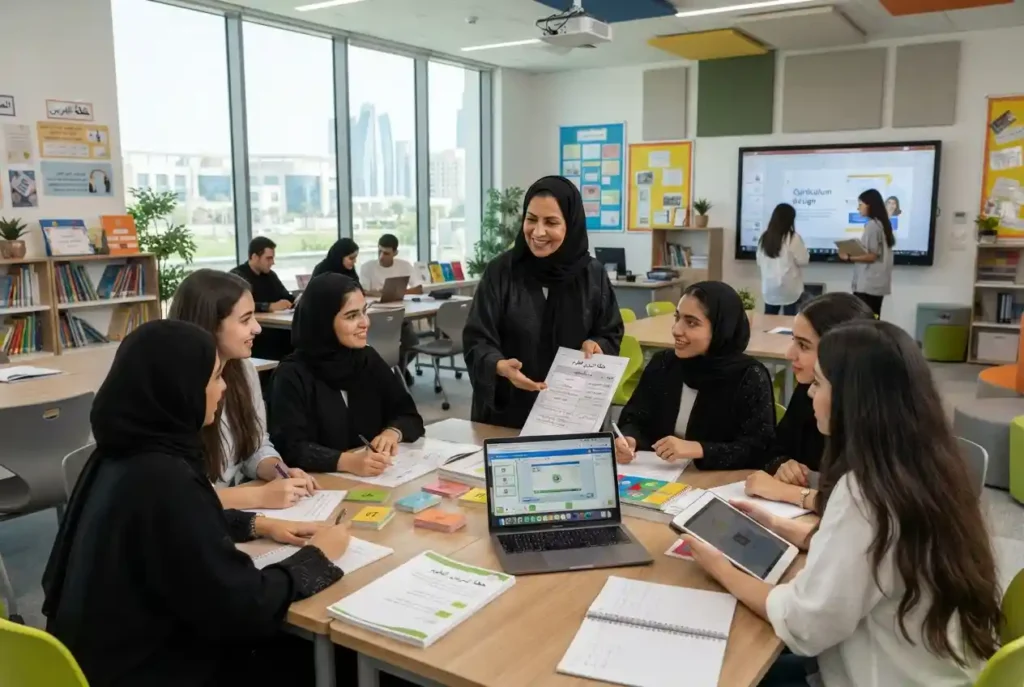
A Bachelor of Education, commonly abbreviated as B.Ed., is an undergraduate degree designed for students who want to develop the academic knowledge, teaching skills, and professional understanding needed for careers in education.
For aspiring teachers, choosing the right degree involves more than looking at the title of a programme. Students should consider the age group they want to teach, subject specialization, curriculum, practical teaching requirements, accreditation, admission criteria, and the regulations that apply in the country where they intend to work.
In the UAE, this is particularly important because the education sector includes government schools, private schools, international schools, higher education institutions, and different curricula. Teacher qualifications and licensing requirements can therefore vary according to the role and institution.
What Is a Bachelor of Education?
A Bachelor of Education is an undergraduate programme focused on teaching and learning. Depending on the university and specialization, the degree can prepare students to work with early childhood learners, primary students, secondary students, or learners in specific subject areas.
A B.Ed. may combine educational theory with practical classroom experience. Students can study topics such as child development, educational psychology, curriculum design, classroom management, assessment, teaching methodologies, inclusive education, and educational technology.
The exact structure differs between universities. Some programmes are designed as direct teacher-preparation degrees, while others may focus on a specific educational stage or subject.
Why Study a Bachelor of Education?
Teaching is a profession that combines subject knowledge with communication, organization, creativity, leadership, and the ability to understand different learners.
A Bachelor of Education can provide a structured pathway for students who want to enter the teaching profession. It can also establish a foundation for later postgraduate study in areas such as educational leadership, curriculum development, special education, educational psychology, or education technology.
Students considering the degree should understand that becoming an effective teacher requires continuous development. A university qualification is a foundation rather than the end of teacher education.
What Do Students Learn in a B.Ed. Programme?
The curriculum depends on the university and specialization, but a typical Bachelor of Education may include several broad areas.
Educational Psychology
Educational psychology helps future teachers understand how students learn and develop. Topics can include motivation, cognitive development, individual differences, behavior, and learning challenges.
This knowledge can help teachers design lessons that recognize differences between learners instead of assuming that every student responds to the same teaching method.
Teaching Methodology
Teaching methodology focuses on how educators present information, design activities, ask questions, provide feedback, and assess understanding.
Students may learn different instructional approaches and examine when each approach is appropriate.
Classroom Management
Classroom management involves creating an environment where students can learn effectively. Future teachers may study routines, communication, behavior management, classroom organization, conflict resolution, and student engagement.
Curriculum and Lesson Planning
Teachers need to understand how individual lessons connect to broader curriculum objectives. Education programmes therefore often introduce curriculum planning, learning outcomes, lesson sequencing, assessment strategies, and instructional resources.
Assessment
Assessment is an important part of teaching. Future educators learn how to use different assessment methods to understand student progress and identify areas where additional support may be required.
Inclusive Education
Inclusive education prepares teachers to work with students who have different abilities, backgrounds, learning preferences, and support needs. Depending on the programme, students may study differentiated instruction, accessibility, special educational needs, and inclusive classroom strategies.
Educational Technology
Technology has become an important part of modern teaching. Future teachers may learn how digital tools can support lessons, assessment, communication, collaboration, and personalized learning.
Technology should generally complement good teaching rather than replace it. Teachers still need to understand curriculum, students, and learning objectives before selecting digital tools.
Teacher Education and Practical Training
Teacher education is most effective when students can connect academic theory with classroom practice. This is why many teacher-preparation programmes include supervised teaching, school placements, internships, or practical training.
Practical experience can help future teachers develop skills that are difficult to acquire solely through lectures. These may include managing a classroom, explaining a difficult concept, responding to student questions, preparing lessons, assessing work, and communicating with colleagues.
Teaching placements can also help students determine whether a particular age group or educational setting suits their personality and career goals.
Specializations Within a Bachelor of Education
Students should look carefully at the specialization offered by each university. Possible areas can include:
- Early childhood education
- Primary education
- Secondary education
- Special education
- English education
- Mathematics education
- Science education
- Social studies education
- Physical education
- Educational technology
Not every university offers every specialization. The best choice depends on the type of students and subjects the graduate wants to teach.
Bachelor of Education vs Education Degree
The terms education degree and Bachelor of Education are sometimes used interchangeably in casual conversation, but they can describe different programmes.
A Bachelor of Education is usually structured specifically around teacher preparation. Other education degrees may focus more broadly on educational studies, policy, administration, research, psychology, or related areas and may not automatically qualify a graduate for classroom teaching.
Students should therefore read the programme description carefully. If the goal is to become a licensed teacher, the relevant teaching qualification and regulatory requirements matter more than the general title of the degree.
Admission Requirements for a Bachelor of Education
Admission requirements vary by university and country. Applicants may need a secondary school qualification, minimum grades in particular subjects, English-language proficiency, entrance examinations, interviews, or other documentation.
Some teacher-preparation programmes may also have specific requirements for students planning to specialize in subjects such as mathematics, science, or languages.
International students should check the exact requirements of the university rather than relying on general B.Ed. admission information found online.
Studying a Bachelor of Education in the UAE
The UAE has a diverse higher education environment with public and private universities and institutions offering different academic programmes. Students considering teacher education should check whether a programme is accredited and whether it aligns with the professional requirements of the teaching role they want to pursue.
The UAE Ministry of Education provides information about higher education and institutions, while teacher licensing and school employment requirements can involve additional considerations depending on the education sector and emirate.
Students should therefore investigate programme accreditation, practical training, language of instruction, specialization, duration, tuition, and post-graduation requirements before enrolling.
Teacher Licensing and Professional Requirements
Completing a Bachelor of Education does not necessarily mean a graduate can teach in every country without further requirements. Teacher licensing and qualification recognition depend on the jurisdiction, school type, curriculum, and teaching position.
For someone planning to work in the UAE, it is important to check the current requirements applicable to the emirate, education authority, and type of school.
International graduates should also investigate whether their degree requires attestation, recognition, equivalency, or other documentation before it can be used for employment purposes.
Career Options After a Bachelor of Education
Teaching is the most obvious career path, but an education degree can support several related careers.
Classroom Teacher
Graduates may work as teachers in primary, secondary, early childhood, or specialized education settings, depending on their qualification and licensing requirements.
Learning Support Roles
Graduates with appropriate specialization may work in learning support or educational assistance roles, helping students who require additional academic support.
Curriculum and Instruction
Some education professionals move into curriculum development, instructional design, educational content creation, or academic coordination.
Education Administration
With experience and further qualifications, teachers may progress into coordination, academic leadership, school administration, or educational management.
Education Technology
The growth of digital learning has created opportunities in educational technology companies. Teachers with strong technology skills may contribute to instructional design, content development, training, or product development.
Skills Developed During Teacher Education
A Bachelor of Education can help students develop skills that extend beyond classroom instruction.
These may include:
- Public speaking and presentation
- Written and verbal communication
- Planning and organization
- Critical thinking
- Problem-solving
- Teamwork
- Leadership
- Assessment and evaluation
- Digital literacy
- Conflict management
These transferable skills can be useful in education-related careers even when graduates eventually move away from classroom teaching.
Technology in Modern Teacher Education
Teachers increasingly work in environments where students use tablets, computers, learning platforms, digital textbooks, educational applications, and other technology.
Teacher education programmes therefore need to prepare future educators to use technology thoughtfully. The objective should not be to use technology in every lesson but to understand when a digital tool genuinely improves learning.
For example, a teacher might use a learning application for practice, an interactive presentation for explanation, or an educational poster as a physical reference that remains visible throughout the lesson.
This combination illustrates why effective teaching increasingly involves selecting the right resource for the learning objective rather than relying on one format.
How to Choose the Right Bachelor of Education Programme
Students should compare programmes carefully before applying.
Check Accreditation
Confirm that the university and programme have the relevant recognition for the country where you intend to study and work.
Review the Specialization
Make sure the programme prepares you for the age group and subject area you want to teach.
Examine Practical Training
Find out how much classroom experience students receive and which schools or educational institutions provide placements.
Compare Curriculum
Look at actual modules rather than relying only on the degree title. Two B.Ed. programmes can have significantly different academic structures.
Consider Career Outcomes
Research where graduates work and whether the qualification is suitable for your intended teaching market.
Calculate the Total Cost
Compare tuition, accommodation, transportation, books, technology, and other expenses rather than looking only at the advertised annual tuition.
Is a Bachelor of Education Right for You?
Teaching can be rewarding, but it also requires patience, preparation, communication, and a willingness to work with students who learn at different speeds.
Students considering a B.Ed. should ask themselves whether they enjoy explaining ideas, helping others improve, managing groups, planning activities, and continuously developing their own knowledge.
Observation or volunteer experience in an educational environment can also help prospective students understand the realities of teaching before committing to a degree.
Continuing Education After a B.Ed.
Teacher education does not stop when a graduate receives a degree. Teachers need to keep developing their knowledge as curricula, technology, student needs, and educational research change.
Graduates may pursue postgraduate degrees, professional certifications, specialist training, workshops, conferences, or other forms of continuing professional development.
Experienced teachers may eventually specialize in areas such as educational leadership, special education, curriculum development, counseling, assessment, or educational technology.
Overall Verdict
A Bachelor of Education can provide a structured foundation for students who want to enter teaching and other education-related professions. The degree combines educational theory with practical preparation and can lead to careers across schools, training organizations, curriculum development, learning support, and education technology.
For students in the UAE or planning to work there, choosing a programme requires additional attention to accreditation, teacher licensing, qualification recognition, curriculum, and practical training.
The most important consideration is not simply whether a university offers a B.Ed. It is whether the programme provides the right academic preparation and professional pathway for the type of educator you want to become.
As education continues to evolve through technology, changing curricula, and greater attention to inclusive learning, teachers will need both strong subject knowledge and the ability to adapt. A good Bachelor of Education programme can provide the foundation for developing those skills throughout a long teaching career.







