
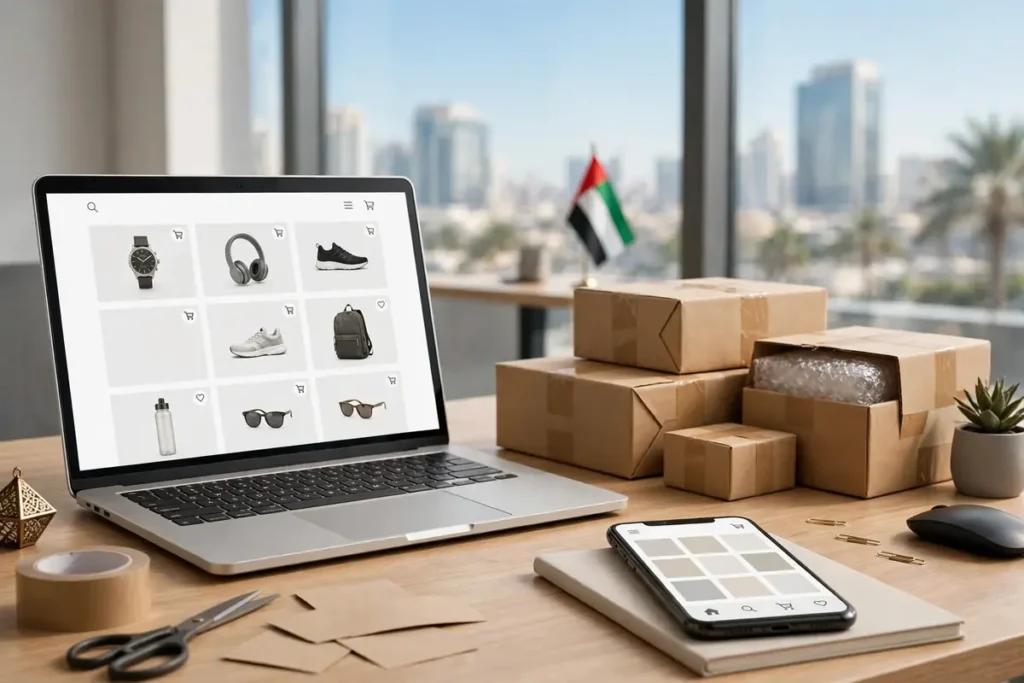
An ajman e-commerce license can be a practical starting point if you want to sell products online from the UAE. It gives your online store a clear legal basis, and it helps customers, suppliers, and payment providers understand that your business is properly set up. At the same time, licensing is only one part of the journey. You also need a clear product idea, a workable store, reliable delivery, and a simple plan for customer service.
This guide explains the process in plain language. It walks through what the license is for, how to choose a suitable route, what to prepare, and how to avoid common mistakes. Costs vary by license type and free zone, so always confirm the current requirements with the relevant authority before you apply.
What Is an Ajman E-Commerce License?
In simple terms, an ajman e-commerce license allows a business based in Ajman to carry out online selling activities under an approved license. It is meant for businesses that sell goods or services through a website, an online store, or another digital channel. The license should match what you actually plan to sell, so describe your products and services accurately from the beginning.
Many new sellers focus only on the website. However, the license is the foundation. Without it, you may struggle to open a business bank account, arrange payment processing, or build trust with customers. With it, you can present your store as a real business rather than a casual side project.
Why Ajman Appeals to Online Sellers
Ajman is often considered by new online sellers because it offers a straightforward business environment and a range of free zone and mainland routes. For a small team, this flexibility can be helpful. You can start lean, test your idea, and then expand as demand grows.
Ajman also sits close to other major UAE markets, which can make storage and delivery planning easier. A seller based in Ajman can still serve customers in Dubai, Sharjah, and other emirates, provided the license and delivery arrangements allow it. Before you commit, check how your chosen route affects where you can sell and how you can fulfil orders.
Choose the Right Route for Your Store
There is no single route that suits every seller. Some businesses are better suited to a free zone setup, while others may need a different structure depending on their customers, products, and plans. This is why it is worth comparing options carefully before you apply.
If you are considering a free zone route, our guide to Ajman Free Zone company setup explains the wider process in more detail. It can help you understand how licensing, facilities, and company structure fit together. In the same way, a broader look at company formation in the UAE can help you compare mainland and free zone options.
Your choice should follow your business model. Ask yourself who your customers are, whether you will hold stock, whether you will sell through your own website or a marketplace, and whether you need staff or a physical workspace. Also check the approved activity carefully. A guide to approved Ajman Free Zone business activities can help you think through the categories that may apply to your store.
A Practical Step-by-Step Process
Although the exact steps can vary, most sellers follow a similar path. First, define your business idea in a few clear sentences. Write down what you will sell, who will buy it, and how orders will be delivered. This short description will guide every later decision.
Second, confirm the license route and activity that fits that idea. Do not choose a license simply because it sounds familiar. Instead, match it to your products, sales channels, and fulfilment method. If you plan to add new product categories later, ask whether they can be added to the same license or whether a separate approval is needed.
Third, prepare your basic information and documents. Requirements vary by applicant and structure, but you should generally be ready with identification documents, shareholder details where relevant, and a clear description of your business. Keeping these items organised will save time and reduce delays.
Fourth, submit your application through the relevant authority or service channel. Read each form carefully, and check that names, activities, and contact details are correct. Small errors can cause avoidable back-and-forth, so take your time at this stage.
Finally, set up the practical parts of your store while the application is being processed. Build your website, prepare product descriptions, test your payment options, and plan your delivery process. Before launch, check that your store shows clear product information, delivery terms, return terms, and contact details.
What to Prepare Before You Apply
Good preparation makes the whole process smoother. Start with a simple business plan, even if it is only one or two pages. It should cover your products, target customers, pricing approach, suppliers, and delivery method. You do not need a long document, but you do need clarity.
Also prepare a list of the products or services you intend to offer. Be specific. Instead of saying you will sell general goods, list the main categories. This helps the authority understand your business, and it helps you plan stock, packaging, and delivery.
Costs and Budgeting Without Guesswork
Costs vary by license type and free zone, and the total budget is rarely just the license fee. You should also consider registration charges, facility costs where relevant, payment processing, website costs, packaging, delivery, and renewal costs. A realistic budget separates one-time setup costs from ongoing monthly costs.
For a closer look at the financial side, our guide to Ajman Free Zone license costs explains the factors that can affect the total amount. It is also useful to compare this with free zone license costs in the UAE, because different authorities and packages can include different items.
When you compare options, ask for a written breakdown. Find out what is included, what is charged separately, and what renewal will involve. Avoid choosing a package on price alone if it does not cover the activities or facilities your business actually needs.
Payments, Banking, and Delivery
Once your license is in place, you will need a way to receive payments and manage your money. A dedicated business account helps you keep business income separate from personal spending, and it makes record-keeping much simpler. Our guide to opening a business bank account in the UAE explains what to prepare and what banks may ask about your business activity.
For payments, choose options that your customers in the UAE will find convenient and trustworthy. The checkout should show the total cost clearly before payment, including delivery charges where relevant. A confusing checkout is one of the most common reasons customers abandon an order.
Delivery deserves just as much attention. Decide whether you will pack and ship orders yourself, use a courier, or work with a fulfilment partner. Test the process with a few trial orders. Check packaging, delivery times, tracking updates, and how returns will be handled. Customers remember delivery experiences, so a smooth process can lead to repeat orders.
Building Your Store and Finding Customers
Your website should make shopping easy. Clear categories, simple navigation, honest product descriptions, and good photos all help. Customers cannot touch products online, so your descriptions need to answer their main questions: what it is, what it does, who it is for, and what is included.
Marketing should start with the basics. Search visibility, social media, and helpful content can all bring steady traffic over time. For local support, digital marketing support in Ajman can be useful if you want help with strategy or campaigns. For online stores more generally, e-commerce digital marketing explains how different channels work together.
Do not try to be everywhere at once. Choose one or two channels that fit your customers, and do them well. Track what brings orders, and improve gradually. Customer service is also part of marketing: reply promptly, be honest about delivery times, and handle returns fairly.
Different Online Selling Models
Not every online store works in the same way. Some sellers buy stock and store it themselves. This gives more control over packaging and delivery, but it also requires more upfront planning. Others use a marketplace to reach customers quickly, which can be a good way to test demand before building a full website.
Another model is dropshipping, where a supplier ships products directly to the customer. Our guide to a dropshipping business in the UAE explains how this model works and what to watch out for. It can reduce inventory needs, but it also makes supplier reliability and delivery times especially important.
Whichever model you choose, treat it as a real business. Check product quality, write original descriptions, set clear policies, and keep customers informed. For a wider view, our guide to starting an e-commerce business in the UAE covers planning, product selection, payments, and growth.
Common Mistakes to Avoid
One common mistake is choosing a license activity that does not match the products you sell. This can create problems later, especially if you expand into new categories. Always check the activity before you apply, and ask about future additions.
Another mistake is focusing only on the license fee. The total cost includes many other items, and renewal should be part of your plan from the start. Our guide to renewing an Ajman Free Zone license is a useful reminder that licensing is an ongoing responsibility, not a one-time task.
A third mistake is launching before delivery and customer service are ready. A beautiful website will not help if orders arrive late or questions go unanswered. Test your full process, from order to delivery, before you promote the store widely.
Frequently Asked Questions
Do I need a license to sell online in Ajman?
In general, if you plan to sell products or services online as a business in Ajman, you should operate under an appropriate license. The right route depends on your business model, products, and sales channels, so confirm the current requirements with the relevant authority before you start trading.
Can I sell to customers outside Ajman?
Many Ajman-based online businesses serve customers across the UAE, but this depends on your license route, activity, and delivery arrangements. Check where you are permitted to sell and how fulfilment should be arranged, especially if you plan to reach customers in other emirates.
How much does an Ajman e-commerce license cost?
Costs vary by license type and free zone, and they also depend on your activity, facility needs, and any additional services. Rather than relying on a single advertised figure, ask for a written breakdown and compare the total first-year cost, including renewal.
Final Thoughts
An ajman e-commerce license is a practical foundation for selling online in the UAE, but the strongest stores are built on more than paperwork. Start with a clear product idea, choose a license route that matches your real business, prepare your documents carefully, and build a store that is easy to use and honest about delivery and returns.
Take your time, verify current requirements, and grow step by step. With a focused product range, reliable fulfilment, and good customer service, an Ajman-based online store can become a sustainable business rather than a short-lived experiment.