
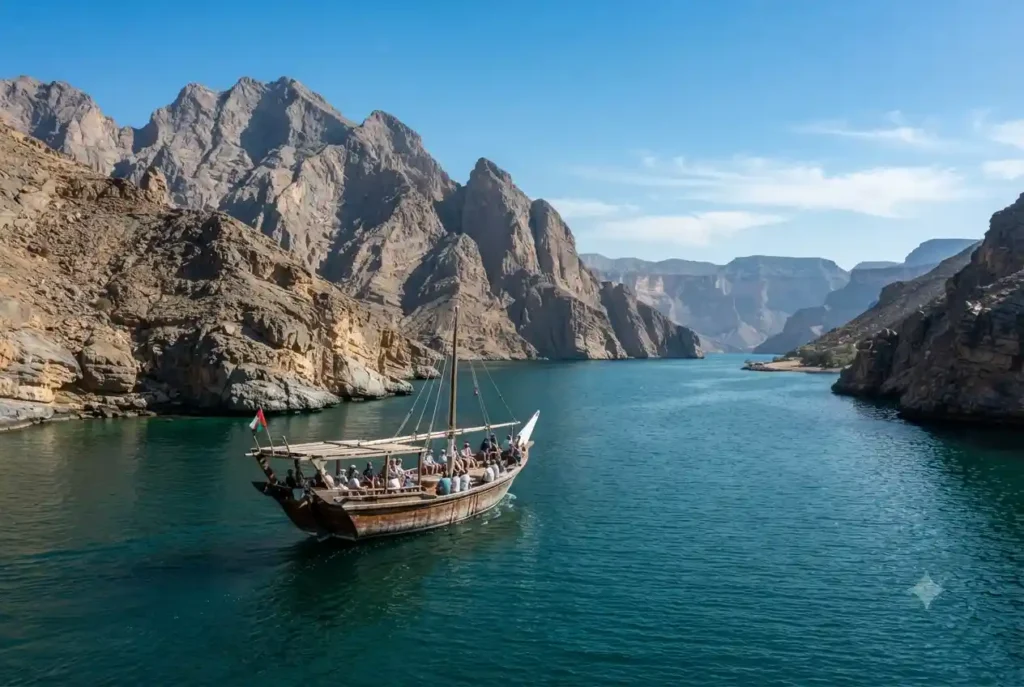
Musandam tourism offers a striking combination of rugged mountains, calm turquoise waters, traditional villages, historic forts, marine life, and dramatic coastal scenery. Located in the northernmost part of Oman, Musandam is separated geographically from most of the country and sits around the Strait of Hormuz. Its unusual landscape, where steep mountains meet the sea, gives the region a character that feels very different from a conventional beach or city holiday.
Khasab is the main gateway for visitors and the most practical base for exploring the governorate. From here, travelers can take traditional dhow cruises through the famous fjord-like coastline, explore Khasab Fort, travel into the mountains toward Jebel Harim, visit secluded bays, and enjoy snorkeling, diving, fishing, and dolphin-watching experiences.
Oman’s official tourism platform describes Musandam as a destination where steep mountains and calm seas come together, with Khasab, Bukha, Dibba, and Madha offering different landscapes and attractions. Mountain trekking, boat trips, and diving are among the region’s highlighted activities. Explore the official Musandam tourism guide before planning your journey. :contentReference[oaicite:0]{index=0}
Why Musandam Tourism Is Worth Exploring
Musandam’s greatest attraction is its geography. Mountains rise sharply from the coastline, creating narrow inlets, sheltered bays, cliffs, and fjord-like formations. The combination of barren rock and deep blue water creates some of the most distinctive scenery in northern Oman.
The region is also ideal for travelers who prefer experiences over conventional sightseeing. A day can begin with a mountain drive and panoramic views before continuing with a dhow trip, swimming, snorkeling, or watching dolphins from the water.
At the same time, Musandam has a strong historical and cultural side. Khasab Fort and other historic structures provide insight into Oman’s coastal heritage, while traditional villages offer glimpses of life in a mountainous environment.
Khasab: The Gateway to Musandam
Khasab is the capital of Musandam Governorate and the primary base for tourism in the region. The town sits between dramatic mountains and the sea, making it an ideal starting point for both land and water excursions.
Visitors can use Khasab as a base for dhow cruises, mountain safaris, diving trips, fishing excursions, and visits to nearby villages and viewpoints.
The town itself is relatively compact, so travelers can combine a short city exploration with excursions into the surrounding landscape. Khasab is also home to one of Musandam’s most important historic attractions, Khasab Fort.
Khasab Fort
Khasab Fort provides a cultural counterpoint to Musandam’s natural attractions. The historic fort stands near the coast and overlooks the Strait of Hormuz, reflecting the strategic importance of Khasab’s location.
According to Oman’s official tourism information, the fort was built at the beginning of the 17th century during the reign of Imam Nasir bin Murshid Al-Ya’rubi. Its structure includes defensive towers, a central tower, traditional rooms, and heritage elements that reflect different stages of its history. :contentReference[oaicite:1]{index=1}
The fort is now a visitor attraction where travelers can explore traditional Omani architecture, historical exhibits, defensive structures, and panoramic coastal views.
Official information currently lists its visiting hours as 8:00 AM to 6:00 PM daily, although travelers should verify current arrangements before visiting. :contentReference[oaicite:2]{index=2}
Musandam Dhow Cruises
A traditional dhow cruise is one of the defining experiences of Musandam tourism. These wooden boats travel along the region’s dramatic coastline, passing steep cliffs, narrow inlets, fishing areas, and sheltered bays.
The landscape looks completely different from the water. Mountains rise directly from the sea, while small beaches and rocky coves appear along sections of the coastline that are difficult to reach by road.
Full-day cruises commonly combine sightseeing with opportunities for swimming, snorkeling, and relaxing on board. Dolphin sightings are also possible during cruises, although wildlife encounters cannot be guaranteed.
Oman’s official tourism resources specifically highlight dhow cruises, sheltered swimming areas, dolphin encounters, diving, and fishing as major experiences around Khasab. :contentReference[oaicite:3]{index=3}
Musandam’s Fjord-Like Coastline
Musandam is often associated with the nickname “Norway of Arabia” because of its dramatic fjord-like coastal formations. While the geological setting is different from Norway, the comparison reflects the visual effect created by steep mountains descending directly toward the sea.
The coastline is best appreciated from a boat. A dhow journey allows travelers to see cliffs, bays, islands, and mountain formations from angles that are impossible to experience from the main roads.
Photography is particularly rewarding during morning and late afternoon trips, when changing light creates stronger contrast between the mountains and water.
Telegraph Island
Telegraph Island is one of the most recognizable stops on many Musandam dhow cruises. The island is associated with the remains of a historic British telegraph station and sits within the Strait of Hormuz.
Today, visitors are attracted not only by the historical connection but also by the surrounding marine environment. Cruises may stop near the island for swimming and snorkeling, depending on weather and sea conditions.
The combination of history, isolated scenery, and clear water makes Telegraph Island an interesting part of a full-day cruise.
Jebel Harim: Musandam’s Mountain Experience
Jebel Harim is the highest mountain in Musandam and a major destination for travelers who want to explore the region beyond the coastline. The mountain reaches approximately 2,087 meters and provides wide views across the rugged landscape. :contentReference[oaicite:4]{index=4}
The journey toward Jebel Harim is usually undertaken in a four-wheel-drive vehicle because the route passes through mountainous terrain. The changing scenery includes valleys, rocky slopes, small settlements, and dramatic viewpoints.
For travelers who have only experienced Musandam from a dhow, a mountain safari provides an important contrast. Instead of looking toward the cliffs from the sea, visitors can climb into the mountains and see the coastline and surrounding valleys from above.
Khawr Najd and Scenic Mountain Roads
Khawr Najd is another scenic location that can be included in a Musandam mountain excursion. The route descends toward a beautiful coastal inlet, creating an impressive viewpoint over the water.
The combination of winding roads, rocky mountains, and the blue sea makes this area particularly attractive for photographers. It can also be a good choice for travelers who want a short nature-focused experience without spending the entire day on a boat.
Mountain roads require caution, particularly when conditions change. Travelers should use experienced local drivers for routes where four-wheel-drive access or specialist knowledge is appropriate.
Sayh and Traditional Mountain Communities
Musandam’s mountain landscape is not empty wilderness. Small communities have adapted to the difficult terrain and developed traditional ways of living around limited water and agricultural resources.
Sayh is one of the mountain settlements that can be incorporated into a Jebel Harim excursion. Visiting such communities can add cultural context to a journey that might otherwise focus entirely on scenery.
Travelers should approach village visits respectfully. Local homes and private areas should not be photographed without permission, and visitors should follow the guidance of their tour operators or local hosts.
Diving and Snorkeling in Musandam
Musandam is also known for its marine environment. The combination of relatively sheltered waters, rocky coastlines, underwater landscapes, and marine life makes the region attractive to divers and snorkelers.
Beginners can look for introductory experiences with established operators, while experienced divers may prefer more specialized excursions. Conditions can vary depending on weather, currents, and location, so operators should determine suitable sites according to the day’s conditions.
Snorkeling can also be included during dhow cruises. Travelers should avoid touching coral, disturbing marine animals, or leaving waste in the water.
Dolphin Watching in Musandam
Dolphin encounters are one of the experiences that attract visitors to Musandam’s waters. Dolphins are frequently associated with dhow cruises around the peninsula, and seeing them in their natural environment can be a memorable part of the trip.
However, responsible wildlife tourism means keeping an appropriate distance and allowing animals to move freely. Sightings are never guaranteed, so travelers should view dolphin watching as an opportunity rather than a promised attraction.
The official Oman tourism platform specifically notes that dolphins are often encountered during Khasab dhow trips. :contentReference[oaicite:5]{index=5}
Bukha and Coastal Heritage
Bukha is one of the other main wilayats of Musandam and offers a quieter coastal experience. The area is known for its beaches, mountain scenery, and historic heritage.
Bukha Fort is an important attraction for visitors interested in Omani defensive architecture. Its coastal position demonstrates how settlements in Musandam historically combined mountain protection with access to the sea.
Travelers exploring the wider governorate can include Bukha as part of a road trip rather than limiting their experience to Khasab.
Dibba and Madha
Dibba provides another side of Musandam, combining mountains and coastline. Its location makes it relevant to travelers interested in coastal scenery and excursions beyond Khasab.
Madha is particularly distinctive because of its freshwater springs and valleys. Oman’s official tourism information identifies Madha among Musandam’s four main wilayats and highlights its natural springs and green valleys. :contentReference[oaicite:6]{index=6}
These areas are less central to the standard Khasab itinerary, but travelers with more time can explore them to gain a broader understanding of the governorate.
Best Time for Musandam Tourism
The cooler months are generally the most comfortable period for exploring Musandam’s mountains and coastline. Outdoor activities such as mountain safaris, hiking, sightseeing, and dhow cruises are more enjoyable when temperatures are moderate.
Oman’s official tourism information currently lists October through April as the best visiting period for Khasab Fort, reflecting the region’s more comfortable cooler-season conditions. :contentReference[oaicite:7]{index=7}
Summer can be considerably hotter, which may make extended outdoor activities less comfortable. Travelers visiting during warmer months should plan excursions carefully, carry sufficient water, protect themselves from the sun, and follow operator advice.
Sea conditions can also influence dhow cruises and water activities, so travelers should check the latest local conditions before heading out.
How Many Days Are Enough for Musandam?
A two-day Musandam trip can provide a strong introduction. One day can focus on a dhow cruise, swimming, snorkeling, and coastal scenery, while another can be dedicated to Khasab, Khasab Fort, and a mountain safari.
Three days allow for a more relaxed itinerary and make it easier to include Jebel Harim, Khawr Najd, Telegraph Island, and additional cultural or coastal stops.
Travelers who want diving, fishing, hiking, or a slower pace may prefer a longer stay. Musandam rewards visitors who leave some time for unplanned scenic stops rather than scheduling every hour.
How to Reach Musandam
Musandam is accessible by land, sea, and air, according to Oman’s official tourism platform. Khasab Airport provides air access, while road and sea connections offer other options depending on the traveler’s starting point. :contentReference[oaicite:8]{index=8}
Travelers coming from the UAE should pay particular attention to border and entry requirements before starting the journey. Requirements can depend on nationality, visa status, vehicle arrangements, and the route used.
Because border procedures and travel regulations can change, it is important to check current official requirements before departure rather than relying solely on older travel guides.
Musandam Tourism for Families
Musandam can be suitable for families who enjoy scenic drives, boat trips, swimming, and nature. A dhow cruise can be a particularly enjoyable family experience because it combines sightseeing with opportunities to stop in sheltered waters.
Families should consider the ages of children when choosing activities. Long mountain journeys, rough boat conditions, or extended snorkeling sessions may not suit every child.
Sun protection, drinking water, appropriate clothing, and basic travel supplies are particularly important during outdoor excursions.
Musandam Tourism for Couples
Couples can create a relaxed itinerary around a private or small-group dhow experience, mountain viewpoints, sunset scenery, seafood, and comfortable accommodation in Khasab.
The region’s combination of mountains and sea creates plenty of opportunities for scenic photography. A late-afternoon mountain excursion followed by a coastal evening can be a simple way to experience Musandam without rushing between attractions.
For couples who prefer adventure, diving, snorkeling, kayaking, and mountain drives can add an active dimension to the trip.
Responsible Tourism in Musandam
Musandam’s natural environment is one of its greatest assets, so responsible travel is particularly important. Visitors should avoid leaving plastic or other waste on beaches, boats, mountains, or remote viewpoints.
Marine activities should be conducted carefully. Coral should not be touched or damaged, and wildlife should be observed without chasing or feeding animals.
Visitors should also respect local communities and cultural sites. Traditional villages, forts, mosques, and other heritage locations are part of the living identity of Musandam rather than simply backdrops for photographs.
Practical Tips for a Musandam Trip
Wear comfortable clothing and footwear suitable for both boat and mountain activities. A hat, sunglasses, sunscreen, and sufficient drinking water are useful for outdoor excursions.
If you are taking a dhow cruise, bring a waterproof bag for phones, cameras, and other valuables. Water conditions can change, and even calm-looking seas may create spray around the boat.
For mountain safaris, use an experienced local driver familiar with the roads and conditions. Avoid attempting challenging mountain routes without appropriate vehicles, knowledge, and preparation.
Travelers should also confirm excursion schedules, border requirements, accommodation arrangements, and any permit or entry conditions before departure.
Combining Musandam With a UAE Trip
Musandam is particularly interesting for travelers based in or visiting the UAE because of its geographical proximity to the Emirates. A trip can be planned as a dedicated Oman getaway or incorporated into a broader Gulf itinerary.
Travelers researching Armenia tourism or other international destinations can also use Musandam as a contrasting example of a destination where nature and adventure are the primary focus rather than major urban sightseeing.
For a UAE-based traveler, Musandam can provide a relatively different landscape without requiring a long-haul journey. However, border formalities and travel eligibility should always be checked before departure.
Final Thoughts on Musandam Tourism
Musandam tourism is built around a rare combination of dramatic mountains, clear coastal waters, traditional culture, and marine adventure. Khasab provides a convenient base, while the surrounding landscape offers enough variety for both short escapes and longer exploration.
A dhow cruise through the fjord-like coastline is one of the region’s defining experiences, especially when combined with swimming, snorkeling, and possible dolphin sightings. On land, Jebel Harim, Khawr Najd, Khasab Fort, Bukha, and mountain villages provide a completely different perspective.
The best time to visit is generally during the cooler part of the year, particularly for travelers planning outdoor activities. A well-balanced itinerary should include both land and sea experiences rather than focusing on only one side of the destination.
For travelers seeking an adventurous Oman experience with dramatic scenery, traditional culture, and easy access to the sea, Musandam offers something genuinely distinctive. Its rugged mountains meeting the Arabian Gulf create a landscape that is difficult to replicate elsewhere in the region.