
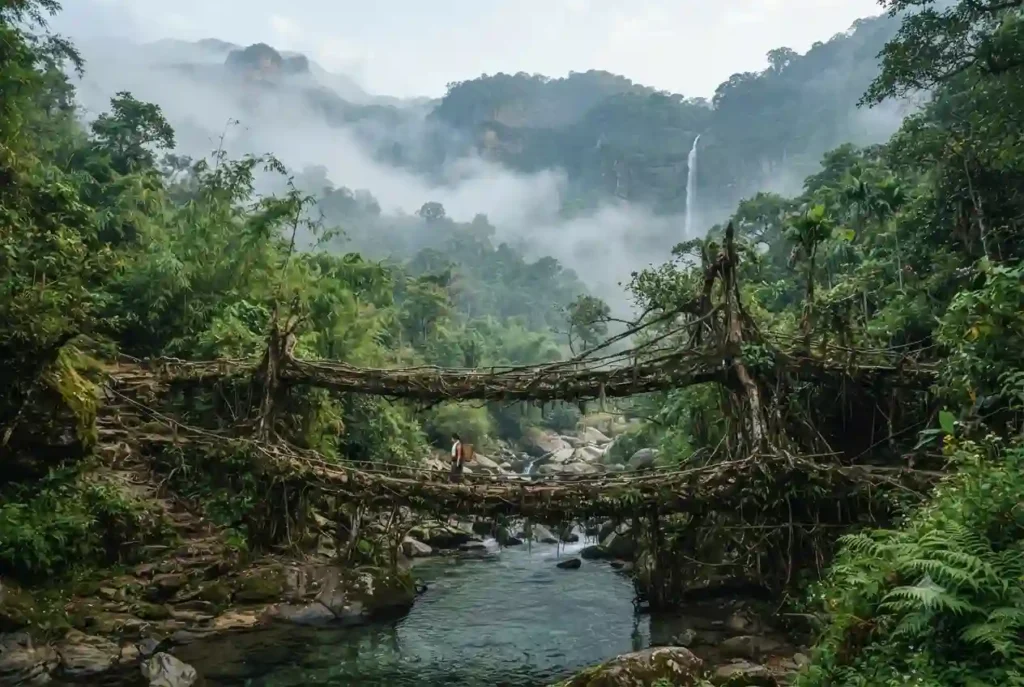
Meghalaya tourism offers a remarkable combination of mist-covered hills, living root bridges, waterfalls, caves, forests, clear rivers, scenic villages, and distinctive local culture. Located in northeastern India, Meghalaya is often associated with lush landscapes and heavy rainfall, but the state offers much more than dramatic monsoon scenery. Its natural attractions, outdoor experiences, and peaceful hill towns make it an appealing destination for travelers who want to explore a greener and less conventional side of India.
Shillong is usually the main starting point for visitors, but a Meghalaya itinerary can extend far beyond the state capital. Cherrapunji, Mawlynnong, Dawki, Nongriat, Mawsynram, Jowai, and several protected natural areas provide different experiences, from waterfalls and caves to village walks and river adventures.
The Meghalaya Tourism Department provides destination information covering the state’s major attractions, natural environments, cultural experiences, and travel resources. Explore the official Meghalaya tourism resources when planning routes and checking destination information before your trip.
Why Meghalaya Tourism Is Worth Exploring
Meghalaya stands out because its landscapes feel dramatically different from many of India’s better-known tourist destinations. Hills are covered with dense greenery, waterfalls appear along cliffs and forested slopes, and rivers cut through valleys and limestone terrain.
The state is also home to the famous living root bridges created by local communities using the roots of rubber fig trees. These bridges are not simply scenic attractions; they demonstrate generations of traditional knowledge and a close relationship between local communities and their natural environment.
For travelers who enjoy nature, Meghalaya offers opportunities for trekking, cave exploration, boating, photography, birdwatching, and scenic drives. Culture is another important part of the experience, with Khasi, Jaintia, and Garo traditions contributing to the state’s distinctive identity.
Shillong: The Gateway to Meghalaya
Shillong is the capital of Meghalaya and one of the easiest places from which to begin exploring the state. The hill city combines natural scenery with markets, cafés, viewpoints, cultural attractions, and local neighborhoods.
Visitors can explore Shillong’s central areas before venturing into the surrounding hills. Ward’s Lake, Shillong Peak, Elephant Falls, and nearby viewpoints are among the attractions that can be incorporated into a city-focused itinerary.
Shillong is also useful as a base for organizing trips to destinations farther into Meghalaya. Travelers can spend a few days in the city before heading toward Cherrapunji, Dawki, Nongriat, or other natural attractions.
The city has its own food and music culture as well, making it worthwhile to experience Shillong rather than treating it only as a transit point.
Cherrapunji: Waterfalls, Caves and Dramatic Landscapes
Cherrapunji, traditionally known as Sohra, is one of Meghalaya’s most recognizable destinations. Its reputation for rainfall has made it internationally famous, but the real attraction is the combination of cliffs, forests, waterfalls, caves, and panoramic valleys.
Nohkalikai Falls is among the most iconic attractions in the region. The waterfall drops dramatically from the surrounding plateau and is especially impressive when viewed against the green landscape.
Other waterfalls and viewpoints around Cherrapunji can be combined into a full-day exploration. The area also provides access to caves and trekking routes for travelers who want to move beyond conventional sightseeing.
Because weather can change quickly, travelers should plan outdoor activities with flexibility. During periods of heavy rain, trails can become slippery and road conditions can change.
Nongriat and the Living Root Bridges
Nongriat is one of the most rewarding destinations for travelers interested in trekking and traditional ecological knowledge. The area is famous for its living root bridges, which are formed by guiding the roots of living trees over streams and gaps.
The Double Decker Living Root Bridge is the best-known example. Reaching it involves a demanding trek involving many steps, so visitors should allow sufficient time and carry suitable footwear and drinking water.
The journey is part of the attraction. Dense forest, streams, village landscapes, and changing terrain create an experience that is very different from visiting a conventional monument.
Travelers should treat the environment respectfully and avoid leaving waste along the trail. The living root bridges are part of local communities and landscapes rather than simply photo opportunities.
Dawki and the Umngot River
Dawki is another popular stop on Meghalaya itineraries, particularly for travelers interested in rivers and border-region landscapes. The Umngot River is famous for its clear water and scenic surroundings.
Boating is one of the most popular activities in the area, especially when water conditions provide good visibility. The surrounding hills and riverbanks create an attractive setting for photography and relaxed outdoor experiences.
Dawki can also be combined with a visit to nearby Mawlynnong, allowing travelers to experience both the river environment and Meghalaya’s village landscapes in one route.
Mawlynnong: Village Tourism and Nature
Mawlynnong became widely known for its emphasis on cleanliness and community-led tourism. The village offers a quieter experience compared with the larger tourist centers and provides an opportunity to see how local communities have developed tourism around their environment and way of life.
Visitors can explore village paths, viewpoints, traditional structures, and nearby natural attractions. The experience is most rewarding when travelers slow down and appreciate the community environment rather than treating the village as a quick photo stop.
Mawlynnong works particularly well as part of a route that includes Dawki and nearby attractions.
Mawsynram and Meghalaya’s Rainy Landscape
Mawsynram is closely associated with Meghalaya’s reputation for extraordinary rainfall. For travelers interested in weather, geography, and dramatic landscapes, the area offers an opportunity to understand how rainfall shapes the region.
The surrounding environment includes green hills, streams, caves, and rural landscapes. The best experience depends heavily on seasonal conditions, so visitors should check local weather and road information before planning outdoor activities.
Travelers who visit during wetter periods should prepare for rain-resistant clothing, suitable footwear, and flexible travel plans.
Meghalaya’s Caves and Underground Landscapes
Meghalaya is an important destination for cave enthusiasts because of its extensive limestone formations and underground systems. Some caves are accessible to general visitors, while others require specialized equipment, experience, or professional guidance.
Mawsmai Cave near Cherrapunji is among the more accessible cave attractions and can be included in a standard sightseeing itinerary. More adventurous travelers may seek guided exploration of larger cave systems.
Cave tourism requires responsible behavior. Visitors should follow local rules, avoid damaging formations, stay with their group, and use qualified guides when the environment or route requires specialist knowledge.
Waterfalls to Include in a Meghalaya Itinerary
Waterfalls are among Meghalaya’s defining attractions. Nohkalikai Falls is perhaps the most recognizable, but the state contains numerous smaller waterfalls and seasonal cascades.
Elephant Falls near Shillong is convenient for travelers who want a waterfall experience without committing to a long regional journey. Cherrapunji and surrounding areas provide many more opportunities for waterfall sightseeing.
The appearance and flow of waterfalls can vary substantially depending on rainfall. During wetter periods, the scenery can become especially dramatic, although trails and roads may also become more challenging.
Best Time for Meghalaya Tourism
The best time to visit Meghalaya depends on the experience you want. The state is strongly influenced by monsoon weather, so travelers should consider rainfall when choosing travel dates.
For travelers who want easier road travel, sightseeing, trekking, and outdoor exploration, periods outside the heaviest monsoon conditions can be more convenient. The landscape remains green for much of the year, while waterfalls and streams can still be impressive.
Traveling during the monsoon can provide an especially dramatic version of Meghalaya, with heavy rainfall, mist, swollen waterfalls, and intensely green landscapes. However, rain can also affect transportation, trekking conditions, and access to certain attractions.
Before booking, travelers should check current weather and local travel conditions, particularly if they plan to trek to living root bridges or explore remote areas.
Meghalaya Tourism for Nature and Adventure Lovers
Meghalaya is particularly well suited to travelers who prefer active holidays. Trekking is one of the state’s most rewarding activities, with routes ranging from relatively easy walks to physically demanding journeys involving long stairways and uneven terrain.
Caving, kayaking, boating, canyon exploration, hiking, and photography can also form part of an itinerary. The exact activities available depend on location, season, weather, and local operators.
Adventure travelers should avoid underestimating Meghalaya’s terrain. Humidity, rain, steep paths, slippery surfaces, and remote locations can make some activities more physically demanding than they initially appear.
Local Culture and Food in Meghalaya
Meghalaya’s cultural diversity is an important part of the destination. Khasi, Jaintia, and Garo communities each contribute traditions, food, music, crafts, and local customs that make the state different from other parts of India.
Visitors should take time to learn about local communities and approach village tourism respectfully. Supporting local guides, restaurants, artisans, and community-run tourism initiatives can also help ensure that tourism benefits residents.
Food experiences can range from local meat and rice dishes to seasonal vegetables, fermented ingredients, and regional specialties. Shillong provides the widest range of restaurants, while traveling through smaller areas offers opportunities to try more localized cuisine.
How to Plan a Meghalaya Tourism Itinerary
A good Meghalaya itinerary should be organized geographically rather than simply listing famous attractions. Shillong is a practical starting point, followed by routes toward Cherrapunji, Nongriat, Dawki, and Mawlynnong depending on available time.
For a short trip, travelers can concentrate on Shillong and Cherrapunji with selected nearby attractions. A longer itinerary can add Nongriat, Dawki, Mawlynnong, Mawsynram, Jowai, or other regional destinations.
Travel time should be taken seriously. Mountain roads can make journeys slower than they appear on a map, and weather can add additional delays. Building some flexibility into the schedule can make the trip significantly more enjoyable.
How Many Days Are Enough for Meghalaya?
A three-day trip can provide a quick introduction through Shillong and Cherrapunji, although it may feel rushed if you want to include trekking.
Five to seven days allow more room for major attractions and provide the flexibility to include Dawki, Mawlynnong, or Nongriat. Travelers interested in trekking, caves, remote villages, and slower exploration may benefit from a longer stay.
The ideal duration ultimately depends on how active you want the trip to be. A sightseeing-focused journey can cover more places, while an adventure itinerary should leave additional time for trekking and weather-related flexibility.
Practical Tips for Visiting Meghalaya
Comfortable waterproof footwear is useful for many Meghalaya trips. Even outside the wettest season, trails and forest paths can be damp or uneven.
Carry rain protection, particularly if traveling toward Cherrapunji, Mawsynram, or other areas known for significant rainfall. A small daypack with water, basic first-aid supplies, and protective clothing can also be helpful during longer walks.
When visiting villages and religious or cultural sites, respect local customs and ask permission before photographing people or private spaces. Travelers should also avoid littering and follow local instructions around forests, caves, rivers, and protected areas.
For official destination details and local tourism resources, the Meghalaya Tourism website is a useful starting point for planning routes and checking information about attractions.
Is Meghalaya Good for Families?
Meghalaya can be an enjoyable family destination, particularly for families who like nature and outdoor sightseeing. Shillong offers relatively accessible attractions, while waterfalls, viewpoints, boating areas, and scenic drives can provide experiences suitable for different age groups.
However, not every activity is appropriate for young children. The trek to the Double Decker Living Root Bridge, for example, involves substantial physical effort. Families should choose activities according to the fitness and age of each traveler.
Planning fewer attractions per day can also make family trips more comfortable, especially when traveling on mountain roads.
Meghalaya Tourism for Couples and Photographers
Couples can find plenty of opportunities for scenic and relaxed travel in Meghalaya. Misty hills, forest trails, waterfalls, river valleys, and quiet villages provide a naturally atmospheric setting.
Photographers will find especially strong opportunities during changing weather, when clouds and mist interact with the hills and waterfalls. Early mornings can provide softer light and quieter conditions at popular viewpoints.
Because weather changes quickly, photographers should protect cameras and other equipment from moisture when exploring Meghalaya’s wetter regions.
Connecting Meghalaya With Other Northeast India Destinations
Travelers with additional time can consider Meghalaya as part of a broader northeastern India itinerary. The region contains several culturally and geographically distinct states, allowing visitors to create a longer journey around landscapes, wildlife, heritage, and local communities.
Travelers researching Sikkim tourism can also compare the two destinations when planning a broader Northeast India trip. Sikkim offers its own Himalayan landscapes and mountain culture, while Meghalaya provides a different environment dominated by forests, rainfall, waterfalls, caves, and subtropical hills.
Combining destinations can create a more diverse trip, but travelers should account for transportation time and regional connectivity before adding too many stops.
Final Thoughts on Meghalaya Tourism
Meghalaya tourism is best experienced at a pace that allows travelers to appreciate its landscapes rather than simply collect sightseeing points. Shillong provides a convenient introduction, while Cherrapunji, Nongriat, Dawki, Mawlynnong, Mawsynram, and other destinations reveal the state’s natural and cultural diversity.
The living root bridges are particularly memorable because they represent both an extraordinary natural environment and traditional local knowledge. Waterfalls, caves, rivers, and forest trails add an adventurous dimension, while Meghalaya’s communities and food provide cultural depth.
Choosing the right season is important, especially for travelers planning trekking and outdoor activities. Weather can change quickly, so flexibility should be part of the itinerary.
Whether you are looking for a peaceful hill escape, an active trekking holiday, a photography trip, or a deeper exploration of northeastern India, Meghalaya offers a distinctive travel experience built around nature, culture, and community.