
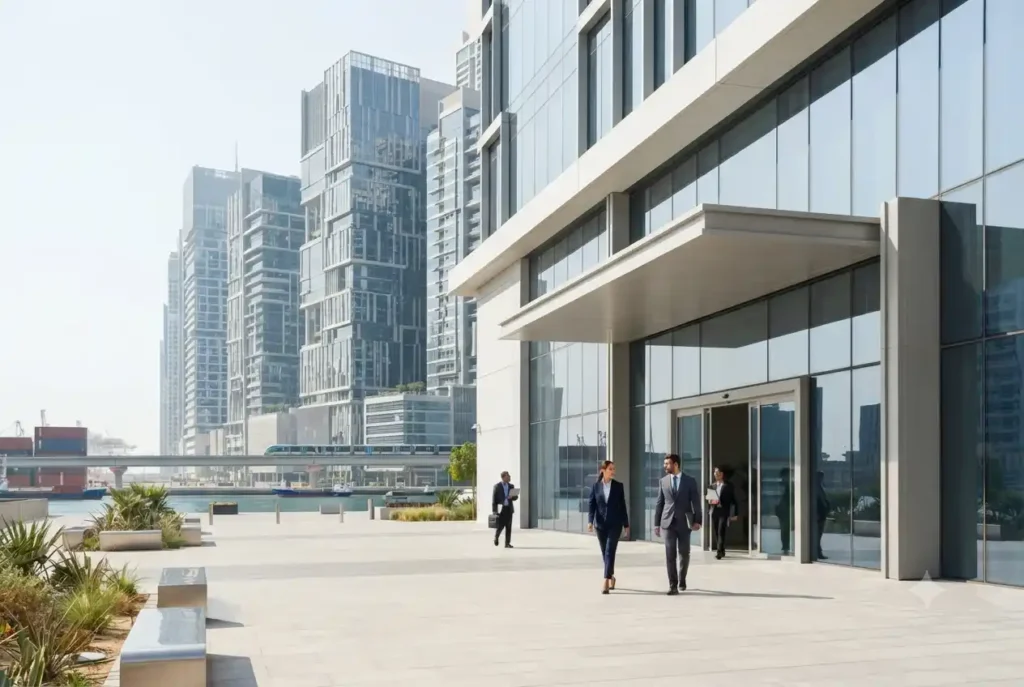
Dubai free zone business setup cost is one of the first considerations for entrepreneurs planning to establish a company in the UAE. With numerous free zones serving different industries, there is no single price that applies to every business. The final cost depends on the selected jurisdiction, business activity, legal structure, licence, office arrangement, visa requirements, and additional approvals.
Dubai’s free zones cater to a wide range of sectors, including technology, trading, logistics, media, professional services, e-commerce, and specialised industries. The UAE government describes free zones as business hubs that provide company registration, licensing, visas, office facilities, warehouses, customs and logistics services, and other administrative support.
For entrepreneurs, this means the right approach is not simply to search for the cheapest licence. Instead, the objective should be to identify a free zone whose activities, facilities, ownership structure, operating requirements, and total costs match the business plan.
What Is a Dubai Free Zone Business Setup?
A free zone company is established within a designated economic zone and operates under the rules of its relevant free zone authority. Depending on the jurisdiction, businesses can choose from different legal structures, licensing categories, office arrangements, and facility options.
The UAE government identifies several possible legal structures for free zone companies, including Free Zone Establishments, Free Zone Companies, private limited liability companies, and branches of local or international companies. Not every free zone offers every structure, so entrepreneurs need to check the rules of the selected authority.
Free zones can be particularly attractive to international entrepreneurs because they provide a structured company formation process and, in many cases, full foreign ownership. They can also provide specialised infrastructure for companies that need warehouses, technology facilities, media studios, logistics services, or other sector-specific resources.
How Much Does Dubai Free Zone Business Setup Cost?
There is no universal Dubai free zone business setup cost because each jurisdiction has its own fee structure. Costs can include the company application, registration, business licence, office or workspace, immigration establishment services, visas, and other government or administrative charges.
As a current reference point, DMCC states that establishing a company in its free zone can typically range from around AED 10,345 to AED 84,515 depending on the licence duration, business requirements, and whether office space is included. Its published packages also show that the actual cost varies substantially according to the selected setup.
DMCC’s current published packages include a Basic Biz Package at AED 35,484 for one year, a Jump Start Package with a standard flexi desk at AED 43,780, and a co-working package at AED 49,941. These figures are specific to DMCC and should not be treated as the standard price for every Dubai free zone.
The total budget can be higher when a company needs multiple visas, a private office, warehouse space, specialised approvals, or additional services.
What Makes Up Dubai Freezone Business Setup Costs?
When comparing Dubai freezone business setup costs, entrepreneurs should look beyond the headline licence price. Several separate components can influence the total amount.
Business Licence
The business licence is usually one of the core expenses. The price depends on the authority, activity, and licence category. A trading business can have different requirements from a professional services company or an industrial operation.
Some jurisdictions offer bundled packages, while others calculate registration, licensing, workspace, and additional services separately. Always review the complete fee schedule before making a decision.
Company Registration
Registration or incorporation charges may be separate from the annual licence fee. For example, DMCC’s current standard pricing lists an application charge of AED 1,035 and a registration charge of AED 9,020, before other applicable costs.
These charges demonstrate why entrepreneurs should calculate the complete formation budget rather than assuming that the annual licence represents the entire cost of establishing the company.
Office or Workspace
Office requirements can have a major effect on the total setup budget. Some businesses can operate with a flexi-desk or serviced workspace, while others need a dedicated office, retail unit, warehouse, or industrial facility.
Workspace requirements can also influence the number of employee visas a company can obtain. The exact rules vary by free zone and facility type.
Visa and Immigration Costs
Entrepreneurs who need UAE residency for themselves or employees should include visa-related expenses in their budget. These can include entry permits, medical examinations, Emirates ID, residency processing, and other immigration-related charges.
The number of visas available can depend on the selected package, office space, and free zone rules. The UAE government advises businesses to check the relevant free zone authority for visa eligibility and the possibility of increasing the quota.
Additional Approvals
Some business activities require approvals from additional government or regulatory bodies. This can apply to specialised sectors such as education, healthcare, food, financial services, media, or other regulated industries.
These approvals should be identified before registration because they can affect both the timeline and overall setup budget.
Popular Free Zone Options in Dubai
Dubai has several free zones, and each has a different commercial focus. Selecting the right one should begin with the company’s activity and operational needs.
DMCC Free Zone Business Setup
DMCC is one of Dubai’s major business hubs and supports companies across numerous sectors, including commodities, technology, energy, e-commerce, gaming, artificial intelligence, financial services, and other industries.
A DMCC free zone business setup can be relevant for entrepreneurs who want access to an established commercial environment and a broad selection of business activities. DMCC provides a digital company formation process, with applicants able to submit information and documents online.
DMCC currently states that its company formation process typically takes around 10 working days, depending on documentation and approvals.
Dubai Silicon Oasis Business Setup
Dubai Silicon Oasis is particularly relevant to technology-oriented companies. Businesses involved in software, technology, innovation, electronics, and related fields can consider the zone when looking for an environment designed around the technology sector.
Entrepreneurs should compare the available activities, licensing options, office solutions, and costs with other technology-focused jurisdictions before deciding.
Dubai Knowledge Village Business Setup
Dubai Knowledge Park, formerly known as Dubai Knowledge Village, is associated with education, training, human resources, and professional development activities.
A business operating in education or training should check whether its proposed activity is permitted and whether additional approvals are required. The appropriate structure depends on the precise nature of the services being provided.
IFZA Business Setup
International Free Zone Authority, commonly known as IFZA, is another option considered by entrepreneurs establishing companies in Dubai. It provides a range of business activities and company formation structures.
When evaluating an IFZA business setup, entrepreneurs should examine the current licence packages, activity combinations, office requirements, visa eligibility, renewal costs, and any additional service charges.
Hamriyah Free Zone Business Setup
Hamriyah Free Zone is located in Sharjah rather than Dubai, but it can enter comparisons when entrepreneurs are evaluating free zone options across the UAE. Its proximity to Dubai and its industrial and trading infrastructure make it relevant to some businesses that are not tied specifically to a Dubai jurisdiction.
Businesses should nevertheless distinguish between establishing a company in Dubai and choosing a free zone in another emirate. Location, customers, facilities, licensing, and operational requirements should all be considered.
JAFZA Business Center
Jebel Ali Free Zone, or JAFZA, is especially relevant to businesses involved in trade, logistics, manufacturing, and supply chains. Its location around the Jebel Ali port and wider logistics infrastructure can be valuable for companies handling goods.
A JAFZA business centre solution may suit companies that need a professional commercial environment without immediately requiring large industrial facilities. Businesses with warehouses or manufacturing requirements should examine the relevant facility options separately.
SAIF Zone Business Setup
Sharjah Airport International Free Zone, commonly known as SAIF Zone, is another Sharjah-based option that can be relevant to trading, logistics, manufacturing, and service businesses.
Although it is outside Dubai, it can be useful in a broader UAE free zone comparison, particularly for entrepreneurs who are flexible about the emirate in which their company is registered.
Dubai South Business Setup
Dubai South provides a business environment connected to aviation, logistics, e-commerce, trade, and related activities. Companies that depend on transport infrastructure may consider it alongside other logistics-focused jurisdictions.
The suitability of a Dubai South business setup depends on the proposed activity, facility requirements, and intended customer base.
How to Choose the Right Dubai Free Zone
The cheapest free zone is not automatically the best free zone. A more useful comparison begins with the company’s operational requirements.
Start With the Business Activity
First identify exactly what the company will sell or provide. The activity should then be matched with free zones that permit it.
This avoids selecting a jurisdiction first and discovering later that the required activity needs a different licence or external approval.
Compare Total First-Year Costs
Calculate the licence, registration, workspace, visa, immigration, approval, and professional service costs together. This gives a much more realistic view of the first-year investment.
Consider Renewal Costs
Initial formation costs are only one part of running a company. Annual licence renewal, office rental, visas, accounting, compliance, and other recurring expenses should also be considered.
Assess Office Requirements
A freelancer or small consultancy may not require the same facility as an e-commerce company with inventory or a trading business that needs warehousing. Select a free zone that can accommodate the company’s current and expected future requirements.
Consider Mainland Market Access
Free zone companies can trade internationally and within their free zone framework, but access to the UAE mainland market is regulated. The UAE government notes that direct mainland sales of goods or services can require a licensed mainland distributor, branch, or company, depending on the circumstances.
This should be considered before choosing a free zone if the majority of customers will be located in the UAE mainland.
Steps for Dubai Free Zone Business Setup
The process varies between authorities, but entrepreneurs can generally follow a straightforward sequence.
1. Define the Business Activity
Determine the company’s exact commercial, professional, industrial, or other permitted activity.
2. Select the Free Zone
Compare jurisdictions based on activities, location, facilities, costs, ownership, visas, and future expansion.
3. Choose the Legal Entity
Select the appropriate structure based on the number and type of shareholders. Options can include an FZE, FZCO, LLC structure, or branch, depending on the authority.
4. Reserve the Trade Name
The proposed company name must comply with the applicable naming requirements and should be available for registration.
5. Submit the Application
Provide the required shareholder, director, ownership, address, and corporate documents. Some free zones allow the entire process to be completed digitally.
6. Arrange the Business Premises
Select the appropriate workspace, flexi-desk, office, warehouse, retail unit, or other facility based on the company’s needs.
7. Obtain the Licence
After approval and payment of the applicable fees, the free zone authority issues the company’s licence and formation documents.
8. Complete Visa and Operational Requirements
Eligible shareholders and employees can then proceed with relevant immigration and residency processes. Depending on the business, further banking, tax, accounting, and regulatory requirements may also need to be addressed.
Free Zone Business Setup and Corporate Tax
Free zone status should not be interpreted as an automatic exemption from UAE corporate tax. The tax treatment depends on the applicable UAE corporate tax rules, the company’s income, activities, and whether it meets the conditions for qualifying income and other requirements.
For example, DMCC states that it is a qualifying free zone for UAE Corporate Tax purposes and that businesses can benefit from a 0% corporate tax rate on qualifying income where the relevant conditions are satisfied.
Entrepreneurs should therefore assess tax requirements as part of the company setup process rather than assuming that every free zone business receives the same treatment.
Common Mistakes When Comparing Free Zone Costs
Comparing Only Licence Prices
A licence price without office, visa, registration, and other expenses can create an unrealistic budget. Compare complete packages whenever possible.
Ignoring Business Activity Limits
Some packages may restrict the number or combination of activities. Confirm that the selected package supports the company’s current and expected operations.
Choosing a Jurisdiction Based Only on Location
A Dubai address can be valuable, but the free zone should also support the company’s operational requirements. Sector specialisation, facilities, costs, and market access may matter more than the address alone.
Forgetting Recurring Costs
Annual renewal, office rent, visas, accounting, tax compliance, and other recurring obligations should be included in long-term planning.
Is Dubai Free Zone Business Setup Worth It?
For many entrepreneurs, a Dubai free zone can provide a practical route into the UAE business environment. The availability of different jurisdictions allows businesses to select a setup based on their sector, operating model, facility requirements, and budget.
However, the right choice depends on the business itself. A technology startup may have different priorities from a trading company, while a logistics operator may need warehouses and transport infrastructure that a professional consultancy does not require.
Entrepreneurs comparing jurisdictions should also look beyond Dubai when appropriate. For example, business setup in Ras Al Khaimah can be considered when evaluating alternative UAE free zone environments, while business setup in Fujairah may be relevant to companies with trading, industrial, logistics, or warehouse requirements.
Essential Points
Dubai free zone business setup cost depends on far more than the advertised licence fee. Registration charges, workspace, visas, business activities, approvals, renewal expenses, and operational requirements can all affect the final budget.
The most effective strategy is to define the business activity first, shortlist suitable free zones, compare complete setup packages, and assess the long-term cost of operating the company. Entrepreneurs should also consider mainland market access, tax obligations, facility requirements, and future expansion before committing to a jurisdiction.
With careful planning, a Dubai free zone can provide a structured environment for launching and growing a business in the UAE. The key is to choose the jurisdiction and package based on genuine business requirements rather than selecting an option solely because it has the lowest initial price.