
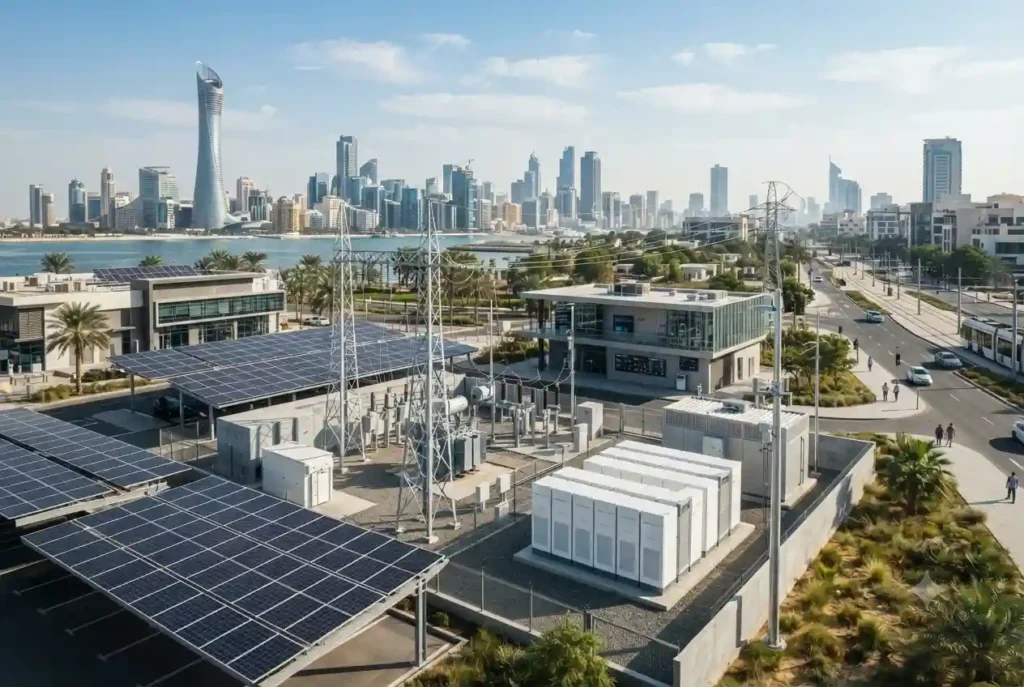
Electricity networks are becoming more complex as cities expand, businesses increase their digital operations, renewable energy grows, and electricity demand changes throughout the day. Traditional power infrastructure was largely designed around centralized generation and predictable consumption. Modern energy systems need to manage a much more dynamic environment. This is where grid technology is becoming increasingly important.
Modern grid technology combines electrical infrastructure with digital communications, sensors, automation, data analytics, energy storage, advanced controls, and monitoring systems. The objective is to create electricity networks that can operate more efficiently, respond to changing conditions, and accommodate new sources of generation and consumption.
For businesses and communities, the development of smarter electricity networks can have implications far beyond the power sector. Reliable electricity supports cloud infrastructure, telecommunications, manufacturing, transportation, healthcare, commercial buildings, and virtually every digitally enabled service.
What Is Grid Technology?
Grid technology refers to the technologies used to generate, transmit, distribute, monitor, control, and manage electricity across modern power networks. It includes both physical infrastructure and digital systems that help electricity providers understand and manage the grid.
A modern grid can incorporate smart meters, sensors, automated substations, digital control systems, communication networks, energy management platforms, distributed generation, batteries, and analytical software.
The term is closely associated with the concept of the smart grid. A smart grid uses digital technologies and communications to improve the monitoring and management of electricity networks. Instead of relying primarily on periodic measurements and manual intervention, operators can receive information from different parts of the network and respond more effectively to changing conditions.
Why Grid Technology Matters
Electricity demand is changing as businesses and households adopt more digital equipment, electric vehicles, cooling systems, data-intensive technologies, and other electrical loads. At the same time, renewable generation can vary according to weather conditions and time of day.
These changes create new requirements for power networks. Grid operators need better visibility into electricity flows and greater flexibility when balancing generation and consumption.
Grid technology can support this transition by combining physical infrastructure with digital monitoring and control. The result can be a more responsive electricity system capable of managing a wider range of operating conditions.
Key Components of Modern Grid Technology
Smart Meters
Smart meters provide digital measurements of electricity consumption and can communicate information to utilities or energy management systems. Compared with traditional meter-reading methods, digital metering can provide more frequent and detailed information about energy usage.
For customers, this information can support better understanding of consumption patterns. For utilities, it can improve visibility and support certain operational and billing processes.
Grid Sensors
Sensors can be installed across electricity networks to monitor voltage, current, temperature, equipment condition, and other operational characteristics. This information can help operators understand what is happening within different parts of the network.
More detailed monitoring can also support faster identification of abnormal conditions and help maintenance teams prioritize equipment that requires attention.
Digital Substations
Substations play an important role in electricity transmission and distribution. Digital technologies can improve how substations are monitored, controlled, and maintained.
Digital substations can use intelligent electronic devices, communications systems, automated controls, and monitoring technologies to provide operators with more information about equipment and electrical conditions.
Distribution Automation
Distribution automation uses sensors, communication networks, and control systems to improve the operation of electricity distribution networks. Some systems can automatically identify certain faults, isolate affected sections, or reconfigure parts of a network.
This can reduce the need for manual intervention in appropriate circumstances and potentially improve the speed of restoration following some types of disruptions.
Energy Storage
Energy storage is becoming increasingly relevant as electricity systems incorporate variable renewable generation. Batteries and other storage technologies can store electricity and release it when required.
Storage can potentially support grid balancing, manage periods of high demand, and help integrate renewable resources. The appropriate application depends on the characteristics of the electricity system and the specific technology being deployed.
Grid Technology and Renewable Energy
Renewable energy is changing the way electricity can be generated. Solar and wind resources can produce electricity without the fuel requirements associated with conventional generation, but their output can vary according to environmental conditions.
This creates additional requirements for grid management. Operators need to understand generation levels, electricity demand, transmission constraints, and available flexibility.
Digital monitoring and control systems can help provide the information required to manage these changing conditions. Energy storage, demand response, flexible generation, and improved network planning can also contribute to a more adaptable electricity system.
The broader transition toward renewable energy therefore depends not only on generating more clean electricity but also on developing infrastructure capable of integrating it effectively.
The Role of Power Technology
Power technology covers the equipment, systems, and engineering practices used to generate, transmit, distribute, convert, and manage electrical energy. Grid technology builds on this foundation by adding increasingly sophisticated digital capabilities.
For example, traditional electrical equipment can be enhanced with sensors and communication systems that provide information about operating conditions. Control systems can then use this information to support grid operations.
This combination of electrical engineering and digital technology is becoming increasingly important as electricity networks become more distributed and data-driven.
Grid Technology and Digital Monitoring
One of the biggest changes in modern power infrastructure is the growing availability of operational data. Sensors, meters, intelligent equipment, and communication networks can generate large amounts of information.
This data can help operators understand energy flows, equipment conditions, demand patterns, and network performance. Advanced analytics can then be used to identify trends or potential issues.
Data quality remains important. A large quantity of information is not automatically useful if measurements are inaccurate, systems are poorly integrated, or data is difficult to interpret.
Organizations developing grid infrastructure can therefore benefit from applying principles similar to those used in big data technology, particularly around data management, processing, analytics, and system integration.
Artificial Intelligence in Grid Management
Artificial intelligence and machine learning are being explored for various energy applications. These technologies can analyze large datasets and identify patterns that may be difficult to detect through manual analysis alone.
Potential applications include demand forecasting, equipment monitoring, renewable generation forecasting, anomaly detection, and optimization of certain energy operations.
AI should nevertheless be deployed carefully in critical infrastructure. Electricity systems require reliability, security, explainability, testing, and appropriate human oversight. Automated recommendations may be useful, but critical operational decisions require robust controls.
Grid Technology and Demand Management
Electricity demand does not remain constant throughout the day. Commercial buildings, factories, homes, transportation systems, and other consumers can create different demand patterns.
Digital grid systems can help utilities and energy managers understand these patterns more accurately. Demand-response programs can then encourage or enable certain customers to change electricity consumption during specific periods.
For businesses, better visibility into energy use can also support operational planning. Energy management systems can monitor consumption and help organizations identify areas where efficiency improvements may be possible.
Electric Vehicles and the Electricity Grid
The growth of electric vehicles introduces another important connection between transportation and electricity infrastructure. Charging stations can create additional electrical demand, particularly when many vehicles charge at the same time.
Grid technology can help operators understand where charging demand is developing and whether local infrastructure has sufficient capacity. Smart charging systems can potentially coordinate charging activity based on electricity prices, grid conditions, customer requirements, or other defined factors.
As vehicle-to-grid technologies develop, some electric vehicles may also become part of broader energy management strategies. Their usefulness will depend on technical standards, market structures, infrastructure, and the requirements of vehicle owners.
Cybersecurity and Grid Technology
Digital connectivity creates important benefits, but it also introduces cybersecurity considerations. Modern electricity networks can contain communications systems, remote monitoring equipment, connected devices, software platforms, and control systems.
Protecting these environments requires a layered approach. Appropriate access controls, authentication, network segmentation, monitoring, software maintenance, incident response, and secure system design can all contribute to resilience.
Cybersecurity should be incorporated into grid modernization from the beginning rather than treated as a separate activity after digital systems have already been deployed.
Grid Resilience and Reliability
Reliability is one of the central objectives of electricity infrastructure. Businesses, hospitals, communication networks, transportation systems, and households depend on consistent power availability.
Grid modernization can support resilience by improving monitoring, fault detection, maintenance planning, and operational visibility. Some technologies can help operators identify problems more quickly, while distributed energy resources and storage can provide additional flexibility in appropriate situations.
Resilience is not created by a single technology. It depends on infrastructure design, maintenance, operational procedures, cybersecurity, emergency planning, and the ability to respond to changing conditions.
How Businesses Can Benefit From Smarter Grid Technology
Businesses do not need to operate power utilities to benefit from advances in grid technology. Commercial and industrial organizations can use smart energy systems to understand consumption, monitor equipment, manage demand, and integrate onsite generation or storage where appropriate.
Energy monitoring can help businesses identify unusual consumption patterns and evaluate the performance of facilities and equipment. Automated controls can also coordinate certain building systems based on predefined conditions.
Large facilities may combine energy data with broader building management systems. This can create a more connected approach to managing lighting, heating, cooling, equipment, and electricity consumption.
Challenges of Modernizing the Grid
Legacy Infrastructure
Electricity networks include infrastructure that may have been installed many years ago. Integrating modern digital systems with legacy equipment can require careful planning and specialized engineering.
High Investment Requirements
Grid modernization can involve substantial investment in physical infrastructure, communications, sensors, software, cybersecurity, and skilled personnel. Projects therefore need clear priorities and long-term planning.
Interoperability
Different technologies and vendors may use different communication standards and architectures. Interoperability is important because grid systems need to exchange information reliably across complex environments.
Cybersecurity
Increasing digital connectivity can create new security considerations. Operators must balance remote access and automation with strong controls designed to protect critical infrastructure.
Workforce Skills
Modern grid environments require expertise spanning electrical engineering, software, communications, cybersecurity, data analytics, and operational technology. Workforce development is therefore an important part of modernization.
How to Approach Grid Technology Investments
Organizations involved in energy infrastructure should begin by identifying the operational problems they want technology to address. Better outage detection, improved demand forecasting, renewable integration, equipment monitoring, and energy efficiency may require different technologies.
It is also important to assess existing infrastructure before introducing new systems. Understanding current equipment, communication networks, data sources, and operational procedures can reduce integration problems.
Projects should also include cybersecurity, interoperability, maintenance, and workforce requirements from the beginning. Technology that performs well during initial deployment still needs to remain reliable throughout its operational life.
The Future of Grid Technology
Electricity networks are likely to become increasingly digital, distributed, and interactive. Renewable generation, battery storage, electric vehicles, smart buildings, connected devices, and flexible demand are creating new relationships between electricity producers and consumers.
Grid technology can provide the digital foundation required to manage these changes. Sensors can improve visibility, communications can connect systems, analytics can support decisions, and automation can help respond to defined operating conditions.
The long-term direction is toward electricity networks that are more adaptive and information-driven. However, modernization must remain focused on reliability, affordability, security, and practical operational needs.
The Final Word
Grid technology is transforming traditional electricity infrastructure into a more connected and responsive system. Smart meters, sensors, automated controls, digital substations, energy storage, analytics, and intelligent management platforms are becoming important tools for managing modern power networks.
As renewable energy, electric transportation, digital businesses, and connected infrastructure continue to grow, the ability to monitor and manage electricity intelligently will become even more valuable. The strongest grid strategies will combine proven power technology with carefully designed digital systems to create reliable, secure, and adaptable energy infrastructure.
“`