
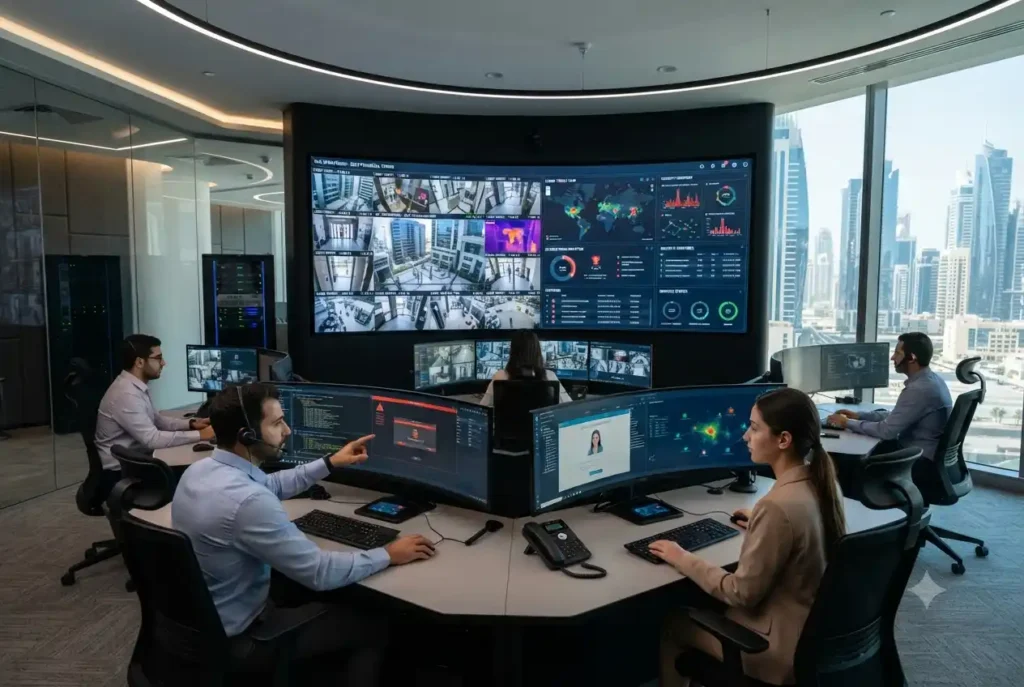
Security has become a central technology priority for businesses operating in an increasingly connected environment. Organizations now depend on cloud platforms, connected devices, digital applications, remote access, physical facilities, and large volumes of business data. Protecting these environments requires more than traditional locks, passwords, or isolated security tools. Advanced security technologies bring together digital and physical protection systems to help organizations detect threats, control access, monitor activity, and respond to incidents more effectively.
Modern security is also becoming more integrated. Cameras can connect with access-control systems, sensors can trigger alerts, identity platforms can control application access, and security software can analyze events across different environments. This interconnected approach can give organizations better visibility while reducing the number of disconnected systems security teams need to manage.
For technology-focused businesses, security should be considered alongside data infrastructure, automation, cloud computing, and digital transformation. A strong security strategy protects not only physical assets but also the technology systems that support everyday operations.
What Are Advanced Security Technologies?
Advanced security technologies are modern tools and systems designed to prevent, detect, monitor, analyze, and respond to security threats. They can include cybersecurity platforms, video surveillance, biometric identification, access-control systems, intrusion detection, security sensors, identity management, network monitoring, and intelligent analytics.
The word “advanced” does not necessarily mean that every solution must use artificial intelligence. A technology can provide advanced protection through better integration, automation, analytics, real-time monitoring, stronger authentication, or more effective control over connected environments.
The most effective security architecture depends on the organization’s risk profile, infrastructure, regulatory requirements, physical environment, and operational needs.
Why Security Technology Matters for Modern Businesses
Businesses increasingly operate across multiple digital and physical environments. Employees may access systems remotely, customers may interact through online platforms, and operational technology may depend on connected devices and cloud services.
This creates more opportunities for efficiency, but it can also expand the potential attack surface. Security teams need visibility across relevant systems and should understand how different technologies interact with each other.
Advanced security solutions can help organizations establish stronger controls around identity, access, data, devices, networks, buildings, and applications. They can also provide information that helps security professionals investigate unusual activity and respond to incidents.
Key Types of Advanced Security Technologies
Video Surveillance Systems
Modern surveillance systems have evolved beyond basic camera recording. High-resolution cameras, networked video systems, intelligent analytics, and centralized monitoring can provide organizations with greater visibility across facilities.
Depending on the system, video analytics can help identify specific events or patterns that deserve attention. This can make monitoring more manageable than relying entirely on people to watch multiple camera feeds continuously.
Access Control
Access-control technology determines who can enter a facility, room, system, or restricted area. Modern systems can use credentials, smart cards, mobile authentication, biometric technologies, or combinations of different methods.
Digital access control can also create records of authorized activity, helping organizations understand when and where access occurred. Integration with other security systems can make these records more useful during investigations.
Biometric Security
Biometric systems use characteristics such as fingerprints, facial features, or other physical identifiers to verify identity. They can be useful in environments where organizations require stronger identity verification than conventional access cards or passwords can provide.
However, biometric technology requires careful implementation because biometric information is highly sensitive. Organizations should consider privacy, data protection, storage, authentication accuracy, and appropriate access controls when deploying these systems.
Intrusion Detection
Intrusion detection systems can monitor physical spaces, networks, or digital environments for suspicious activity. Physical systems may use sensors to identify unauthorized entry, while cybersecurity systems can analyze network or system activity for potential threats.
When detection systems are integrated with alerting and response workflows, security teams can receive relevant information more quickly and investigate potential incidents before they become larger problems.
Identity and Access Management
Identity and access management, commonly referred to as IAM, focuses on ensuring that users have appropriate access to applications and resources. It can include authentication, authorization, account management, and access policies.
Strong identity management is especially important for businesses with remote employees, cloud applications, contractors, and multiple technology platforms. Access should be based on legitimate business requirements rather than broad permissions that remain active indefinitely.
Integrated Security Systems
One of the most important developments in modern security is the integration of previously separate systems. Instead of operating cameras, access controls, alarms, sensors, and cybersecurity platforms independently, organizations can connect relevant systems through centralized platforms and workflows.
For example, an access-control event could be correlated with a nearby camera recording. A sensor alert could trigger a notification to a security team. A suspicious digital event could generate an automated response or require additional authentication.
This integrated approach can improve situational awareness because security teams receive more context around an event instead of examining individual systems separately.
Advanced Security Technologies and Cybersecurity
Physical security and cybersecurity are increasingly connected. A compromised access-control device, surveillance camera, or connected sensor can potentially create risks for a wider technology environment if it is poorly secured.
Businesses should therefore consider the security of connected devices as part of their broader cybersecurity strategy. Network segmentation, authentication, software updates, secure configurations, monitoring, and controlled administrative access can all contribute to a stronger environment.
This is particularly important as businesses adopt more connected technologies. The larger the technology environment becomes, the more important it is to understand which systems communicate with each other and what information they can access.
Artificial Intelligence in Security
Artificial intelligence and machine learning are increasingly being incorporated into security technologies. These systems can help analyze large amounts of information and identify patterns that might otherwise require significant manual effort.
In video security, intelligent analytics may assist with identifying specific events. In cybersecurity, machine learning can help security teams analyze unusual patterns across large volumes of system activity.
AI should not be viewed as a replacement for security professionals. Human oversight remains important, particularly when automated systems generate alerts or make recommendations that could affect people, systems, or business operations.
Security Technology for Physical Facilities
Businesses managing offices, warehouses, industrial facilities, retail locations, and other properties often require multiple layers of physical security.
A comprehensive system may combine perimeter monitoring, cameras, access controls, alarms, visitor management, environmental sensors, and centralized monitoring. The exact combination should be determined by the facility’s risks and operational requirements.
Organizations evaluating providers such as consolidated technology security safety systems LLC may also consider how effectively security, safety, technology, and monitoring components can be integrated into a single operational environment.
Security Technology for Digital Infrastructure
Cloud computing, enterprise applications, websites, APIs, databases, and employee devices all require appropriate security controls. Digital infrastructure can be protected through layered measures rather than a single security product.
These measures can include strong authentication, endpoint protection, network controls, encryption, vulnerability management, logging, monitoring, backup strategies, and incident response procedures.
Security should also be included when organizations introduce new technology. Businesses expanding their digital infrastructure can benefit from evaluating security requirements during system design rather than trying to add protection after deployment.
The Role of Security Technology Providers
A security technology provider may help businesses assess risks, select appropriate systems, integrate technologies, deploy equipment, configure software, and provide ongoing support.
When evaluating providers, organizations should look beyond the number of products offered. Compatibility, integration capability, maintenance, monitoring, support, scalability, documentation, and security expertise can be equally important.
For example, a business considering a provider such as prism technology security solutions should assess whether the proposed systems address its actual security requirements and whether the technology can integrate with existing infrastructure.
How to Choose Advanced Security Technologies
The first step is to understand the organization’s risks. Different businesses have different security priorities. A retail store may focus on theft prevention and customer safety, while a technology company may prioritize identity management, data protection, endpoint security, and cloud infrastructure.
After identifying risks, organizations can map their current security controls and identify gaps. This assessment can reveal duplicated tools, outdated systems, weak access controls, limited monitoring, or disconnected security processes.
Integration should then be considered. New security technology should ideally complement existing infrastructure. A system that works well in isolation may create operational difficulties if it cannot communicate with other important platforms.
Businesses should also consider scalability. Security requirements can change as organizations add employees, facilities, applications, devices, and customers. A scalable architecture can make future expansion easier.
Security Automation and Incident Response
Automation can help security teams respond to routine events more efficiently. For example, an alert can automatically create a case, notify an appropriate team, request additional authentication, or initiate another predefined action.
This creates a natural connection between security and automation technology. However, automated responses should be designed carefully. Critical actions may require human approval to prevent false positives from disrupting legitimate business activity.
Common Challenges in Security Technology
Too Many Disconnected Tools
Adding security products without considering integration can create fragmented environments. Security teams may need to switch between multiple dashboards and manually correlate information.
Legacy Infrastructure
Older equipment and software may not support modern security features or integrations. Replacing everything immediately may not be practical, so organizations may need phased modernization plans.
False Alerts
Security systems that generate too many irrelevant alerts can overwhelm security teams. Effective configuration, analytics, prioritization, and ongoing tuning are important for keeping alerts useful.
Maintenance
Security technology requires continuous maintenance. Software patches, firmware updates, credential reviews, system testing, and configuration checks should be incorporated into regular operational processes.
Building a Layered Security Strategy
A strong security environment normally relies on multiple layers rather than one protective measure. If one control fails, other controls can provide additional protection or visibility.
For a digital environment, layers might include identity security, endpoint protection, network controls, application security, data protection, monitoring, backups, and incident response. For physical environments, layers may include perimeter controls, surveillance, access management, alarms, visitor controls, and security personnel.
The important principle is coordination. Each layer should contribute to an overall security objective instead of operating as an isolated product.
The Future of Advanced Security Technologies
Security technology is likely to become increasingly connected, intelligent, and automated. Businesses are adopting more cloud services, IoT devices, digital applications, and connected physical systems, creating demand for security architectures capable of monitoring complex environments.
AI-supported analytics, stronger identity systems, integrated monitoring, intelligent sensors, and automated response workflows are likely to play important roles in this evolution.
At the same time, organizations will need to balance innovation with privacy, governance, reliability, and human oversight. The most effective security strategy will not necessarily be the one with the most advanced technology, but the one that provides appropriate protection for the organization’s actual risks.
Wrapping Up
Advanced security technologies are becoming essential as businesses combine physical facilities with increasingly complex digital infrastructure. From surveillance and access control to identity management, cybersecurity, intelligent analytics, and automated response, modern security systems can provide multiple layers of protection.
The strongest approach is to begin with business-specific risks and build a coordinated security architecture around them. By selecting compatible technologies, maintaining strong governance, monitoring systems continuously, and integrating security with broader technology operations, organizations can create a more resilient environment that supports long-term digital growth.
“`