
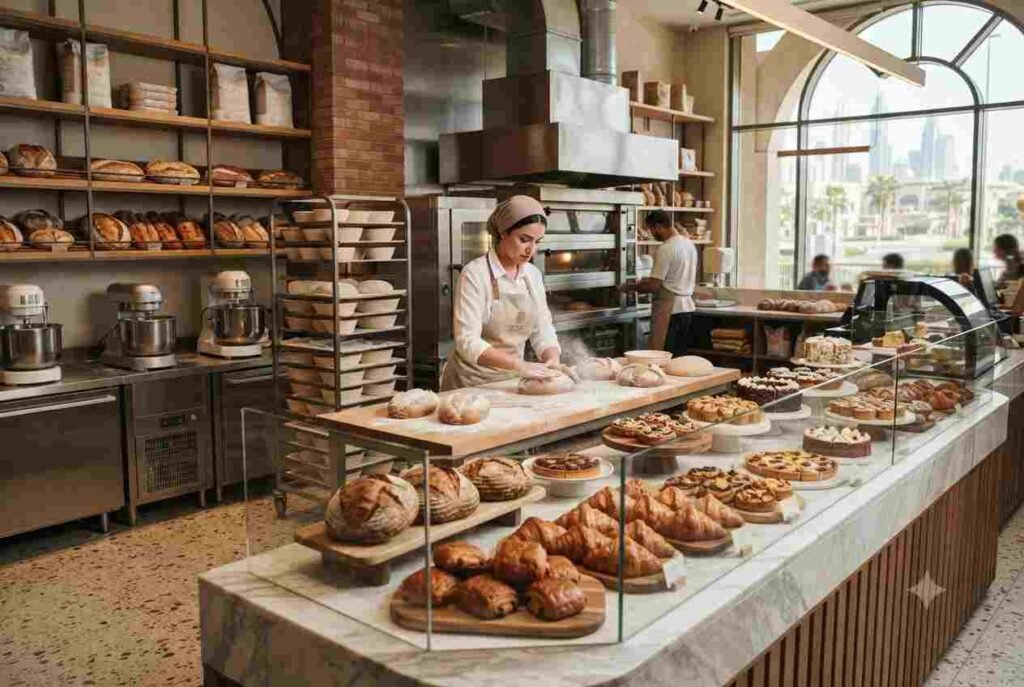
The bakery industry continues to offer promising opportunities for entrepreneurs across the UAE. From artisan bakeries and specialty dessert shops to wholesale production facilities and café-style concepts, the market supports a wide range of business models that cater to both residents and visitors.
However, turning a bakery idea into a profitable enterprise requires more than a passion for baking. A well-structured bakery business plan helps entrepreneurs understand market demand, estimate startup costs, manage operations, and create a sustainable growth strategy.
This guide explains how to develop a bakery business plan and build a successful bakery company in the UAE.
Why Start a Bakery Business in the UAE?
The UAE’s diverse population, thriving hospitality sector, and growing demand for premium food products create favorable conditions for bakery businesses.
Several factors contribute to the industry’s potential:
- Strong consumer demand for baked goods
- Growing café and restaurant sector
- Increasing interest in specialty products
- Tourism-driven food consumption
- Demand for custom cakes and desserts
- Opportunities in wholesale supply contracts
Whether serving local communities or supplying commercial clients, bakery businesses can develop multiple revenue streams that support long-term growth.
Creating a Bakery Business Plan
A bakery business plan acts as a roadmap for launching and operating the company. It helps entrepreneurs evaluate opportunities, manage risks, and make informed decisions.
A comprehensive business plan should include:
- Business concept and positioning
- Target customer profile
- Product offerings
- Competitive analysis
- Marketing strategy
- Operational workflow
- Financial projections
- Staffing requirements
- Growth objectives
A strong plan also improves credibility when seeking funding or strategic partnerships.
Choosing the Right Bakery Business Model
The bakery industry offers several business models, each with different investment requirements and operational structures.
Retail Bakery
Retail bakeries sell directly to consumers through storefront locations. Products may include bread, pastries, cakes, cookies, and specialty desserts.
Wholesale Bakery
Wholesale bakeries supply restaurants, cafés, hotels, supermarkets, and catering companies. This model often focuses on volume production.
Specialty Bakery
Specialty bakeries target specific niches such as artisan bread, gluten-free products, custom cakes, or premium desserts.
Bakery Café
A bakery café combines baked goods with beverages and dine-in services. Entrepreneurs considering this model may also benefit from understanding a coffee business since coffee and bakery products frequently complement one another.
Understanding Your Target Market
Successful bakeries align their offerings with customer preferences and purchasing behavior.
Potential customer groups may include:
- Families
- Office workers
- Tourists
- Hotels and restaurants
- Event organizers
- Corporate clients
Market research can help identify underserved segments and emerging consumer trends.
Licensing and Regulatory Requirements
Food businesses in the UAE must comply with licensing, food safety, and health regulations.
Entrepreneurs should review official guidance from the UAE Government Portal and relevant municipal authorities before commencing operations.
Requirements may include:
- Commercial licensing
- Food establishment permits
- Health and safety compliance
- Food handling certifications
- Municipality approvals
- Employee permits
Compliance helps protect both customers and business operations.
Equipment and Facility Planning
The equipment required depends on production volume and product range. Investing in appropriate infrastructure is essential for efficiency and quality control.
Common bakery equipment includes:
- Commercial ovens
- Mixers
- Proofing cabinets
- Refrigeration systems
- Display units
- Packaging equipment
- Storage facilities
Equipment selection should support current operations while allowing room for future growth.
Bakery Management Best Practices
Strong bakery management helps maintain consistency, profitability, and customer satisfaction.
Key management priorities include:
- Inventory control
- Quality assurance
- Staff supervision
- Cost management
- Production scheduling
- Customer service
Efficient management systems reduce waste and improve operational performance.
Marketing a Bakery Company
Marketing plays a major role in attracting customers and building brand recognition.
Effective bakery marketing strategies include:
- Social media content
- Product photography
- Local search optimization
- Customer loyalty programs
- Community partnerships
- Seasonal promotions
- Online ordering platforms
Consistent branding and customer engagement help strengthen long-term relationships.
Financial Planning and Profitability
Financial planning is one of the most important components of any bakery startup. Entrepreneurs must understand startup costs, operating expenses, and expected revenue.
Common expenses include:
- Rent
- Equipment purchases
- Ingredients
- Packaging materials
- Staff salaries
- Utilities
- Marketing costs
- Maintenance expenses
Accurate forecasting helps prevent cash flow challenges and supports informed decision-making.
Bookkeeping and Financial Control
As the bakery grows, financial records become increasingly important. Proper accounting supports budgeting, compliance, and performance analysis.
Many bakery owners work with bookkeeping services for small business to improve financial visibility and maintain accurate records.
Reliable reporting helps identify profitable products, control expenses, and support future expansion.
Funding a Bakery Startup
Some entrepreneurs self-fund their bakery startup, while others seek external financing to cover equipment purchases, facility costs, and initial operating expenses.
Business owners may explore small business financing options when additional capital is required to support growth or expansion.
The right financing strategy can provide flexibility while preserving working capital.
Expansion Opportunities for Bakeries
Once a bakery achieves stable profitability, several growth opportunities may become available.
Examples include:
- Opening additional locations
- Wholesale distribution
- Corporate catering services
- Online sales
- Franchise development
- Product diversification
Expansion should be guided by customer demand, operational readiness, and financial performance.
Learning from Other Food Businesses
Bakery owners often gain valuable insights by studying other food-service sectors. Understanding how operators develop a successful restaurant business plan can provide useful lessons in customer experience, staffing, menu development, and operational efficiency.
Cross-industry learning can help entrepreneurs strengthen business performance and improve growth strategies.
A Quick Recap
A well-developed bakery business plan provides the foundation for launching and growing a successful bakery company in the UAE. By focusing on market research, operational efficiency, financial discipline, and customer satisfaction, entrepreneurs can create a business that remains competitive in a dynamic food and beverage market.
Whether starting a retail bakery, wholesale operation, specialty concept, or bakery café, careful planning and consistent execution are key to building a profitable and sustainable bakery startup.