
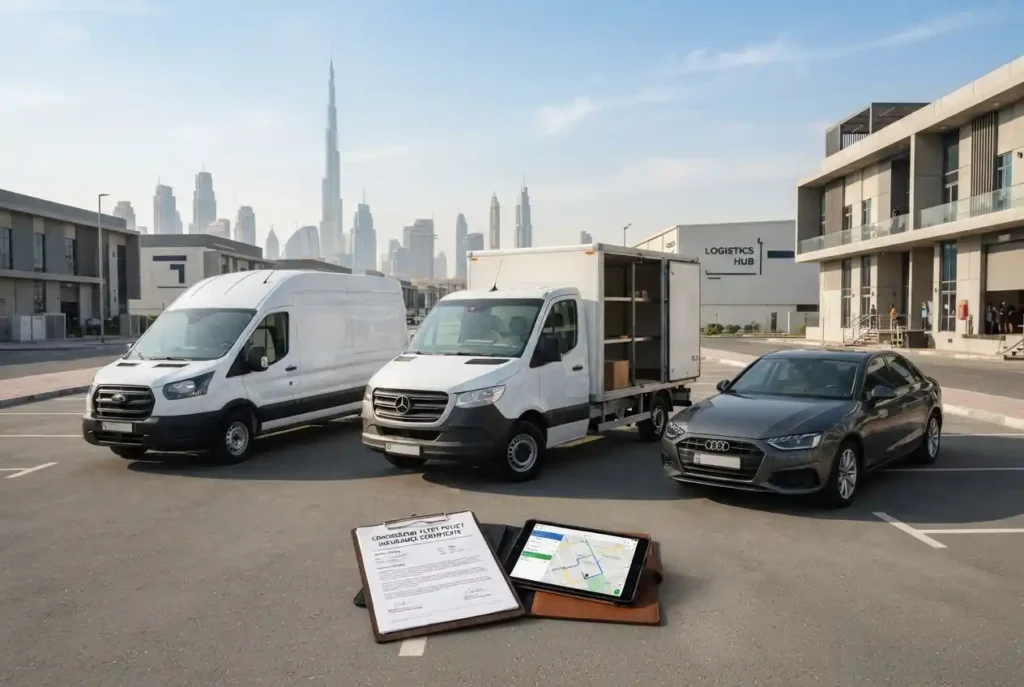
Commercial vehicle insurance in the UAE is designed for businesses and organisations that use vehicles as part of their commercial activities. Whether a company operates delivery vans, trucks, taxis, buses, company cars, construction vehicles, or other business-use vehicles, the right insurance can help protect against covered vehicle damage and third-party liabilities.
Commercial vehicle insurance differs from ordinary private car insurance because the vehicle’s use, business activity, driver arrangements, mileage, vehicle type, and operational risks can affect the policy. Choosing personal car insurance for a vehicle that is actually being used commercially can create serious coverage problems.
This guide explains commercial vehicle insurance in the UAE, including the main types of cover, vehicles that may require commercial policies, factors affecting premiums, claims procedures, exclusions, and practical considerations for businesses comparing insurance options.
What Is Commercial Vehicle Insurance in the UAE?
Commercial vehicle insurance is motor insurance designed for vehicles used in connection with a business or commercial activity. The policy is structured around the nature of the vehicle and how it is operated rather than treating it simply as a privately owned passenger car.
Examples can include vehicles used for deliveries, transportation, logistics, construction, passenger services, sales visits, business operations, and other commercial purposes.
The precise coverage depends on the policy, vehicle category, business activity, and insurer’s underwriting requirements. Businesses should therefore provide accurate information about how each vehicle will be used when requesting a quotation.
Why Do Businesses Need Commercial Vehicle Insurance?
Businesses can face substantial financial exposure when a company vehicle is involved in an accident. Costs can arise from damage to the insured vehicle, damage to another vehicle or property, injury to third parties, towing, repairs, and business disruption.
Commercial vehicle insurance is intended to address covered risks according to the policy conditions. The appropriate policy can therefore form an important part of a company’s overall risk-management approach.
Businesses should also consider the consequences of vehicle downtime. A delivery company, for example, may experience operational disruption if a commercial van is unavailable for an extended period.
Which Vehicles Need Commercial Insurance?
The appropriate type of motor insurance depends on the vehicle’s use and classification. Vehicles used primarily for private purposes may be insured under personal motor policies, while vehicles used for commercial activities may require commercial motor coverage.
Commercial vehicle categories can include:
- Delivery vans
- Pickup trucks
- Commercial cars
- Light commercial vehicles
- Heavy trucks
- Tractors and trailers
- Buses and minibuses
- Commercial passenger vehicles
- Vehicles used for logistics operations
- Certain construction and industrial vehicles
The classification depends on the vehicle and its actual use. If a business is unsure whether a particular vehicle requires commercial insurance, it should confirm the classification with an insurer or authorised insurance professional before arranging cover.
Types of Commercial Vehicle Insurance
Commercial vehicle insurance can generally be structured around different levels of protection. The most common distinction is between third-party liability and comprehensive cover.
Third-Party Commercial Vehicle Insurance
Third-party commercial vehicle insurance focuses on the business’s covered liability toward other parties when a vehicle is involved in an insured incident.
This can include liability associated with damage to third-party property or injury, subject to the policy terms and applicable requirements.
Third-party insurance does not provide the same own-vehicle protection as comprehensive insurance. A business choosing this option should consider whether it can absorb the cost of repairing or replacing its own vehicle after an accident.
Comprehensive Commercial Vehicle Insurance
Comprehensive commercial vehicle insurance can provide broader protection for the insured vehicle while also including third-party liability protection, subject to the policy wording.
Depending on the insurer and vehicle category, comprehensive policies may address risks such as accidental damage, theft, fire, and other covered events.
This type of insurance can be particularly important for businesses operating expensive vehicles or fleets where the cost of replacing damaged vehicles could significantly affect operations.
Commercial Vehicle Insurance for Business Fleets
Businesses operating multiple vehicles may be able to arrange fleet insurance rather than managing every vehicle through an entirely separate policy. Fleet arrangements can simplify administration and provide a centralised approach to managing business vehicles.
A fleet can include vehicles of different types, although the insurer may apply specific eligibility and underwriting requirements. Businesses should provide a complete list of vehicles and explain their respective uses.
Fleet insurance can be especially relevant to logistics companies, delivery businesses, construction firms, rental operations, transport providers, and companies with multiple employee vehicles.
What Does Commercial Vehicle Insurance Cover?
The exact coverage depends on the selected policy. However, commercial motor insurance can be designed to address several common business-related vehicle risks.
Depending on the policy, coverage may include:
- Third-party property damage liability
- Third-party bodily injury liability
- Accidental damage to the insured vehicle
- Theft, where covered
- Fire-related damage, where covered
- Vehicle recovery or towing, where included
- Roadside assistance, where included
- Other optional commercial motor benefits
Businesses should check the actual policy wording because exclusions, limits, deductibles, and conditions can significantly affect how a claim is handled.
Commercial Vehicle Insurance for Delivery Businesses
Delivery companies have specific insurance considerations because vehicles may spend long periods on the road and can be driven by multiple employees.
A business should disclose the nature of delivery work, vehicle usage, operating areas, driver arrangements, and other relevant details when requesting insurance.
For delivery businesses, vehicle downtime can also affect revenue and customer service. When comparing policies, ask whether roadside assistance, recovery, replacement vehicle benefits, or other business-use features are available.
Commercial Vehicle Insurance for Trucks
Truck insurance can involve different underwriting considerations from ordinary passenger vehicles because of vehicle size, cargo, usage, routes, and operating conditions.
Businesses should make sure the insurer understands the type of truck, how it is used, whether it carries goods, and where it operates.
If the vehicle is part of a larger logistics operation, fleet insurance may also be worth investigating. Cargo insurance and motor insurance should not automatically be treated as the same protection; businesses may need separate arrangements depending on what they are transporting.
Commercial Vehicle Insurance for Buses and Passenger Transport
Businesses operating buses or passenger vehicles face additional operational considerations because passengers may be transported as part of the commercial activity.
The insurance requirements can differ according to the vehicle type, passenger capacity, use, licensing requirements, and operating model. Businesses should therefore provide accurate information when seeking quotations.
Passenger transport operators should also check that their insurance arrangement is suitable for the specific commercial activity they conduct rather than relying on a standard private motor policy.
How Much Does Commercial Vehicle Insurance Cost in the UAE?
There is no fixed commercial vehicle insurance price because premiums depend on multiple factors. Commercial policies can be more complex than private motor insurance because insurers assess both the vehicle and the business use.
Factors that can affect the premium include:
- Vehicle type
- Vehicle age
- Vehicle market value
- Commercial use
- Operating area
- Number of drivers
- Driver experience
- Claims history
- Annual mileage or usage patterns
- Type of goods or services involved
- Coverage level
- Deductible
- Fleet size
Because of these variables, businesses should request tailored quotations rather than relying on generic online estimates.
How to Get Commercial Vehicle Insurance in the UAE
The first step is to identify exactly which vehicles need cover and how each vehicle is used. This information should then be provided to insurers or authorised brokers when requesting quotations.
Prepare Vehicle Information
Prepare the registration details, vehicle make and model, manufacturing year, chassis information, vehicle value, and other relevant specifications.
For commercial vehicles, also document the type of vehicle, intended use, operating areas, and any other information that may affect underwriting.
Prepare Business Information
The insurer may need information about the company and the commercial activity in which the vehicle is used. Be prepared to explain whether the vehicle is used for deliveries, transportation, construction, passenger services, sales activities, or another purpose.
Provide Driver Information
If specific employees will operate the vehicles, driver information may also be relevant. This can include licence details, driving experience, and claims history depending on the insurer’s requirements.
Compare the Quotations
Once you receive quotations, compare the coverage and conditions carefully. Do not choose based solely on the lowest premium.
Commercial Vehicle Insurance Deductibles
The deductible is an important part of commercial motor insurance because businesses may have to contribute toward an eligible claim according to the policy conditions.
A business should consider the deductible alongside its cash-flow position. A lower premium may appear attractive, but a high deductible could create a significant expense after an accident.
When comparing fleet or commercial vehicle policies, review whether deductibles differ by vehicle type, claim type, driver circumstances, or other conditions.
Commercial Vehicle Insurance Claims
A clear claims process is particularly important for businesses because vehicle downtime can disrupt operations.
After an accident, the driver should follow the relevant UAE police and traffic procedures and notify the business and insurer according to the policy requirements.
Report the Incident
The incident should be reported through the appropriate official channels, followed by notification to the insurer. Provide accurate information about the accident and the vehicle involved.
Collect Documentation
Keep the police report, vehicle registration, insurance information, driver’s licence, and relevant photographs or supporting documentation.
Arrange Assessment and Repairs
The insurer may require an inspection before repairs are authorised. Follow the approved claims procedure and use designated repair facilities where required by the policy.
Businesses should avoid arranging significant repairs without prior approval unless the policy specifically permits emergency action.
Common Commercial Vehicle Insurance Exclusions
Businesses should carefully review exclusions because commercial vehicles can be used in ways that fall outside the intended scope of a policy.
Depending on the policy, exclusions can relate to:
- Unauthorised vehicle use
- Unauthorised drivers
- Use outside the declared commercial activity
- Racing or prohibited activities
- Driving under the influence of prohibited substances
- Overloading or improper use
- Unlicensed operation
- Unapproved geographical use
- Intentional damage
This is not a universal list. Businesses must read their actual policy exclusions and ensure that operational practices comply with the insurance conditions.
Commercial Vehicle Insurance and Driver Management
Driver management can be an important part of commercial motor risk. Businesses should maintain accurate records of who is authorised to operate each vehicle and ensure that drivers have the appropriate licences.
Companies can also establish internal procedures for vehicle inspections, accident reporting, safe driving, maintenance, and incident documentation.
Good operational controls can help businesses manage vehicle risks alongside their insurance coverage.
Commercial Vehicle Insurance vs Private Car Insurance
Private car insurance is designed around personal vehicle use, while commercial vehicle insurance is designed around business-related vehicle operations.
The distinction matters because commercial driving can involve higher mileage, multiple drivers, deliveries, passenger transport, business routes, or specialised vehicle use.
A company should never assume that a personal motor policy is appropriate simply because the vehicle looks like an ordinary car. If the vehicle is being used for business purposes, disclose that use to the insurer and obtain appropriate coverage.
How to Choose a Commercial Vehicle Insurer
Businesses should evaluate insurers based on more than price. Important considerations include claims support, repair networks, geographical coverage, fleet capabilities, roadside assistance, policy flexibility, and the insurer’s understanding of the business activity.
For businesses comparing individual UAE providers, related resources such as Emirates Insurance car coverage, Orient motor insurance, and RAK car insurance can provide additional context when researching the wider motor insurance market.
Businesses new to arranging motor coverage can also review our guide to how to do car insurance in the UAE for a general overview of the insurance process.
Questions Businesses Should Ask Before Buying
Before accepting a commercial vehicle insurance quotation, ask the insurer or broker:
- Is the vehicle fully covered for its declared commercial use?
- What type of comprehensive protection is available?
- What third-party liability limits apply?
- What deductible applies to each vehicle?
- Are all intended drivers covered?
- Are there restrictions on operating areas?
- Are deliveries or passenger services specifically covered?
- Which garages can repair the vehicle?
- Is roadside assistance included?
- Can the policy cover multiple vehicles as a fleet?
- What are the major exclusions?
- How should a commercial vehicle accident be reported?
These questions can help a business identify gaps before the policy becomes active.
Tips for Managing Commercial Vehicle Insurance Costs
Businesses can improve the value of their commercial vehicle insurance by providing accurate information, reviewing coverage regularly, and avoiding unnecessary optional benefits.
Maintaining clear driver records and vehicle maintenance procedures can also help create a more organised risk-management process.
For fleets, reviewing the vehicle list regularly is useful. Vehicles that have been sold, replaced, or removed from service should be handled according to the insurer’s procedures so that the policy reflects the current fleet.
Businesses should also review their insurance when they expand into new areas, add different vehicle types, change their commercial activity, or significantly alter how vehicles are used.
To Sum Up
Commercial vehicle insurance in the UAE is an important consideration for businesses that rely on vehicles for deliveries, transportation, logistics, passenger services, construction, sales, or other commercial activities.
The right policy should reflect the actual vehicle use, driver arrangements, operating areas, and financial risks of the business. Comprehensive and third-party coverage serve different purposes, while fleet arrangements may be useful for companies operating multiple vehicles.
When comparing commercial vehicle insurance, look beyond the premium. Review deductibles, exclusions, repair arrangements, liability limits, claims support, roadside services, and eligibility conditions.
A well-matched commercial vehicle insurance policy can provide valuable financial protection while helping businesses manage the risks associated with keeping their vehicles on UAE roads.







