
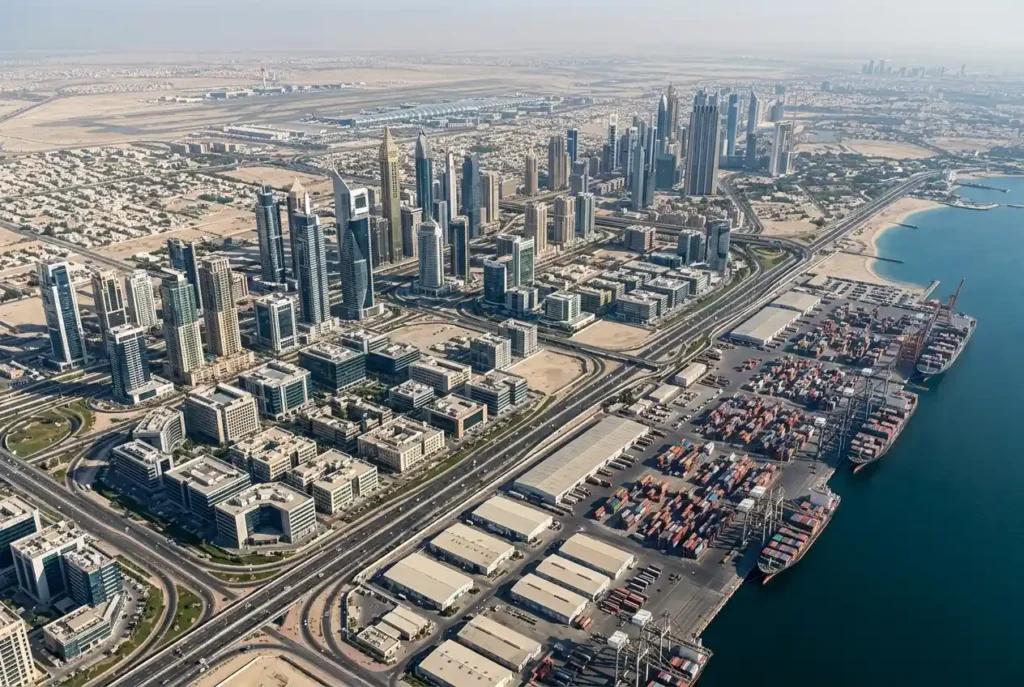
A Dubai Free Zones Guide is useful for entrepreneurs who want to understand the different jurisdictions available for establishing a company in the emirate. Dubai’s free zones are not all designed for the same purpose. Some are closely associated with commodities and international trade, while others focus on logistics, technology, media, healthcare, finance, design, or other specialised sectors.
The UAE Government currently states that the country offers 40 free zones for business activities across sectors including retail, agritech, healthcare, FinTech, logistics, media, and ICT. Dubai itself has a number of specialised free zones, and the Dubai Free Zones Council coordinates 11 Dubai free zones across sectors including aviation, financial services, industry, logistics, health, and information and communications technology.
This means entrepreneurs should not choose a free zone simply because it appears popular or inexpensive. The better approach is to match the jurisdiction with the company’s activity, customers, facilities, ownership structure, visa requirements, and future growth plans.
What Is a Dubai Free Zone?
A Dubai free zone is a designated business jurisdiction operating under its own free zone authority and regulatory framework. Businesses established within these zones receive licences for permitted activities and can access infrastructure designed for particular commercial sectors.
Dubai’s official investment platform describes free zones as specialised environments and distinguishes them from mainland businesses. It also notes that companies established in a free zone cannot trade within the UAE without the relevant mainland licence or arrangement.
This distinction is important because the right jurisdiction depends on how the company intends to generate revenue. A business serving international customers may have different requirements from a company that expects to conduct extensive direct activity with mainland customers.
How Many Free Zones in Dubai Are There?
The question how many freezones in Dubai has no single answer unless the scope of the count is clearly defined. Dubai has numerous specialised free zone jurisdictions, while official government material may group or classify zones differently depending on the purpose of the information.
The Dubai Free Zones Council is an important reference point because it covers 11 free zones across multiple industries. Meanwhile, UAE Government resources provide broader lists of free zones and specialised industrial zones across the country.
For business planning, the exact number is less important than identifying which free zones actually support the company’s intended activity. A shortlist of three suitable jurisdictions is usually more useful than a long list of names that do not match the business model.
Dubai Free Zone Map: How to Understand Locations
A Dubai free zone map can help entrepreneurs understand the geographic distribution of major business jurisdictions, but location should be considered together with infrastructure and business activity.
Some free zones are positioned close to airports, ports, logistics corridors, financial districts, residential communities, or specialised commercial areas. The location can affect access to customers, employees, suppliers, warehouses, and transport networks.
For example, a logistics company may prioritise proximity to ports and cargo infrastructure, while a professional services company may place greater value on access to corporate clients and convenient office locations.
Rather than choosing a zone simply because it is geographically close to a particular part of Dubai, consider how the location supports the company’s daily operations.
Major Dubai Free Zones to Know
Dubai’s free zone landscape includes several well-known jurisdictions. Each has a different commercial identity and should be assessed according to its current licensing rules.
DMCC
DMCC is one of Dubai’s major free zone business ecosystems and is particularly well known for commodities, trading, professional services, and international companies.
Its location in Jumeirah Lakes Towers provides access to a large commercial community, while the jurisdiction supports businesses across a wide range of permitted activities.
DMCC can be particularly relevant to companies that want an established international business environment rather than a purely industrial or logistics-focused location.
Jebel Ali Free Zone
Jebel Ali Free Zone, commonly known as JAFZA, is strongly associated with logistics, manufacturing, trading, and international supply chains.
Its relationship with Jebel Ali Port makes it particularly relevant to companies that import, export, store, manufacture, or distribute physical goods.
For businesses that need warehouses or industrial facilities, the available infrastructure can be more important than the headline company licence cost.
Dubai Airport Free Zone
Dubai Airport Free Zone is positioned around Dubai’s aviation and international logistics ecosystem. Its location can be relevant to companies that benefit from access to air cargo, international transportation, and Dubai’s wider commercial network.
Businesses considering DAFZ should evaluate the permitted activities, office requirements, legal structures, visa options, and total operating cost before incorporation.
Dubai Silicon Oasis
Dubai Silicon Oasis has a strong association with technology, innovation, and digital businesses. It can be relevant to companies looking for a technology-oriented business environment.
Technology startups should consider not only licensing costs but also office facilities, networking opportunities, talent access, and the suitability of the ecosystem for their growth plans.
Meydan Free Zone
Meydan is another Dubai jurisdiction considered by entrepreneurs establishing professional and commercial businesses.
Companies evaluating Meydan should compare its current licence packages, permitted activities, office solutions, visa arrangements, renewal costs, and other requirements against alternative Dubai free zones.
Dubai Healthcare City
Dubai Healthcare City provides a specialised environment for healthcare-related businesses and organisations. Healthcare activities can involve additional regulatory requirements, so entrepreneurs should confirm the relevant approvals before selecting a company structure.
Dubai Internet City
Dubai Internet City is closely associated with technology, communications, and digital businesses. Its location and ecosystem can appeal to companies that want to operate within Dubai’s technology community.
Dubai Media City
Dubai Media City is a specialised environment for media and communications businesses. UAE Government information identifies Dubai Media City among the country’s media free zones, alongside Dubai Production City and Dubai Studio City.
Dubai Studio City and Dubai Production City
These specialised media and production environments can be relevant to companies involved in content production, broadcasting, entertainment, and related creative activities.
The suitability of a media free zone depends on the exact activity that the company intends to conduct, because specialised activities may have particular licensing requirements.
Free Zones at UAE Level vs Dubai Free Zones
The phrase free zones at UAE can create confusion because not every UAE free zone is located in Dubai.
Abu Dhabi, Sharjah, Ajman, Ras Al Khaimah, Fujairah, and Umm Al Quwain also have free zone jurisdictions. The UAE Government’s business resources provide information about free zones across the country and identify dozens of specialised jurisdictions and industrial zones.
This broader market gives entrepreneurs more choices. A company that initially assumes Dubai is the only option may find another emirate more suitable because of its industrial infrastructure, location, operating model, or cost structure.
What Is the Dubai Free Zone Council?
The Dubai Free Zone Council is an advisory body that coordinates efforts among Dubai’s free zones and the UAE Government. According to UAE Government material, the council aims to attract investment, create an enabling business environment, encourage collaboration, and exchange knowledge and best practices among free zones. It covers 11 free zones across multiple industries.
The council should not be confused with a single licensing authority. Entrepreneurs still deal with the relevant free zone authority when establishing and operating their company.
Why Are Dubai Free Zones Specialised?
Specialisation allows free zones to develop infrastructure and services around particular industries.
A logistics-oriented jurisdiction can provide warehouses and supply-chain facilities. A technology-focused zone can build an ecosystem around digital companies. A media zone can provide facilities and services relevant to production and creative businesses.
This specialisation can make a meaningful difference to companies that need industry-specific infrastructure.
Benefits of Setting Up in a Dubai Free Zone
Free zones can provide several advantages, depending on the jurisdiction and business activity.
Foreign Ownership
Free zone structures can provide 100% foreign ownership subject to applicable regulations and activity requirements. The Dubai Free Zones Council’s official description also highlights enterprise ownership as one of the benefits associated with Dubai free zones.
Specialised Infrastructure
Businesses can choose environments designed around particular sectors, which can make it easier to access relevant commercial facilities and services.
International Business Environment
Dubai’s free zones attract companies and investors from around the world, creating commercially diverse ecosystems.
Dedicated Licensing Frameworks
Each free zone authority manages its own licensing process and provides services for businesses operating within its jurisdiction.
Potential Tax and Customs Advantages
Free zones can provide specific tax or customs treatment under applicable UAE laws. However, entrepreneurs should not assume that every free zone company or every type of income automatically receives the same tax treatment.
Businesses should assess their tax position based on their actual activities and current UAE regulations.
How to Choose the Best Free Zone in UAE
The best free zone in UAE depends on the business rather than on a universal ranking.
A useful selection process starts with the following questions:
- What exact activity will the company conduct?
- Where are the customers located?
- Does the business need mainland access?
- Does it require a warehouse or industrial facility?
- How many employees will need visas?
- Does the company need a physical office?
- Are special regulatory approvals required?
- Will the company import or export products?
- What is the annual renewal budget?
- Could the company add new activities later?
Once these requirements are clear, the number of suitable free zones becomes much smaller.
Dubai Free Zone vs Mainland
The choice between a free zone and mainland company should be based on the company’s operating model.
Dubai’s official investment platform describes mainland companies as operating outside free zones and notes that mainland businesses have no territorial restrictions in the same way as free zone companies. It also explains that free zone companies require the appropriate mainland licensing arrangement to trade within the UAE mainland.
This does not mean that mainland is always better. A company with international customers may benefit from a specialised free zone ecosystem, while a business that needs extensive direct mainland operations may prefer a mainland structure.
How Much Does a Dubai Free Zone Company Cost?
The cost varies according to the free zone, business activity, legal structure, office solution, visa requirements, and additional approvals.
Licence fees are only one part of the overall setup budget. Registration, establishment card, office facilities, immigration services, visas, and annual renewal can also affect the total cost.
For a detailed cost-focused comparison, read our guide to Free Zone License Cost UAE.
How to Use a Dubai Free Zone Map for Business Planning
A map becomes more useful when combined with operational data.
For example, a company can compare the location of each free zone against:
- Major airports
- Seaports
- Highways
- Customer locations
- Employee residential areas
- Warehousing requirements
- Commercial districts
- Industry clusters
This approach can reveal practical differences that are not obvious from licence prices alone.
Do Dubai Free Zones All Have the Same Rules?
No. Each free zone authority has its own rules, licensing procedures, available legal structures, office requirements, and administrative processes.
The UAE Government also notes that each free zone authority has its own employment law framework for employees working in free zones.
Entrepreneurs should therefore avoid assuming that a rule found on one free zone’s website automatically applies to another jurisdiction.
Common Mistakes When Choosing a Dubai Free Zone
- Choosing solely on the lowest licence price
- Ignoring the permitted business activity
- Assuming every free zone provides identical legal structures
- Ignoring office and warehouse requirements
- Underestimating visa needs
- Assuming free zone companies can freely trade on the mainland
- Ignoring annual renewal expenses
- Failing to check special regulatory approvals
- Choosing a location without considering customers and logistics
- Assuming tax treatment is identical across all businesses
How to Build a Free Zone Shortlist
Instead of comparing every available jurisdiction, create a shortlist of three to five free zones that support your activity.
For each option, compare the licence, office requirements, visa capacity, setup cost, renewal cost, infrastructure, location, customer access, and expansion possibilities.
Then verify the final information directly with the relevant authority before making a payment. Fees, licensing categories, and administrative requirements can change over time.
Closing Remarks
This Dubai Free Zones Guide shows why choosing a free zone requires more than finding a list of jurisdictions or asking how many free zones Dubai has.
Dubai has developed a diverse network of specialised free zones covering sectors such as commodities, logistics, aviation, technology, media, healthcare, finance, and other industries. The Dubai Free Zones Council currently covers 11 free zones, while broader UAE Government resources identify many additional free zones and specialised zones across the country.
The best option depends on the company’s activity, customers, facilities, ownership requirements, visa needs, location, budget, and long-term growth strategy.
For entrepreneurs comparing the wider company formation process, our guide to Company Formation in UAE explains the major registration options and considerations.
Before incorporating, verify the current licence categories, fees, permitted activities, office requirements, visa rules, and mainland trading arrangements directly with the selected free zone authority or the relevant UAE government platform.