
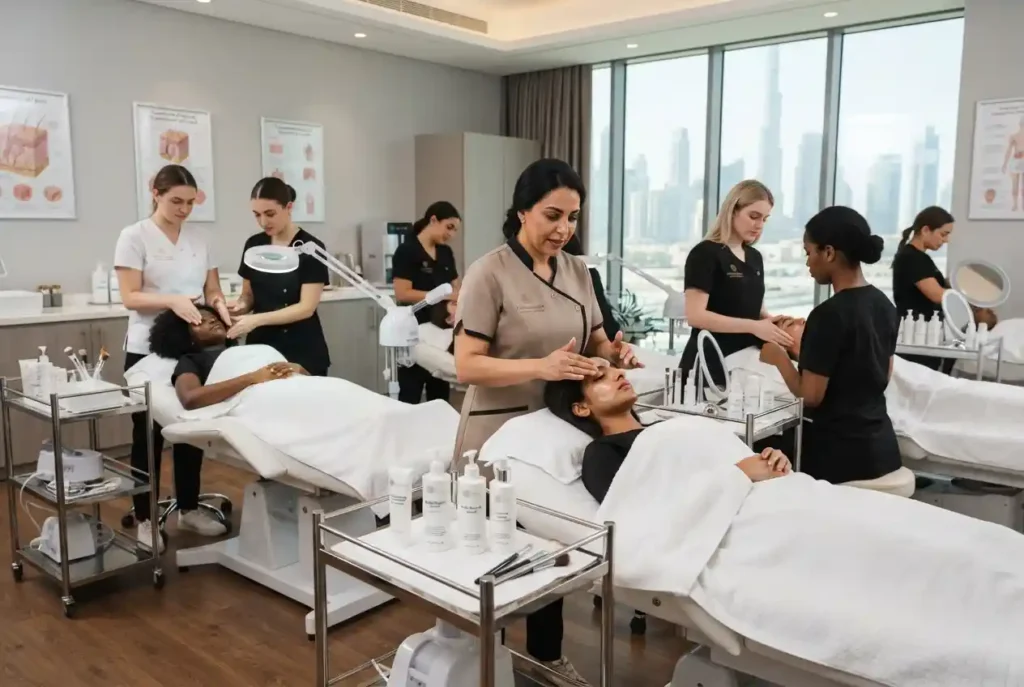
The UAE has a diverse and fast-moving beauty industry, creating opportunities for people interested in skincare, makeup, salon services, wellness, and personal care. For anyone considering a career in this sector, beauty therapy courses can provide a structured way to develop practical skills and understand professional standards.
Beauty therapy is broader than learning how to perform individual salon treatments. A good course can introduce students to skincare, hair removal, facial treatments, manicure and pedicure techniques, client consultation, hygiene, product knowledge, and professional conduct. Depending on the course and training provider, students may also learn specialist techniques and business-related skills.
For people planning to work in Dubai or another UAE emirate, choosing the right training programme requires careful consideration. Course content, practical training, qualification recognition, trainer experience, facilities, and career support can all affect the value of the education.
What Are Beauty Therapy Courses?
Beauty therapy courses are educational programmes designed to teach students the practical and theoretical knowledge needed for professional beauty services. The depth of training can range from introductory programmes for beginners to advanced courses for professionals who want to expand their existing skills.
Depending on the programme, students may learn how to analyse skin conditions, prepare clients for treatments, apply professional skincare products, perform beauty treatments safely, maintain equipment, and provide appropriate aftercare advice.
The exact curriculum varies between institutions, so prospective students should read the course syllabus carefully instead of choosing a programme based only on its title.
Why Study Beauty Therapy in the UAE?
The UAE is home to a broad network of salons, beauty centers, spas, hotels, wellness businesses, aesthetic providers, and cosmetic brands. This creates a diverse professional environment for people who want to build experience in the beauty sector.
Dubai in particular has a highly international customer base. Beauty professionals may work with clients from different cultural backgrounds and with varied expectations regarding skincare, grooming, hair removal, makeup, and personal care.
This environment can help students understand the importance of communication, professionalism, presentation, and adaptability alongside technical beauty skills.
For people researching the industry as a whole, understanding how a beauty center operates can also provide useful context about the types of services and professionals that make up the wider sector.
What Do You Learn in a Beauty Therapy Course?
A comprehensive course may cover several areas of beauty and personal care. The exact subjects depend on the level and specialization of the programme.
Skincare Fundamentals
Skincare is one of the core areas of many beauty therapy programmes. Students may learn about different skin types, basic skin analysis, cleansing, exfoliation, masks, moisturising, and professional facial routines.
Understanding skin fundamentals is important because a beauty therapist needs to recognise when a particular product or treatment may not be appropriate for a client. Good training should also emphasise the limits of a beauty professional’s role and when a client may need to seek medical advice.
Facial Treatments
Facial treatments can involve several stages, from cleansing and preparation to exfoliation, massage, masking, and finishing products. Training allows students to understand the correct sequence and purpose of each stage.
Practical experience is especially valuable because facial treatments require controlled technique, client communication, hygiene, and attention to skin sensitivity.
Manicure and Pedicure
Many beauty therapy courses include basic nail care. Students may learn nail preparation, shaping, cuticle care, polish application, and appropriate hygiene practices.
Because manicure and pedicure services involve close contact with the skin and nails, sanitation and safe working procedures should be an important part of the curriculum.
Waxing and Hair Removal
Hair removal is another common area of beauty therapy training. Students may learn preparation, application techniques, removal procedures, client positioning, and aftercare.
Training should also cover contraindications and situations where a treatment should be postponed or referred for professional assessment. This knowledge is just as important as learning the physical technique.
Makeup and Presentation
Some programmes include makeup application and professional presentation. These skills can be useful for beauty therapists who want to work in salons, bridal services, events, retail beauty, or other customer-facing roles.
Advanced makeup training may focus on specific styles or applications, while introductory beauty therapy programmes may provide only foundational knowledge.
Practical Training Matters
Beauty therapy is a practical profession, so classroom knowledge alone is not enough. Students should look for programmes that provide meaningful hands-on training under appropriate supervision.
Practical sessions allow students to develop technique, speed, client communication, hygiene habits, and confidence. They also provide an opportunity to learn how different skin types and client preferences can affect a treatment.
When comparing courses, ask how much practical training is included, whether students work with real clients or training models, and how practical assessments are conducted.
How to Choose the Right Beauty Therapy Course
Not every course is designed for the same student. Before enrolling, consider your current experience, career goal, preferred specialization, budget, and available study time.
Check the Course Curriculum
Start by reviewing the syllabus. A good programme should clearly explain what students will learn and what practical competencies they are expected to develop.
If your goal is to become a general beauty therapist, a broad curriculum may be more useful than a very narrow course. On the other hand, experienced professionals may benefit from specialist training in areas such as advanced skincare, makeup, nails, or other beauty services.
Evaluate the Training Provider
Look at the institution’s background, trainers, facilities, course duration, assessment methods, and student support. Professional facilities can make practical learning more realistic and effective.
It is also worth checking whether the qualification or certificate is appropriate for the career path you intend to pursue in the UAE.
Consider Course Duration
Course length can vary significantly. Short programmes may be suitable for people seeking introductory knowledge or a specific skill, while comprehensive professional programmes usually require more time.
A longer course is not automatically better. The important question is whether the programme provides sufficient depth and practical experience for your intended career.
Ask About Certification
Certification can be important when applying for beauty-related positions. Before enrolling, ask exactly what certificate is awarded, who issues it, what skills it represents, and whether any additional professional or regulatory requirements apply to the role you want.
Students should avoid assuming that every beauty course provides the same level of professional recognition.
Careers in Beauty Therapy
Completing appropriate training can open several possible paths within the beauty industry. The best option depends on the student’s skills, experience, qualifications, and interests.
Beauty Therapist
A beauty therapist may provide services such as facials, waxing, basic skincare treatments, manicure and pedicure services, and other treatments within their professional scope.
Working in a busy salon or beauty center can help new professionals develop speed, customer service skills, and practical confidence.
Skincare Specialist
People with a strong interest in skincare may pursue roles focused more heavily on facial treatments and skincare products. Product knowledge and understanding different skin needs can be valuable in this area.
Spa Therapist
Spas and hotels can offer another career direction. Spa professionals may work in environments where relaxation, wellness, customer experience, and personal care are central to the service.
Beauty Retail and Product Advisory
Beauty brands and retailers also need professionals who understand cosmetic products and can communicate effectively with customers. Training in beauty therapy can provide a useful foundation for these customer-facing roles, although additional product or retail training may be beneficial.
Beauty Business Owner
Experienced professionals may eventually consider operating a salon, beauty center, mobile beauty service, or specialist studio. Running a business requires skills beyond treatment delivery, including budgeting, staffing, marketing, customer retention, operations, and compliance.
Beauty Therapist Jobs in Dubai
Searches for beauty therapist jobs in Dubai are common among people who want to turn their training into a professional career. Dubai’s beauty market includes salons, spas, hotels, beauty centers, wellness businesses, and other personal care providers.
Competition can also be strong, which means completing a course is only one part of building a career. Employers may consider practical ability, communication skills, previous experience, presentation, customer service, and relevant certifications when assessing candidates.
A well-prepared CV should clearly present your training, practical skills, previous experience, treatment specialisations, and relevant professional development.
Building a Career in Beauty Therapy
Students who want long-term careers should think beyond their first qualification. Beauty trends, products, techniques, and customer expectations continue to change, so ongoing learning can help professionals remain competitive.
Additional workshops and specialist courses can help therapists expand their service range. For example, a professional who begins with general beauty therapy may later develop stronger expertise in skincare, makeup, nails, or another specialised area.
Keeping a record of completed training can also make it easier to demonstrate professional development when applying for new opportunities.
Skills Employers Look For
Technical knowledge is important, but successful beauty therapists need a combination of practical and interpersonal skills.
- Client communication: Professionals need to understand customer expectations and explain treatments clearly.
- Attention to detail: Small details can influence the quality of beauty treatments and overall presentation.
- Hygiene awareness: Clean working practices are essential in professional beauty environments.
- Time management: Salons and beauty centers often operate on appointment schedules.
- Product knowledge: Understanding ingredients, applications, and product suitability can improve client service.
- Professional presentation: Beauty professionals work in an industry where appearance and professionalism are closely connected.
- Customer service: A positive experience can influence repeat bookings and client loyalty.
What to Ask Before Enrolling
Prospective students should speak with the training provider before making a final decision. Useful questions include:
- What subjects are included in the course?
- How much practical training is provided?
- Who teaches the programme?
- What qualification or certificate will I receive?
- Are training products and equipment included?
- How are practical skills assessed?
- What are the entry requirements?
- What is the total course cost?
- Are there additional examination or certification fees?
- Does the provider offer career guidance or placement support?
Getting clear answers before registration can help students compare programmes based on genuine educational value rather than marketing claims.
Is Beauty Therapy a Good Career Choice in the UAE?
Beauty therapy can be a suitable career for people who enjoy practical work, personal care, customer interaction, and continuous learning. The industry offers several possible working environments, from independent salons and beauty centers to hotels, spas, retail businesses, and specialist providers.
However, prospective students should approach the career realistically. Success requires more than completing a certificate. Developing strong practical skills, maintaining professional standards, building customer trust, and continuing to learn are all important for long-term progression.
Those interested in the broader beauty industry can also explore opportunities related to beauty consultant roles, where product knowledge, customer communication, and professional presentation can become particularly valuable.
Wrapping Up
Beauty therapy courses can provide a useful foundation for people who want to enter the UAE beauty industry or develop existing salon and skincare skills. The right programme should combine theoretical knowledge with practical training, professional hygiene, client care, and a clear understanding of the services being taught.
Before enrolling, compare course content, practical hours, trainers, facilities, certification, cost, and career relevance. If your long-term goal is to find beauty therapist jobs in Dubai, choose training that helps you build both technical ability and the professional skills employers expect.
The beauty sector rewards professionals who continue learning and understand that excellent service is about more than performing a treatment. Strong communication, careful technique, responsible product use, hygiene, and consistent customer care can all contribute to a sustainable career in the UAE’s beauty industry.
For official information about vocational and training-related requirements in Dubai, prospective students can review guidance from the Knowledge and Human Development Authority before selecting a training provider.







