
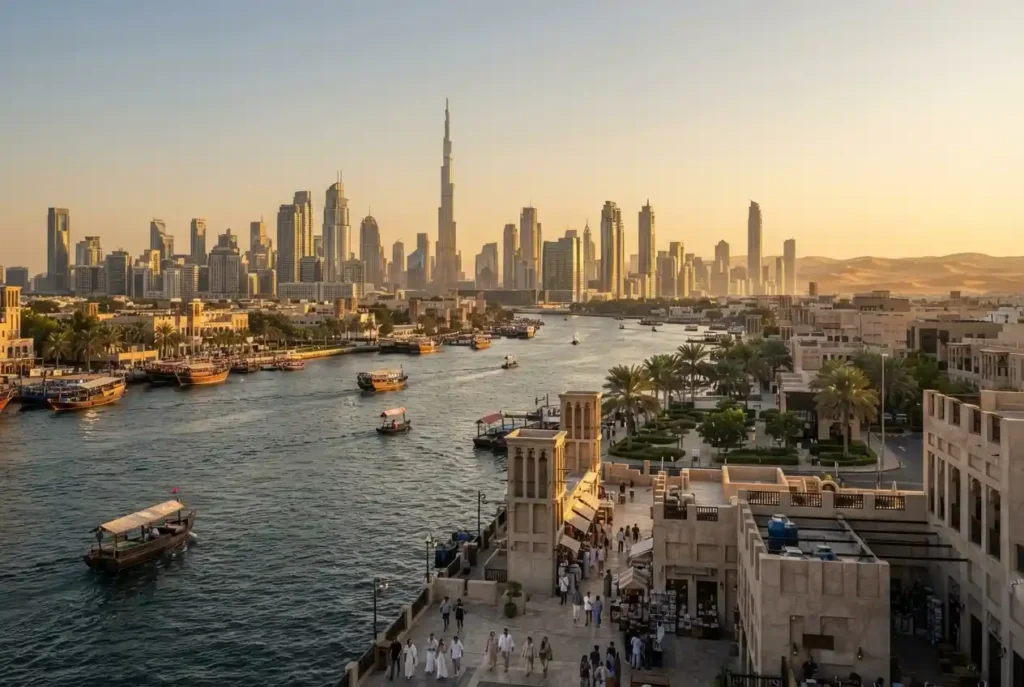
Dubai is a city that rewards curiosity. Beyond its famous skyline and luxury shopping centres, there are historic neighbourhoods, traditional markets, beaches, desert landscapes, waterfront districts and cultural spaces waiting to be explored. For visitors who want to experience more than the city’s most photographed landmarks, exploring Dubai by area and interest can make a trip considerably more rewarding.
The city is geographically diverse, so an effective itinerary is not simply a list of attractions. It is about understanding what each part of Dubai offers and combining nearby places into a practical day of sightseeing. Downtown provides modern architecture and major attractions, while Old Dubai offers heritage and traditional markets. Along the coast, visitors can explore beaches, marinas and resort areas, while the desert provides a completely different environment beyond the urban centre.
The official Visit Dubai guide also presents the city through its neighbourhoods, attractions, culture, experiences and itineraries, making location-based exploration a useful way to plan a visit.
If you are starting with Dubai’s most important landmarks, our guide to Dubai highlights is a useful companion. This guide takes a broader approach and focuses on how to explore Dubai rather than simply checking off famous attractions.
Why Explore Dubai Beyond the Famous Landmarks?
Dubai’s most recognisable attractions are worth seeing, especially on a first visit, but they only represent one side of the destination. The city has developed around very different communities and landscapes, each with its own atmosphere.
Exploring different areas allows visitors to experience contrasts that make Dubai distinctive. You can start the day among skyscrapers, walk through a historic neighbourhood later, eat at a local restaurant and finish the evening beside the Arabian Gulf.
This approach also helps prevent an itinerary from becoming repetitive. Instead of visiting one modern attraction after another, you can alternate architecture, culture, food, nature, shopping and relaxation.
Explore Downtown Dubai
Downtown Dubai is one of the easiest places to begin exploring the modern side of the city. It is home to Burj Khalifa, Dubai Mall and a collection of restaurants, hotels, entertainment venues and public spaces.
Burj Khalifa provides the area’s most recognisable landmark, while Dubai Mall offers shopping, dining and entertainment. The surrounding district is particularly impressive after sunset when the skyline and illuminated buildings create a different atmosphere from the daytime city.
Downtown works well for first-time visitors because several major attractions can be combined without spending much time travelling between them. If your schedule is short, this is one of the areas that can deliver a strong introduction to modern Dubai.
Discover Old Dubai and Dubai Creek
To understand a different side of the city, head towards Dubai Creek and the historic districts around it. This part of Dubai provides a contrast to the glass towers and large-scale developments found elsewhere.
Dubai Creek has long been connected with the city’s trading history, and visitors can still experience the area’s traditional atmosphere through its souks, waterfront and older neighbourhoods.
A traditional abra ride is one of the simplest ways to experience the creek. The short crossing also makes it easy to move between the historic districts on either side of the water.
Bur Dubai is particularly interesting for travellers who want to combine heritage, traditional souks and authentic dining. The official Visit Dubai neighbourhood guide describes Bur Dubai as an area where traditional souks, dining and maritime character remain important parts of the local atmosphere.
Walk Through Al Fahidi Historical Neighbourhood
Al Fahidi Historical Neighbourhood is another essential stop for anyone interested in exploring Dubai’s heritage. The area is known for its traditional buildings, narrow lanes, courtyards and cultural atmosphere.
Unlike the city’s major modern attractions, Al Fahidi is best experienced slowly. Take time to walk through the lanes, examine the architecture and visit cultural spaces rather than treating the neighbourhood as a quick photo stop.
The area can easily be combined with Dubai Creek, the souks and nearby museums, creating a cultural half-day itinerary without requiring long journeys across the city.
Explore Dubai’s Neighbourhoods
One of the best ways to explore Dubai is to treat its neighbourhoods as destinations in their own right. Different districts have developed distinct identities, and choosing where to spend time can change the character of your trip.
Dubai Marina
Dubai Marina is a modern waterfront district surrounded by high-rise buildings, restaurants, cafés and pedestrian areas. It is particularly enjoyable around sunset and in the evening when the towers and marina lights create a lively atmosphere.
A walk along the waterfront can be combined with dining or a boat experience. The area also provides convenient access to nearby coastal attractions.
Jumeirah
Jumeirah is associated with beaches, villas, restaurants and a more relaxed coastal atmosphere. It is a good choice for travellers who want to balance sightseeing with time near the sea.
The area can also be useful for visitors interested in combining beach time with dining and modern attractions.
Al Quoz
Al Quoz offers another perspective on Dubai through its creative and cultural spaces. Former industrial areas have developed into destinations for art, design, galleries and independent businesses.
For visitors who prefer contemporary culture to conventional sightseeing, exploring this side of the city can provide a more local and creative experience.
Deira
Deira is one of the city’s established commercial districts and is particularly known for traditional markets. The Gold Souk and Spice Souk are among the places that attract visitors interested in shopping and the atmosphere of traditional Dubai.
Walking through Deira also reveals a different rhythm from the highly polished tourist districts, with local shops, restaurants and everyday urban activity adding character to the experience.
Explore Dubai’s Beaches
Dubai’s coastline provides plenty of opportunities to slow down after a busy day of sightseeing. Beaches can be used as destinations in themselves or as short breaks between visits to nearby attractions.
Some beaches are geared towards watersports and active recreation, while others are better suited to relaxing, walking and enjoying views of the city. Choosing the right beach therefore depends on your interests and how much activity you want in your itinerary.
For travellers who want to explore Dubai’s coastal side in more detail, our upcoming guide to beaches in Dubai will provide a more focused look at beach destinations and waterfront experiences.
Experience the Dubai Desert
Dubai’s desert is one of the strongest contrasts to the city’s urban environment. Just beyond the developed areas, the landscape opens into broad stretches of sand where visitors can experience a quieter side of the emirate.
Desert experiences vary considerably. Some focus on adventure, with dune driving and sandboarding, while others offer a slower experience centred on sunsets, wildlife and traditional-style hospitality.
When choosing a desert excursion, consider whether you prefer adventure, photography, cultural experiences or a peaceful escape. This will help you choose an experience that complements rather than duplicates the rest of your Dubai itinerary.
Explore Dubai’s Famous Modern Architecture
Architecture is one of the defining features of Dubai. The city has developed a skyline filled with buildings that are instantly recognisable, from the Burj Khalifa to the Museum of the Future and the distinctive developments around Palm Jumeirah.
Architecture-focused sightseeing can be particularly rewarding for photographers. Different parts of the city provide contrasting perspectives, with skyscrapers, waterfront buildings, traditional structures and contemporary landmarks appearing within relatively short distances of one another.
Rather than viewing every building as a separate attraction, consider creating a route around the city’s most interesting architectural areas. This makes the experience more cohesive and gives you opportunities to compare Dubai’s older and newer visual identities.
Discover Dubai Through Food
Food is an important part of exploring any city, and Dubai’s international population has created an exceptionally varied dining scene. Visitors can find Emirati and Middle Eastern dishes alongside South Asian, East Asian, European, African and many other cuisines.
For a more traditional experience, explore restaurants and cafés in older districts such as Bur Dubai and Deira. These areas can offer a different dining experience from the luxury restaurants concentrated around major hotels and modern developments.
Food exploration can also make your itinerary more efficient. Instead of travelling across the city solely for meals, choose restaurants located near the attractions you already plan to visit.
Explore Dubai’s Markets and Souks
Dubai’s modern malls are famous, but its traditional souks offer a very different shopping experience. The Gold Souk, Spice Souk and other traditional markets provide opportunities to browse jewellery, spices, textiles, perfumes and other products.
Shopping in these areas is also about atmosphere. Narrow passages, displays of merchandise and the movement of traders and visitors create an environment that feels distinctly different from Dubai’s large contemporary shopping centres.
If you are interested in local shopping, allow enough time to explore rather than treating the souks as a quick stop between attractions.
Explore Dubai Through Tours
Guided tours can be useful for visitors who want to understand more about the city while reducing the work involved in planning transport and schedules. Different tour styles suit different travellers.
Walking tours
Walking tours are particularly useful in compact historic areas. A knowledgeable guide can explain architectural details, traditions and historical connections that may not be obvious when exploring independently.
Desert tours
Desert tours are convenient for visitors who want transport, activities and a structured experience outside the city. Packages vary widely, so review exactly what is included before booking.
Boat tours
Boat tours provide a different view of Dubai’s skyline and coastline. They can be especially appealing around sunset, when the city’s architecture takes on a different appearance from the water.
City sightseeing tours
City tours can be useful during a short visit because they allow travellers to cover several major areas without arranging every journey independently. They are particularly helpful for first-time visitors who want an overview before deciding which places deserve more time.
How to Explore Dubai by Area
Dubai is easier to explore when attractions are grouped geographically. Trying to visit distant areas in random order can lead to unnecessary travel time, particularly during busy periods.
For example, combine Downtown attractions on one day, Old Dubai and the creek on another, and coastal districts such as Dubai Marina and Palm Jumeirah on a separate itinerary. This approach gives you more time at each destination and reduces the feeling of constantly being in transit.
The official Visit Dubai neighbourhood guide is useful for this style of planning because it organises the city around individual districts and their distinctive experiences.
How to Explore Dubai on a Short Trip
If you have only a few days, do not try to see every part of the city. Instead, choose experiences that represent different sides of Dubai.
A balanced short trip might include one day focused on Downtown and modern landmarks, another exploring Old Dubai and its markets, and another dedicated to the coast or desert. This creates variety without turning the holiday into a race between attractions.
For an especially short visit, our one day in Dubai guide can help you turn the city’s most accessible attractions into a practical itinerary.
Tips for Exploring Dubai Comfortably
Weather should influence your planning, particularly when you intend to spend significant time outdoors. During warmer periods, schedule outdoor sightseeing during more comfortable parts of the day and use indoor attractions during the hotter hours.
Wear comfortable footwear if you plan to explore historic districts, markets or waterfront promenades on foot. Carry water and allow enough time between destinations rather than creating an itinerary with back-to-back reservations.
It is also worth checking attraction opening hours and booking requirements before travelling. Popular attractions may use timed entry, and schedules can change during holidays, events or special periods.
Wrapping Up
To truly explore Dubai, look beyond the city’s most famous skyline. Visit its historic neighbourhoods, walk beside the creek, discover traditional markets, spend time on the coast, experience the desert and explore districts that reveal a more local side of the emirate.
The city’s greatest strength is its variety. You can move from heritage architecture to futuristic buildings, from busy markets to quiet desert landscapes, and from urban entertainment to the beach within the same trip.
Rather than trying to see everything, choose several areas that offer different experiences and build your itinerary around them. That approach will give you a richer understanding of Dubai while leaving enough time to actually enjoy each place.
For additional planning inspiration, the official Explore Dubai guide provides information about neighbourhoods, attractions, culture and experiences across the city.